
Apr . 01, 2024 17:55 Back to list
oem thermoplastic hose Performance Analysis

Introduction
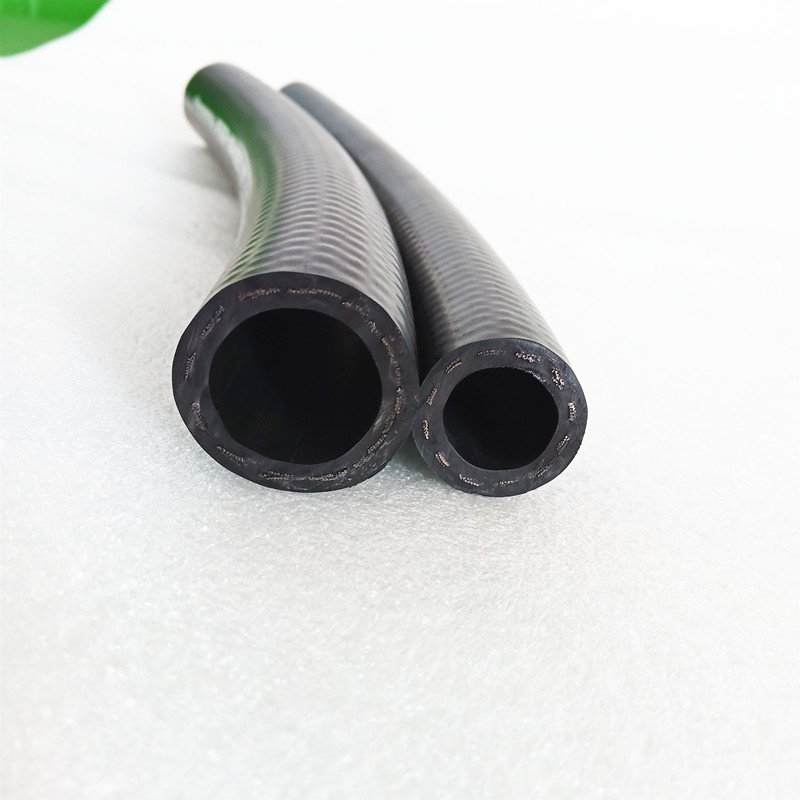
OEM thermoplastic hose represents a critical component in fluid transfer systems across diverse industrial applications. Unlike traditional rubber hoses, thermoplastic hoses are constructed from polymer materials exhibiting superior chemical resistance, temperature tolerance, and pressure handling capabilities. Positioned within the broader supply chain as a fabricated good, they serve as a vital link between fluid sources (pumps, reservoirs) and end-use applications (machinery, processing equipment, delivery systems). Core performance characteristics include burst pressure, tensile strength, elongation at break, and resistance to specific media, dictating suitability for particular environments and fluids. The increasing demand for lightweight, corrosion-resistant, and high-performance fluid conveyance solutions is driving the growth of the thermoplastic hose market, challenging traditional elastomer-based solutions.
Material Science & Manufacturing
Thermoplastic hoses are typically manufactured from polymers such as Polyvinyl Chloride (PVC), Polyethylene (PE), Polypropylene (PP), Polyamide (Nylon), and Thermoplastic Polyurethane (TPU). The choice of polymer dictates the hose’s ultimate properties. PVC offers cost-effectiveness and good chemical resistance, while Nylon provides high tensile strength and abrasion resistance. TPU excels in flexibility and resistance to oils and greases. Raw material selection critically impacts performance. Manufacturing processes generally involve extrusion, where the molten polymer is forced through a die to create the hose profile. Critical parameters during extrusion include melt temperature, screw speed, and die pressure. Post-extrusion processes often include braiding or spiraling with reinforcement materials (typically polyester or high-tensile steel wire) to enhance burst pressure capabilities. Welding or bonding techniques are used to attach fittings. Quality control requires rigorous testing of raw material properties (molecular weight, viscosity), dimensional accuracy of the extruded hose, and adhesion strength of fittings. Chemical compatibility testing is paramount to verify resistance to intended media. The degree of crystallinity in semi-crystalline polymers (like PE and PP) significantly affects their mechanical properties, dictated by cooling rate during extrusion.
Performance & Engineering
Performance analysis of thermoplastic hoses centers around several key engineering principles. Burst pressure, determined by hoop stress calculations based on wall thickness and internal pressure, is a primary design consideration. Finite Element Analysis (FEA) is frequently employed to model stress distribution and optimize reinforcement configurations. Tensile strength and elongation at break determine the hose’s resistance to stretching and tearing. Environmental resistance, particularly UV degradation and ozone cracking, are crucial for outdoor applications, often addressed through the incorporation of UV stabilizers. Permeation resistance, or the rate at which fluids migrate through the hose wall, is important for applications handling hazardous or valuable substances. Hose flexibility is governed by the material’s Young’s modulus and is critical for ease of installation and routing. Compliance requirements, such as REACH and RoHS, dictate restrictions on hazardous substances. Furthermore, electrostatic dissipative (ESD) properties may be required in applications where static electricity poses a risk, typically achieved through the addition of conductive fillers to the polymer matrix. Hose performance is also impacted by temperature fluctuations, which cause thermal expansion and contraction; proper expansion loops and fittings must be engineered to accommodate these changes.
Technical Specifications
| Parameter | PVC Hose | Nylon Hose | TPU Hose | Operating Temperature Range (°C) |
|---|---|---|---|---|
| Burst Pressure (MPa) | 5-10 | 15-30 | 10-20 | -40 to +80 |
| Tensile Strength (MPa) | 20-30 | 50-80 | 40-60 | -60 to +100 |
| Elongation at Break (%) | 150-300 | 200-400 | 300-500 | -50 to +90 |
| Chemical Resistance | Good (Acids, Bases) | Excellent (Oils, Fuels) | Excellent (Oils, Greases, Abrasion) | -30 to +70 |
| Wall Thickness (mm) | 2-5 | 1.5-4 | 2-6 | -20 to +120 |
| Inner Diameter (mm) | 6-100 | 4-75 | 4-50 | -10 to +110 |
Failure Mode & Maintenance
Thermoplastic hoses are susceptible to several failure modes. Fatigue cracking can occur due to repeated flexing and pressure cycling, particularly at connection points. Environmental stress cracking (ESC) arises from exposure to specific chemicals that weaken the polymer structure. Permeation-induced swelling can cause dimensional changes and eventual rupture. Abrasion, especially in abrasive media applications, can wear through the hose wall. Kinking, caused by excessive bending, restricts flow and can lead to localized stress concentrations. Delamination, the separation of reinforcement layers from the polymer matrix, reduces burst pressure capacity. Oxidation, particularly at elevated temperatures, degrades the polymer. Maintenance involves regular visual inspection for cracks, swelling, abrasion, and leaks. Pressure testing should be conducted periodically to verify integrity. Avoid exceeding the maximum operating pressure and temperature limits. Proper storage (protected from UV exposure and extreme temperatures) is crucial. For hoses handling critical fluids, a preventative maintenance schedule should be implemented, including periodic replacement based on service life or operational hours. Correct installation practices, including proper support and routing, minimize stress and prolong hose life.
Industry FAQ
Q: What is the primary difference between PVC and TPU thermoplastic hoses regarding chemical resistance?
A: While PVC offers good resistance to acids and bases, TPU excels in resisting oils, greases, and abrasive chemicals. TPU’s polyurethane structure provides inherent resistance to hydrocarbon-based fluids, whereas PVC can become softened and degraded upon prolonged exposure to such substances. Therefore, TPU is the preferred choice for applications involving fuels, lubricants, and solvents.
Q: How does reinforcement braiding affect the burst pressure of a thermoplastic hose?
A: Reinforcement braiding, typically using polyester or steel wire, significantly increases the burst pressure. The braiding provides tensile strength that counteracts the hoop stress created by internal pressure. A higher braiding density and stronger reinforcement material result in a higher burst pressure rating. The angle of the braid also impacts performance, with shallower angles generally providing better pressure resistance.
Q: What measures can be taken to mitigate the risk of environmental stress cracking in PVC hoses?
A: Avoiding exposure to incompatible chemicals is the primary preventative measure. Using a PVC compound formulated with impact modifiers and stabilizers can improve resistance to ESC. Reducing stress concentrations by ensuring proper hose routing and avoiding sharp bends also helps. Selecting a different hose material (e.g., Nylon or TPU) may be necessary for highly aggressive chemical environments.
Q: How does temperature affect the performance characteristics of a thermoplastic hose?
A: Elevated temperatures can reduce the tensile strength and burst pressure of thermoplastic hoses. Thermal expansion can cause the hose to lengthen, potentially leading to stress on fittings. Low temperatures can decrease flexibility and increase the risk of cracking. Selecting a hose material with a suitable operating temperature range for the application is crucial.
Q: What are the implications of permeation in thermoplastic hose applications handling critical fluids?
A: Permeation, the diffusion of fluids through the hose wall, can lead to product loss, contamination, and potential environmental hazards. Selecting a hose material with low permeability to the specific fluid is essential. Factors like wall thickness and operating temperature influence permeation rates; thicker walls and lower temperatures generally reduce permeation. Specialized barrier layers can also be incorporated into the hose construction to minimize permeation.
Conclusion
OEM thermoplastic hose technology represents a significant advancement in fluid transfer solutions, offering enhanced performance characteristics compared to traditional rubber hoses. The selection of appropriate materials, coupled with precise manufacturing control and a thorough understanding of engineering principles, is paramount to ensuring reliable operation and longevity. Careful consideration of potential failure modes and the implementation of preventative maintenance strategies are essential for maximizing service life and minimizing downtime.
Future trends in thermoplastic hose development are focused on creating lighter-weight, more durable, and environmentally sustainable materials. The integration of smart sensing technologies to monitor hose condition and predict failure is also gaining traction. As industrial applications become increasingly demanding, the need for high-performance thermoplastic hose solutions will continue to grow, driving innovation and shaping the future of fluid transfer technology.