
Apr . 01, 2024 17:55 Back to list
oem smooth cover high pressure hydraulic hose Performance Analysis

Introduction
OEM smooth cover high pressure hydraulic hose constitutes a critical component in fluid power systems across diverse industrial sectors including construction, agriculture, mining, and manufacturing. Positioned within the hydraulic system’s power transmission chain, these hoses are responsible for safely and efficiently conveying pressurized hydraulic fluid to actuators and other components. Core performance characteristics revolve around burst pressure rating, working pressure capacity, temperature range, fluid compatibility, and abrasion resistance. The smooth cover, typically constructed of synthetic rubber compounds, offers enhanced protection against abrasion, weathering, and oil degradation, crucial for extending service life and ensuring operational safety. Unlike wire-braided hoses intended for general purpose applications, high-pressure hydraulic hose utilizes multi-layer reinforcement structures, commonly incorporating steel wire braiding or spiral windings, to withstand significantly higher operating pressures and maintain dimensional stability. Failure of these hoses can lead to significant downtime, safety hazards, and costly repairs, making selection and proper maintenance paramount.
Material Science & Manufacturing
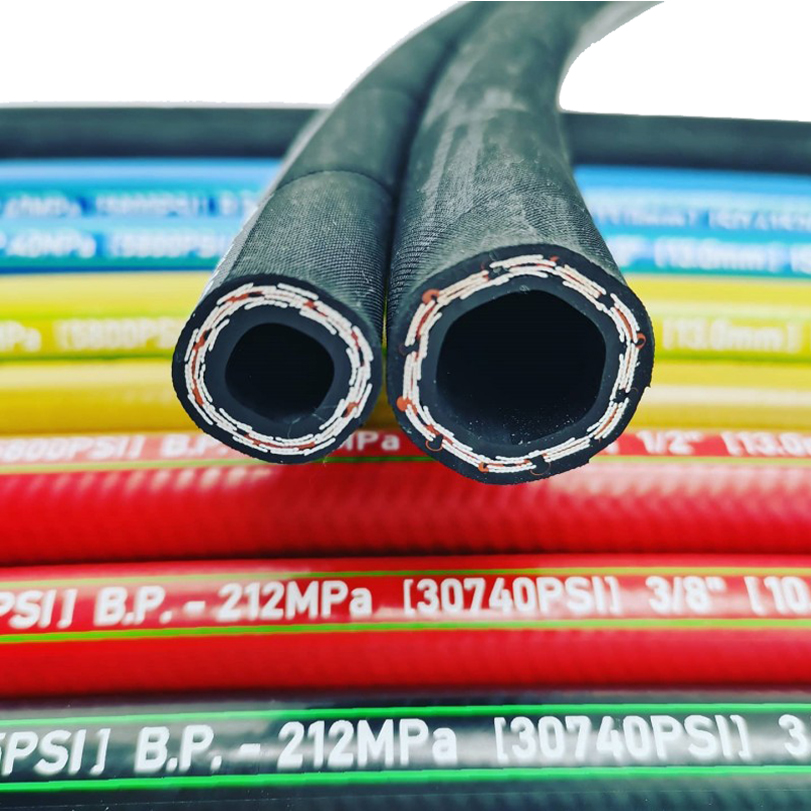
The composition of OEM smooth cover high pressure hydraulic hose is meticulously engineered, beginning with the inner tube. This layer is typically constructed from a highly oil-resistant synthetic rubber, most commonly nitrile rubber (NBR) due to its excellent compatibility with petroleum-based hydraulic fluids. Alternative materials like chloroprene rubber (CR) are employed for specialized applications requiring resistance to ozone, weathering, or specific fluid types. The reinforcement layer dictates the hose’s pressure rating and flexibility. Steel wire braiding, using multiple plies (typically 2, 4, or 6), provides exceptional strength and burst resistance. Alternatively, spiral-wound steel wire offers higher pressure capabilities and greater flexibility, particularly in larger diameter hoses. The cover material, defining the "smooth cover" designation, is usually a synthetic rubber blend, frequently a polyurethane (PU) or a polyester-based compound. This provides abrasion resistance, weathering protection, and resistance to ozone and hydrocarbon fluids.
Manufacturing processes begin with extrusion of the inner tube and cover layers. Precise control of polymer formulation, mixing ratios, and extrusion temperatures are critical to achieve consistent material properties. The reinforcement layer is then applied, involving winding or braiding of the steel wire. Braiding involves interlacing individual wires to create a flexible, high-strength structure. Spiral winding uses a single wire continuously wound around the inner tube. Following reinforcement, the hose is vulcanized—a process of cross-linking the rubber compounds with sulfur or peroxides under heat and pressure—to impart elasticity, strength, and durability. Critical parameters during vulcanization include temperature, time, and pressure, which directly affect the final material properties. Post-vulcanization, the hose undergoes rigorous testing, including burst pressure testing, impulse testing, and dimensional checks, to ensure compliance with industry standards. Quality control includes visual inspection for defects, dimensional measurements, and performance testing of representative samples.
Performance & Engineering
The performance of a high-pressure hydraulic hose is governed by several engineering principles. Force analysis dictates the stress-strain relationship of the hose under pressure, with the reinforcement layer bearing the majority of the tensile load. Hose wall thickness, reinforcement ply count, and wire diameter are critical design parameters. Finite Element Analysis (FEA) is frequently used to model stress distribution and optimize hose design for specific pressure ratings and operating conditions. Environmental resistance is another crucial consideration. Exposure to extreme temperatures (both high and low) can affect the flexibility and integrity of the rubber compounds. UV radiation can cause degradation of the cover material, leading to cracking and reduced abrasion resistance. Hydraulic fluids themselves can also impact performance; incompatibility can lead to swelling, softening, or cracking of the inner tube.
Compliance requirements vary by region and application, but generally adhere to standards like SAE J517, EN 853, and ISO 6897. These standards specify performance requirements for burst pressure, working pressure, impulse testing, and temperature range. The selection of hose fittings is equally important. Fittings must be compatible with the hose material and pressure rating, and securely crimped onto the hose to prevent leakage. Improper crimping can lead to premature failure. Furthermore, minimizing hose bending radius is vital to prevent kinking and fatigue failure. Excessive bending stresses concentrate at the bend point, accelerating material fatigue. Proper hose routing and support are essential to ensure long-term reliability.
Technical Specifications
| Parameter | Unit | Typical Value (1" ID Hose) | Testing Standard |
|---|---|---|---|
| Working Pressure | PSI | 3000-5000 | SAE J517 |
| Burst Pressure | PSI | 9000-15000 | SAE J517 |
| Temperature Range | °F | -40 to +212 | SAE J517 |
| Inner Tube Material | - | Nitrile Rubber (NBR) | ASTM D2000 |
| Reinforcement | - | 4SP (Four Spiral Wire) | SAE J517 |
| Cover Material | - | Polyurethane (PU) | ASTM D2000 |
Failure Mode & Maintenance
Failure modes in OEM smooth cover high pressure hydraulic hose are diverse. Fatigue cracking, initiated by repeated pressure cycling and bending, is a common failure mechanism, particularly near fittings. Delamination, or separation of the reinforcement layer from the inner tube or cover, can occur due to inadequate adhesion or material degradation. Oxidation of the rubber compounds, accelerated by exposure to heat and oxygen, leads to hardening, cracking, and loss of flexibility. Abrasion damage, resulting from contact with abrasive surfaces, can compromise the cover integrity. Chemical attack from incompatible fluids can cause swelling, softening, or cracking of the inner tube.
Preventative maintenance is crucial for extending hose service life. Regular visual inspections should be conducted to identify signs of damage, such as cracks, abrasions, or leaks. Hose routing should be optimized to minimize bending stress and exposure to extreme temperatures. Fluid compatibility must be verified before use. Proper crimping of fittings is essential to ensure a secure seal. Hose assemblies should be replaced according to the manufacturer’s recommendations or when signs of damage are detected. When replacing hoses, it is vital to use hoses and fittings that meet or exceed the original specifications. Proper storage of hoses is also important; they should be stored in a cool, dry, and dark location, away from direct sunlight and ozone sources.
Industry FAQ
Q: What is the difference between spiral and braided hydraulic hose construction, and which is better for high-pressure applications?
A: Spiral wound hose typically offers higher pressure ratings and greater flexibility compared to braided hose. Braided hose is generally more cost-effective and suitable for moderate pressure applications. For extremely high-pressure systems exceeding 5000 PSI, spiral wound hose is the preferred choice due to its superior strength and ability to withstand repeated pressure cycles.
Q: How does temperature affect the performance of a hydraulic hose?
A: Extreme temperatures, both high and low, can significantly impact hose performance. High temperatures can cause rubber compounds to degrade, leading to loss of flexibility and reduced burst pressure. Low temperatures can make the rubber brittle and prone to cracking. It’s vital to select hoses rated for the operating temperature range of the application.
Q: What is the importance of proper hose crimping?
A: Proper crimping is paramount for a secure and leak-proof connection between the hose and fitting. Incorrect crimping—either too loose or too tight—can lead to premature failure. A loose crimp allows fluid leakage, while an overly tight crimp can damage the hose reinforcement, reducing its strength.
Q: What are the common causes of hydraulic hose leaks?
A: Common causes include damaged or worn seals, improper crimping, exceeding the hose’s pressure rating, chemical incompatibility with the fluid, and physical damage such as abrasion or kinking. Regular inspections are crucial for identifying and addressing potential leak sources.
Q: How do I determine the correct hose size and pressure rating for my application?
A: Determine the required flow rate and working pressure of the system. Select a hose size that provides adequate flow capacity without excessive pressure drop. Ensure the hose’s pressure rating exceeds the maximum system pressure with an appropriate safety factor (typically 4:1). Consult manufacturer’s specifications and relevant industry standards for guidance.
Conclusion
OEM smooth cover high-pressure hydraulic hose represents a critical engineering component demanding rigorous material selection, precise manufacturing control, and diligent maintenance. Understanding the interplay between material science, pressure ratings, environmental factors, and potential failure modes is essential for ensuring the reliable and safe operation of hydraulic systems. Proper specification, installation, and regular inspection are not merely best practices; they are fundamental to maximizing service life and minimizing the risk of catastrophic failure.
Looking ahead, advancements in materials science, such as the development of more durable and chemically resistant rubber compounds, will continue to enhance hose performance. Furthermore, the integration of sensor technology for real-time pressure and temperature monitoring will provide valuable data for predictive maintenance and improved system reliability. Prioritizing quality, adhering to industry standards, and embracing proactive maintenance strategies will remain paramount for optimizing the performance and longevity of these vital hydraulic components.