
Apr . 01, 2024 17:55 Back to list
oem six wire spiral hydraulic hose Performance Analysis
Introduction
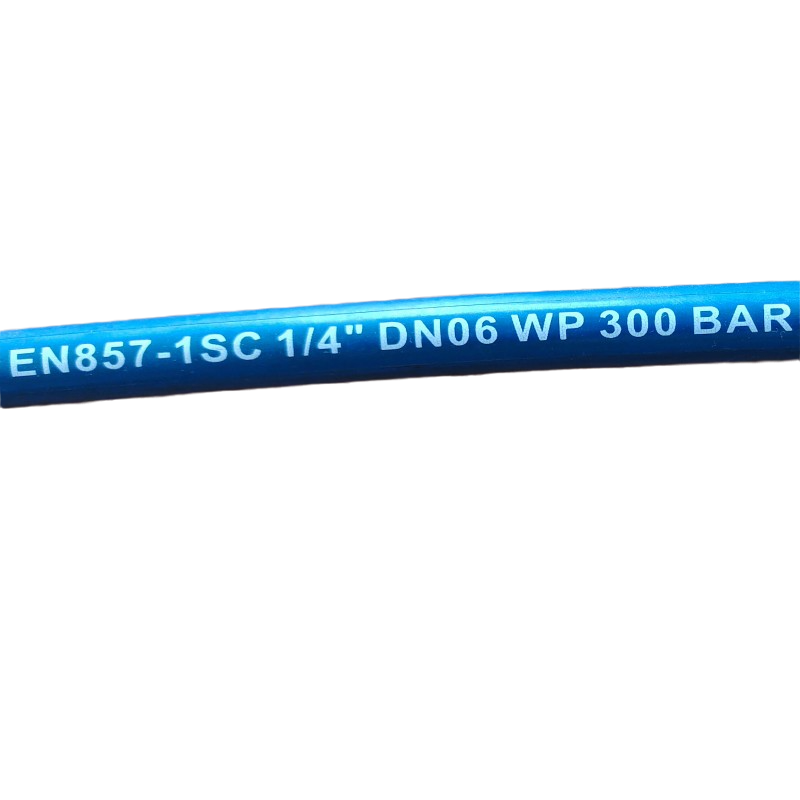
OEM six-wire spiral hydraulic hose is a reinforced flexible conduit designed for the transmission of hydraulic fluid under high pressure in demanding industrial applications. Positioned within the fluid power industry as a critical component in hydraulic systems, this hose provides a robust and reliable alternative to rigid piping, offering flexibility and ease of installation. Core performance characteristics include high pressure capability, resistance to abrasion and corrosion, and suitability for a wide range of hydraulic fluids. Its construction features multiple layers, including an inner tube compatible with diverse fluids, a high-tensile steel wire spiral reinforcement for pressure resistance, and an outer cover providing environmental protection. A key industry pain point addressed by these hoses is the need for dependable fluid conveyance in mobile machinery, construction equipment, and industrial processing environments, where failure can lead to significant downtime and safety hazards. This guide details the materials, manufacturing, performance, and maintenance considerations for OEM six-wire spiral hydraulic hose.
Material Science & Manufacturing
The manufacturing of OEM six-wire spiral hydraulic hose relies on a careful selection of materials and precise control of production processes. The inner tube is typically constructed from synthetic rubbers such as nitrile (NBR), ethylene propylene diene monomer (EPDM), or fluorocarbon (FKM) depending on fluid compatibility requirements. NBR offers excellent resistance to petroleum-based fluids, EPDM excels with phosphate ester fluids, and FKM provides superior resistance to a broader range of chemicals and high temperatures. The reinforcement layer consists of six high-tensile steel wires spirally wound around the inner tube. These wires are manufactured from carbon steel and undergo surface treatment (e.g., galvanization) to enhance corrosion resistance. The outer cover is typically made of chloroprene rubber (CR) for abrasion and weather resistance, or polyurethane (PU) for enhanced oil resistance and cut resistance.
Manufacturing begins with the extrusion of the inner tube, followed by the winding of the steel wire spiral reinforcement. Maintaining precise wire tension and pitch is critical for achieving the hose’s rated working pressure. The outer cover is then extruded over the reinforcement layer. Post-extrusion, the hose undergoes a curing process, typically involving heat and pressure, to vulcanize the rubber compounds and bond the layers together. Key parameters controlled during manufacturing include rubber compound formulation (polymer type, filler content, plasticizer concentration), wire diameter and tensile strength, winding tension, curing temperature, and curing time. Dimensional accuracy and layer adhesion are rigorously inspected throughout the process. Failure to maintain these parameters can result in premature failure, such as hose bursting or delamination.
Performance & Engineering
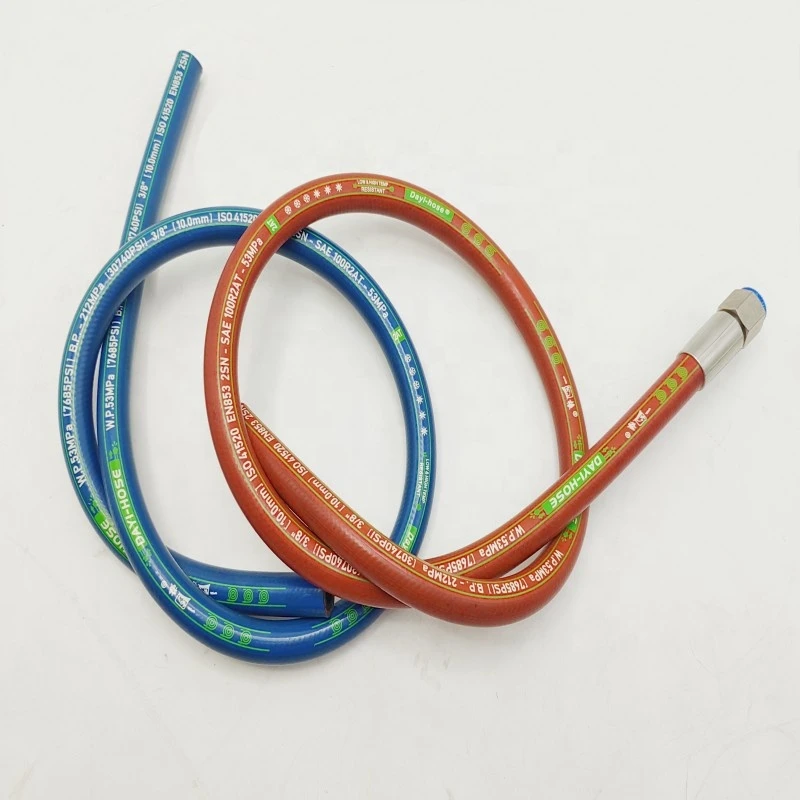
The performance of OEM six-wire spiral hydraulic hose is governed by several engineering principles. Burst pressure is a critical parameter, determined by the tensile strength of the steel wire reinforcement and the bond strength between layers. Working pressure is typically specified as a fraction of the burst pressure, with safety factors ranging from 3:1 to 4:1. Hose flexibility is influenced by the wire pitch and the elasticity of the rubber compounds. Fatigue life is a crucial consideration, especially in applications involving repeated flexing and pressure cycling. Finite element analysis (FEA) is often employed to model stress distribution within the hose under various loading conditions, optimizing the design for maximum durability.
Environmental resistance is also paramount. Exposure to ozone, ultraviolet (UV) radiation, and extreme temperatures can degrade the rubber compounds, reducing the hose’s lifespan. Chemical compatibility with the hydraulic fluid is essential to prevent swelling, softening, or cracking of the inner tube. Compliance requirements vary by region and application. For instance, SAE J517 standard specifies performance requirements for hydraulic hoses, including pressure rating, temperature range, and fluid compatibility. ISO 6897 provides similar standards in Europe. Proper hose assembly is vital for achieving optimal performance. Fittings must be securely crimped onto the hose, ensuring a leak-proof seal and maintaining the hose’s structural integrity. Incorrect crimping can lead to premature failure.
Technical Specifications
| Parameter | Unit | Specification Range | Test Standard |
|---|---|---|---|
| Working Pressure | MPa | 10 – 35 | SAE J517 |
| Burst Pressure | MPa | 30 – 105 | SAE J517 |
| Temperature Range | °C | -40 to +100 | SAE J517 |
| Inner Tube Material | - | NBR, EPDM, FKM | ASTM D2000 |
| Reinforcement Material | - | High-Tensile Steel Wire | ASTM A938 |
| Outer Cover Material | - | CR, PU | ASTM D2000 |
Failure Mode & Maintenance
OEM six-wire spiral hydraulic hose is susceptible to several failure modes. Fatigue cracking, initiated by repeated flexing and pressure cycling, can occur in the steel wire reinforcement, leading to hose rupture. Delamination, the separation of layers, can result from poor adhesion between the inner tube, reinforcement, and outer cover. Oxidation and ozone cracking can degrade the rubber compounds, reducing their elasticity and strength. Abrasion and cutting damage to the outer cover can expose the reinforcement to corrosion. Internal degradation of the inner tube can occur due to incompatible fluids or excessive temperatures.
Preventive maintenance is crucial for extending hose life. Regular visual inspections should be conducted to identify signs of wear, damage, or leakage. Hose routing should be optimized to minimize bending and abrasion. Proper fluid filtration is essential to remove contaminants that can accelerate wear. Hoses should be replaced at scheduled intervals or when signs of degradation are detected. When replacing hoses, it is essential to use compatible fittings and ensure proper crimping. Stored hoses should be protected from direct sunlight, ozone, and extreme temperatures. If a hose rupture occurs, the entire assembly should be replaced, not just the damaged section, to prevent catastrophic failure in the hydraulic system.
Industry FAQ
Q: What is the impact of hydraulic fluid type on hose selection?
A: Hydraulic fluid compatibility is paramount. Using an incompatible fluid can cause the inner tube to swell, soften, or crack, leading to leaks and failure. NBR is suitable for petroleum-based fluids, EPDM for phosphate ester fluids, and FKM for a broader range of fluids including those with aggressive chemical compositions. Always verify the fluid compatibility chart provided by the hose manufacturer.
Q: How does temperature affect hose performance?
A: Extreme temperatures can significantly impact hose performance. High temperatures accelerate the degradation of rubber compounds, reducing their elasticity and strength. Low temperatures can decrease flexibility, increasing the risk of cracking. Ensure the hose’s specified temperature range aligns with the operating conditions of the application.
Q: What are the key considerations for hose assembly?
A: Proper hose assembly is critical for ensuring a leak-proof seal and maintaining the hose’s structural integrity. Fittings must be of the correct size and type and must be securely crimped onto the hose using calibrated crimping equipment. Incorrect crimping can lead to premature failure.
Q: How can I identify early signs of hose failure?
A: Regular visual inspections can help identify early signs of failure. Look for cracks, blisters, abrasion, oil leaks, or discoloration of the rubber compounds. Also, check for kinks or twists in the hose. Any of these signs indicate that the hose should be replaced.
Q: What is the role of steel wire in a spiral hydraulic hose?
A: The steel wire spiral reinforcement provides the primary pressure-containing strength of the hose. The number of wires (in this case, six) and their tensile strength determine the hose’s maximum working and burst pressures. The spiral configuration also provides flexibility, allowing the hose to bend and maneuver within the application.
Conclusion
OEM six-wire spiral hydraulic hose represents a crucial element in numerous industrial and mobile hydraulic systems, offering a robust and flexible solution for fluid power transmission. Its performance is intrinsically linked to material selection, precise manufacturing control, and adherence to relevant industry standards. Understanding the potential failure modes and implementing proactive maintenance strategies are vital for maximizing service life and ensuring operational safety.
The continued development of advanced rubber compounds and reinforcement materials will likely lead to hoses with even higher pressure ratings, improved temperature resistance, and enhanced durability. Furthermore, advancements in non-destructive testing methods will enable more accurate assessment of hose condition, facilitating predictive maintenance and minimizing downtime. Properly specifying, installing, and maintaining these hoses is critical for the longevity and efficiency of hydraulic systems.