
Apr . 01, 2024 17:55 Back to list
oem single fiber braid hydraulic hose Performance Analysis

Introduction
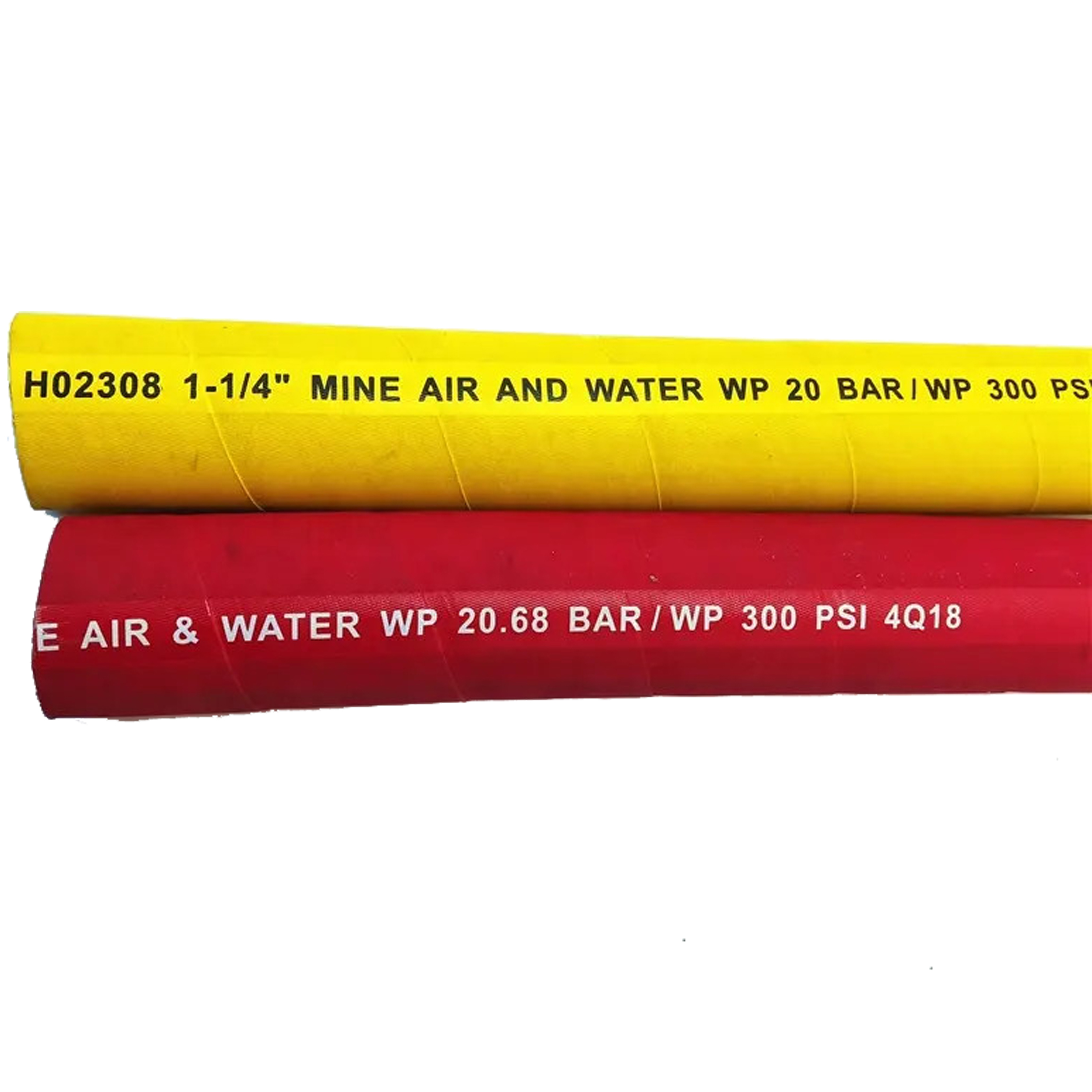
OEM single fiber braid hydraulic hose represents a critical component in fluid power systems across numerous industries, including construction, agriculture, and manufacturing. Positioned within the hydraulic system as the conduit for pressurized fluid, its performance directly impacts system efficiency, reliability, and safety. These hoses are characterized by a synthetic rubber inner tube, a single layer of high-tensile braided fiber reinforcement (typically polyester or aramid), and a durable outer cover designed to protect against abrasion, weathering, and chemical exposure. Core performance characteristics include burst pressure, working pressure, impulse pressure resistance, and flexibility. Addressing the industry's need for reliable fluid conveyance, these hoses offer a cost-effective solution where extreme pressures and temperatures are not paramount, filling a vital niche between low-pressure rubber hoses and high-performance multi-braid constructions. A common industry pain point is premature failure due to improper hose assembly, exceeding pressure ratings, or incompatibility with the conveyed fluid.
Material Science & Manufacturing
The construction of a single fiber braid hydraulic hose begins with the inner tube, typically composed of nitrile rubber (NBR) due to its excellent resistance to petroleum-based hydraulic fluids. NBR exhibits a glass transition temperature of approximately -40°C, allowing for flexibility in cold environments, though its temperature range is limited compared to fluoropolymers. The fiber braid reinforcement, generally polyester or aramid (like Kevlar), provides the tensile strength required to withstand internal pressure. Polyester offers good abrasion resistance and cost-effectiveness, while aramid provides superior strength-to-weight ratio and temperature resistance. The outer cover is usually a blend of synthetic rubbers like chloroprene (CR) for weathering and ozone resistance, or styrene-butadiene rubber (SBR) for general-purpose applications. Manufacturing involves extrusion of the inner tube, followed by precisely winding the fiber braid onto the tube using automated braiding machines. Braid angle and fiber tension are critical parameters – typically between 55° and 70° for optimal performance. The final stage involves extrusion of the outer cover, followed by vulcanization (curing) to cross-link the rubber compounds and achieve desired physical properties. Precise control of temperature, pressure, and cure time during vulcanization is essential to ensure uniform material properties and prevent defects like voids or incomplete curing. Chemical compatibility between the inner tube, reinforcement, and outer cover is verified through accelerated aging tests and fluid resistance studies.
Performance & Engineering
The performance of a single fiber braid hydraulic hose is fundamentally governed by the principles of thin-walled pressure vessel theory. The burst pressure is calculated based on the internal radius, wall thickness, fiber tensile strength, and braid angle. A safety factor, typically 4:1, is applied to determine the working pressure. Impulse pressure resistance, critical in systems with pulsating flows, depends on the elasticity of the hose and the damping characteristics of the fluid. Finite element analysis (FEA) is commonly employed to model stress distributions within the hose under various loading conditions, including internal pressure, bending, and axial tension. Environmental resistance is assessed through exposure to temperature extremes, ozone, UV radiation, and various hydraulic fluids. Compliance requirements, such as those stipulated by SAE J517, dictate acceptable performance limits for pressure, temperature, and fluid compatibility. Hose flexibility is engineered through careful selection of rubber compounds and braid construction, balancing flexibility with strength. The industry faces challenges related to minimizing weight while maintaining adequate pressure ratings and ensuring long-term durability in demanding applications. Proper hose assembly, including correct fitting selection and crimping procedures, is vital for realizing optimal performance and preventing premature failure. Force analysis considers hoop stress and longitudinal stress, with fiber reinforcement primarily resisting hoop stress, and the rubber matrix providing support and preventing deformation.
Technical Specifications
| Parameter | Unit | Typical Value (Polyester Braid) | Typical Value (Aramid Braid) |
|---|---|---|---|
| Working Pressure | PSI | 1500 | 2200 |
| Burst Pressure | PSI | 6000 | 8800 |
| Temperature Range | °F | -40 to +212 | -40 to +250 |
| Inner Tube Material | - | Nitrile Rubber (NBR) | Nitrile Rubber (NBR) |
| Reinforcement Material | - | Polyester Fiber | Aramid Fiber |
| Outer Cover Material | - | Chloroprene Rubber (CR) | Chloroprene Rubber (CR) |
Failure Mode & Maintenance
Single fiber braid hydraulic hoses are susceptible to several failure modes. Fatigue cracking, initiated by repeated flexing and pressure cycling, is a common issue, particularly near the fitting connections. Delamination, or separation of the braid from the inner tube, can occur due to insufficient adhesion or chemical attack. Abrasion of the outer cover leads to reinforcement exposure and subsequent corrosion or damage. Oxidation and degradation of the rubber compounds, accelerated by heat, ozone, and UV radiation, reduce flexibility and strength. Improper installation – over-tightening or under-tightening of fittings – can cause premature failure at the connection points. Kinking, caused by excessive bending, can restrict flow and lead to localized stress concentrations. Maintenance involves regular visual inspection for signs of abrasion, cracking, or leakage. Hoses should be replaced if any damage is detected. Proper storage, away from direct sunlight and extreme temperatures, is essential to prolong service life. Fluid compatibility should be verified to prevent chemical attack. Periodic pressure testing can identify potential weaknesses before catastrophic failure. Correct fitting selection and professional crimping are vital preventative measures. Failure analysis often reveals root causes related to exceeding pressure ratings, incompatible fluids, or improper assembly procedures.
Industry FAQ
Q: What is the primary difference between a single fiber braid hose and a two-fiber braid hose in terms of operational capabilities?
A: A two-fiber braid hose offers significantly higher pressure ratings and improved impulse pressure resistance compared to a single-fiber braid hose. The additional braid layer provides greater tensile strength and structural integrity. While a single-fiber braid hose is suitable for lower-pressure applications, a two-fiber braid hose is necessary for demanding systems with higher operating pressures or frequent pressure surges.
Q: How does the choice of inner tube material impact the hose's suitability for different hydraulic fluids?
A: The inner tube material must be chemically compatible with the hydraulic fluid. Nitrile Rubber (NBR) is commonly used for petroleum-based fluids, but it's not suitable for phosphate ester fluids. For these, specialized materials like fluoropolymers (e.g., PTFE) are required. Incompatibility can lead to swelling, degradation, and ultimately, hose failure.
Q: What factors contribute to hose kinking, and how can it be prevented?
A: Kinking occurs when the hose is bent beyond its minimum bend radius, causing internal collapse and flow restriction. Contributing factors include tight routing, insufficient support, and low operating temperatures. Prevention involves ensuring adequate bend radii, providing proper hose support, and avoiding sharp turns.
Q: What is the correct procedure for crimping hose fittings, and why is it critical?
A: Proper crimping involves using the correct die size and crimping machine settings specific to the hose and fitting combination. It ensures a leak-proof seal and prevents fitting blow-off. Improper crimping – under-crimping or over-crimping – can compromise the hose's integrity and lead to premature failure.
Q: How important is the outer cover material in determining the hose's lifespan and operational reliability?
A: The outer cover provides crucial protection against abrasion, weathering, ozone, and chemical exposure. A durable outer cover extends the hose's lifespan and prevents damage to the reinforcement layer. Chloroprene rubber (CR) is a common choice for its excellent resistance to these environmental factors.
Conclusion
OEM single fiber braid hydraulic hose represents a fundamental element in a wide range of hydraulic systems, offering a balance of performance, cost-effectiveness, and flexibility. Its performance is dictated by material selection, manufacturing precision, and adherence to industry standards. Understanding the hose’s limitations – particularly regarding pressure and temperature – is critical for ensuring safe and reliable operation.
Proper installation, regular inspection, and preventative maintenance are paramount to maximizing service life and preventing catastrophic failures. Future developments in hose technology will likely focus on improving material properties, enhancing durability, and developing more robust designs to meet the demands of increasingly complex and challenging applications.