
Apr . 01, 2024 17:55 Back to list
oem sae100r9 Performance Analysis
Introduction
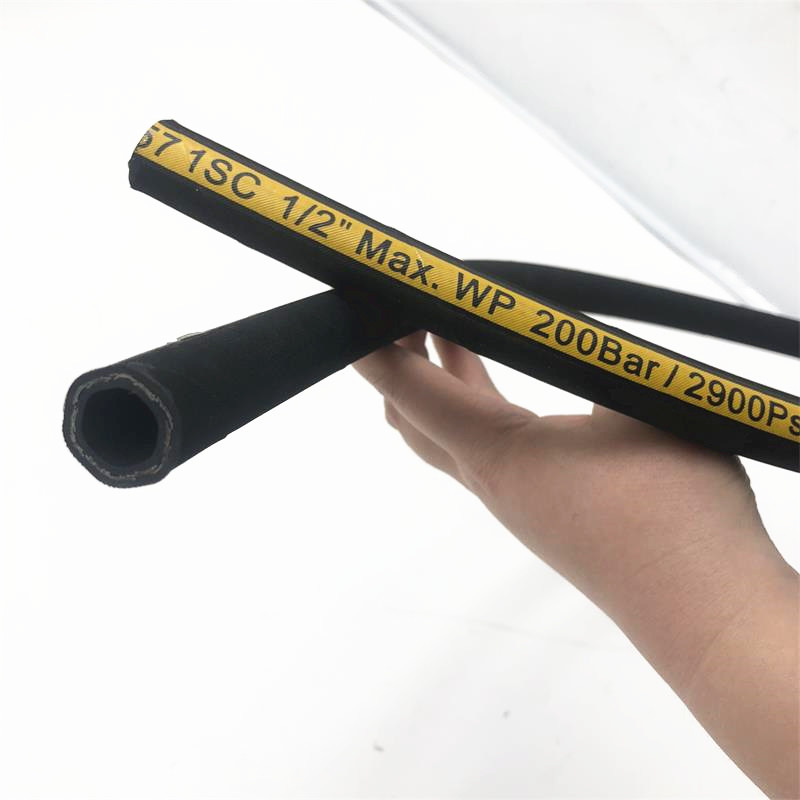
OEM SAE100R9 hose represents a critical component in hydraulic fluid power transmission systems across diverse industries, including construction, agriculture, material handling, and manufacturing. Classified under the Society of Automotive Engineers (SAE) standard 100R9, this hose is designed for continuous pressure applications utilizing petroleum-based hydraulic fluids. Its defining characteristic is a multi-spiral high-tensile steel wire reinforcement encased within an oil-resistant rubber cover and inner tube. This construction delivers exceptional flexibility, high-pressure capacity, and durability under demanding operating conditions. Within the industry chain, SAE100R9 hose occupies a position downstream from raw material suppliers (rubber compounds, steel wire), and upstream from hydraulic machinery manufacturers and end-users. Core performance characteristics include burst pressure resistance, working pressure rating, temperature range compatibility, and resistance to fluid degradation. Understanding these parameters is paramount for ensuring system safety and operational efficiency.
Material Science & Manufacturing
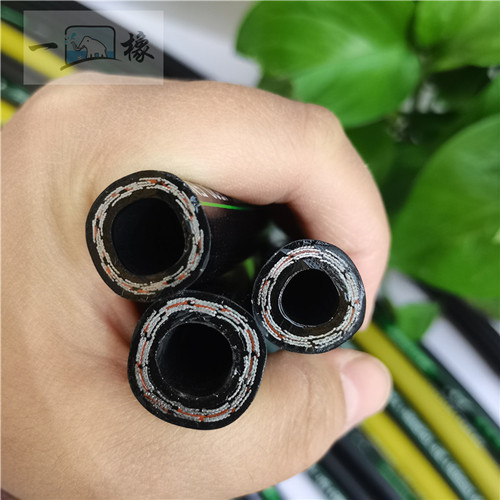
The SAE100R9 hose is fundamentally constructed from three primary material components: the inner tube, the reinforcement layer, and the outer cover. The inner tube typically utilizes a nitrile rubber (NBR) compound, selected for its exceptional resistance to petroleum-based hydraulic fluids, abrasion, and temperature fluctuations. NBR’s chemical structure (acrylonitrile-butadiene copolymer) imparts this fluid compatibility. The degree of acrylonitrile content within the NBR compound directly correlates with oil resistance; higher acrylonitrile levels provide improved resistance but can reduce low-temperature flexibility. The reinforcement layer consists of multiple spirals of high-tensile steel wire, specifically drawn and treated steel conforming to standards like ASTM A228. The steel wire provides the hose’s pressure-withstanding capability. Wire diameter, spiral pitch, and the number of spirals are meticulously controlled during manufacturing to achieve specific pressure ratings. The outer cover is typically composed of a synthetic rubber, often chloroprene (CR – Neoprene), chosen for its excellent resistance to ozone, weathering, abrasion, and oil. CR provides a protective barrier against external environmental factors.
The manufacturing process begins with inner tube extrusion, where the NBR compound is forced through a die to create a seamless tube. This is followed by the winding of the steel wire reinforcement layer onto the inner tube using specialized winding machines. Precise tension control during winding is crucial to maintain uniform reinforcement distribution and prevent stress concentrations. Subsequently, the outer cover is extruded over the reinforcement layer. A critical parameter is vulcanization – a chemical process involving heat and pressure – to crosslink the rubber polymers in both the inner tube and outer cover, enhancing their elasticity, strength, and resistance to degradation. Post-vulcanization, the hose undergoes rigorous testing for dimensional accuracy, pressure resistance, and fluid compatibility. Quality control at each stage ensures adherence to SAE100R9 specifications.
Performance & Engineering
The performance of SAE100R9 hose is dictated by its ability to withstand internal pressure, external forces, and environmental stressors. Force analysis centers on hoop stress within the hose wall due to internal fluid pressure. Hoop stress (σ) is calculated using the formula σ = (P r) / t, where P is the internal pressure, r is the inner radius of the hose, and t is the wall thickness. The steel wire reinforcement significantly contributes to resisting this hoop stress, preventing hose expansion and rupture. The hose's flexibility is determined by its bend radius, which must be maintained within specified limits to avoid kinking or internal damage. Environmental resistance is critical; exposure to elevated temperatures can degrade the rubber compounds, reducing their elasticity and increasing the risk of failure. Conversely, low temperatures can cause the rubber to become brittle. Hydraulic fluid compatibility is paramount, as incompatible fluids can cause swelling, softening, or cracking of the inner tube. Compliance with SAE100R9 mandates rigorous testing, including burst pressure testing (typically four times the working pressure), impulse testing (simulating pulsating pressure), and temperature cycling. Furthermore, proper hose fitting selection and installation techniques (e.g., correct crimp pressure) are essential for optimal performance and preventing leaks or failures.
Technical Specifications
| Parameter | Unit | SAE 100R9 Specification | Typical Value (OEM SAE100R9) |
|---|---|---|---|
| Working Pressure | MPa | Up to 35 | 31.5 |
| Burst Pressure | MPa | ≥ 4 x Working Pressure | 126 |
| Inner Tube Material | - | Nitrile Rubber (NBR) | NBR |
| Reinforcement | - | Multiple High-Tensile Steel Wire Spirals | 6 Spiral |
| Outer Cover Material | - | Chloroprene (CR – Neoprene) | CR |
| Temperature Range | °C | -40 to +100 | -40 to +121 |
| Minimum Bend Radius | mm | 4D (D = Hose ID) | 4D |
Failure Mode & Maintenance
SAE100R9 hoses are susceptible to various failure modes under prolonged use and adverse conditions. Fatigue cracking, often initiated at the bend radius, occurs due to repeated flexing and pressure cycles, leading to the formation of microcracks that propagate over time. Delamination, the separation of the layers (inner tube, reinforcement, cover), can occur due to inadequate bonding during manufacturing or exposure to incompatible fluids. Oxidation of the rubber compounds, accelerated by exposure to ozone and UV radiation, causes hardening and cracking of the cover. Abrasion from external contact with surfaces or rubbing against other components erodes the cover, exposing the reinforcement layer and increasing the risk of corrosion. Internal degradation of the inner tube occurs when exposed to fluids exceeding temperature limits or incompatible fluids, leading to swelling, softening, or cracking. External corrosion of the steel wire reinforcement can occur in humid environments, weakening the hose's structural integrity.
Preventive maintenance is crucial for extending the service life of SAE100R9 hoses. Regular visual inspections should be conducted to identify signs of cracking, abrasion, swelling, or leakage. The hose should be protected from extreme temperatures, direct sunlight, and exposure to corrosive chemicals. Proper hose routing and support are essential to prevent excessive bending and abrasion. Fluid compatibility should be verified before use, and the hydraulic fluid should be maintained within its recommended specifications. When replacing hoses, ensure the new hose meets or exceeds the original specifications and that the fittings are properly crimped. A scheduled replacement program based on operating hours or calendar time is recommended to mitigate the risk of unexpected failures. Records of inspections and replacements should be maintained for traceability.
Industry FAQ
Q: What is the significance of the 'R9' designation in SAE100R9, and how does it differ from other SAE hydraulic hose standards like R1 or R2?
A: The 'R9' designation signifies a multi-spiral reinforced hose intended for high-pressure applications and superior flexibility. Unlike SAE100R1 (single braid) and R2 (two-braid) hoses, R9 utilizes multiple spirals of high-tensile wire. This results in a significantly higher pressure capacity and improved resistance to kinking and bending, but typically at a higher cost. R1 and R2 are suitable for lower-pressure systems where flexibility is less critical.
Q: What impact does fluid temperature have on the performance and lifespan of an SAE100R9 hose?
A: Fluid temperature directly affects the rubber compounds’ elasticity and resistance to degradation. Exceeding the maximum operating temperature (typically +100°C or +121°C for OEM versions) causes the rubber to harden and lose flexibility, increasing the risk of cracking and failure. Conversely, operating at temperatures below the minimum (-40°C) can make the rubber brittle and prone to damage during bending. Maintaining the fluid temperature within the specified range is crucial.
Q: What are the critical considerations when selecting hose fittings for an SAE100R9 hose?
A: Selecting compatible fittings is paramount. Fittings must be specifically designed for SAE100R9 hoses and have the correct crimp size and geometry to ensure a secure, leak-proof connection. Using incorrect fittings can lead to premature failure, even if the hose itself is in good condition. Fittings must also be made of materials compatible with the hydraulic fluid being used to prevent corrosion or degradation.
Q: How can we effectively prevent abrasion damage to the outer cover of an SAE100R9 hose?
A: Implementing protective measures is essential. This includes routing the hose away from sharp edges, moving parts, and abrasive surfaces. Utilizing hose guards, sleeves, or clamps provides physical protection against abrasion. Regular inspections to identify and address potential abrasion hazards are also crucial. Ensuring proper hose support to prevent chafing against other components is vital.
Q: What is the recommended procedure for storing unused SAE100R9 hose to maximize its shelf life?
A: Unused hose should be stored in a cool, dry, and dark environment, away from direct sunlight, ozone sources (like electric motors), and excessive heat. The hose should be coiled loosely and stored horizontally, avoiding any tension or compression. Regularly rotating the stock ensures that older hoses are used first, minimizing the risk of degradation due to prolonged storage.
Conclusion
The OEM SAE100R9 hose stands as a robust and reliable solution for high-pressure hydraulic fluid conveyance. Its multi-spiral steel wire reinforcement, coupled with carefully selected rubber compounds, delivers exceptional performance and durability. However, realizing its full potential necessitates a comprehensive understanding of its material properties, manufacturing processes, and operational limitations. Proper selection, installation, and maintenance are vital to preventing premature failures and ensuring the longevity of the hose within demanding industrial applications.
Looking ahead, advancements in materials science will likely lead to the development of even more durable and chemically resistant rubber compounds for SAE100R9 hose, enhancing its performance in extreme environments. Furthermore, the integration of sensor technology within the hose structure could enable real-time monitoring of pressure, temperature, and internal condition, facilitating predictive maintenance and minimizing downtime. Continuous adherence to industry standards like SAE100R9, along with a proactive approach to maintenance, will remain paramount in ensuring the safe and efficient operation of hydraulic systems.

