
Apr . 01, 2024 17:55 Back to list
oem sae100r8 Technical Analysis
Introduction
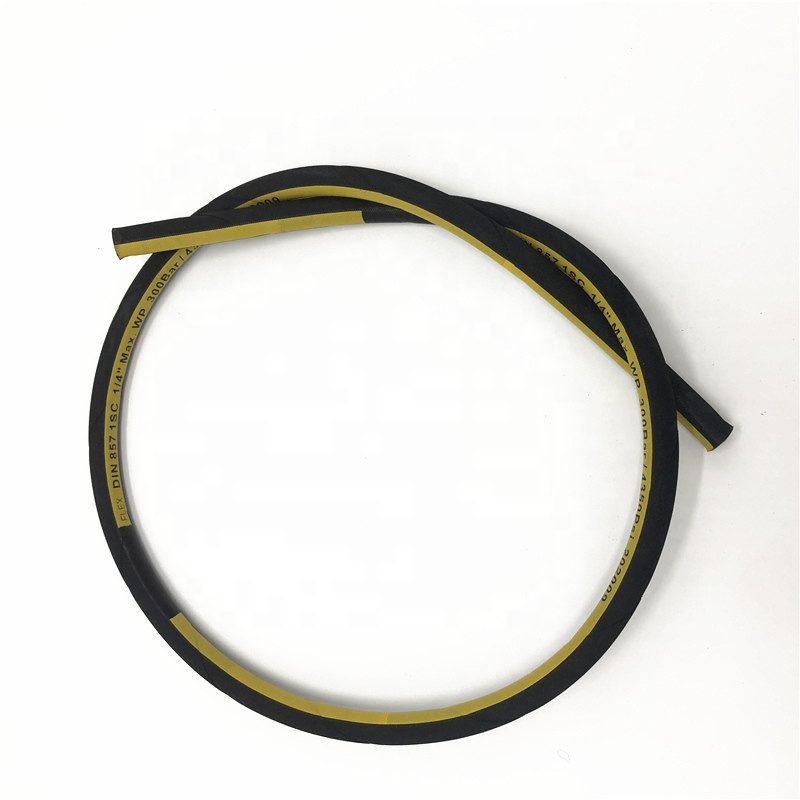
OEM SAE100R8 hose refers to hydraulic hose assemblies manufactured to meet the specifications defined by the Society of Automotive Engineers (SAE) standard J100R8. This standard dictates the requirements for non-synthetic, oil-resistant hoses with a two-braid reinforcement, typically used for medium-pressure hydraulic systems. Positioned within the fluid power industry, SAE100R8 hoses serve as a crucial component in transferring hydraulic fluid to power machinery across diverse sectors, including construction, agriculture, industrial manufacturing, and mobile equipment. Core performance characteristics include burst pressure resistance, impulse pressure capacity, temperature range, and fluid compatibility. A key challenge in this sector revolves around ensuring consistent quality and adherence to the SAE standard across numerous OEM suppliers, leading to concerns about counterfeit products and premature hose failure. This guide provides an in-depth technical analysis of SAE100R8 hose, covering its material science, manufacturing processes, performance characteristics, failure modes, and relevant industry standards.
Material Science & Manufacturing
SAE100R8 hoses typically consist of four key layers: an inner tube, inner reinforcement, two braids, and an outer cover. The inner tube is commonly constructed from nitrile rubber (NBR), known for its excellent resistance to petroleum-based fluids. NBR’s properties are directly related to its acrylonitrile content; higher acrylonitrile content increases oil resistance but decreases flexibility at low temperatures. The inner reinforcement layer, typically a synthetic fiber braid, provides initial pressure resistance and supports the braids. The two braids are usually steel wire, high-tensile strength steel being paramount. The steel wire undergoes a drawing process to achieve the required diameter and strength, followed by galvanization for corrosion protection. Outer cover materials are generally made of synthetic rubber such as chloroprene (CR) or EPDM, offering abrasion, weather, and ozone resistance. Manufacturing involves extrusion of the inner tube, application of reinforcement layers via spiraling or braiding machines, and extrusion of the outer cover. Critical parameters include braid angle, tension control during braiding, and vulcanization temperature/time. Improper vulcanization leads to incomplete cross-linking of the rubber compounds, resulting in reduced mechanical properties and fluid resistance. Consistent dimensional control throughout the extrusion process is vital to maintain burst pressure specifications. Material traceability and certification of raw materials are fundamental for ensuring compliance and quality.
Performance & Engineering
The performance of SAE100R8 hose is dictated by its ability to withstand internal pressure, external damage, and environmental factors. Burst pressure, specified in the SAE J100R8 standard, is determined through hydrostatic testing. Impulse pressure resistance is crucial for applications with pulsating flow; this is assessed through repeated pressure cycling tests. The hose's ability to maintain flexibility over a wide temperature range (-40°C to +100°C) is critical for reliable operation. Force analysis during bending reveals that excessive bending radius places stress on the reinforcement braids, leading to potential fatigue failure. The hose's chemical compatibility with various hydraulic fluids (mineral oils, synthetic fluids, water-glycol fluids) is paramount, as incompatible fluids can cause swelling, degradation, or cracking. Compliance requirements include REACH and RoHS regulations, restricting the use of hazardous substances. Proper hose assembly, including correct crimping, is critical; under-crimping leads to leakage, while over-crimping damages the reinforcement and reduces burst pressure. Finite element analysis (FEA) is often employed to optimize hose design and predict stress distribution under various loading conditions. The selection of appropriate end fittings is also essential, with considerations for thread type, material compatibility, and pressure rating.
Technical Specifications
| Parameter | Unit | Typical Value (SAE100R8) | Test Standard |
|---|---|---|---|
| Minimum Burst Pressure | MPa | 8.3 | SAE J100R8 |
| Working Pressure | MPa | 2.1 | SAE J100R8 |
| Minimum Bend Radius | mm | 400 (for 3/4" ID hose) | SAE J100R8 |
| Temperature Range | °C | -40 to +100 | SAE J100R8 |
| Inner Tube Material | - | Nitrile Rubber (NBR) | SAE J100R8 |
| Reinforcement | - | Two Steel Wire Braids | SAE J100R8 |
| Outer Cover Material | - | Chloroprene (CR) or EPDM | SAE J100R8 |
Failure Mode & Maintenance
Common failure modes for SAE100R8 hose include burst failure due to exceeding pressure limits, fatigue cracking from repeated bending or impulse pressure, abrasion of the outer cover leading to reinforcement exposure, and fluid permeation causing swelling and degradation. Failure analysis often reveals that cracks initiate at braid crossover points or at defects in the inner tube. Corrosion of steel wire reinforcement, particularly in harsh environments, significantly reduces hose strength. Oxidation of the rubber compounds, accelerated by high temperatures and exposure to ozone, causes hardening and cracking. Regular inspection is crucial, focusing on identifying cuts, abrasions, bulges, kinks, and leaks. Proper hose routing, avoiding sharp bends and contact with abrasive surfaces, extends service life. Maintenance involves periodically checking crimp connections for tightness and ensuring compatibility of hydraulic fluid. When replacing a hose, it is critical to use fittings that meet or exceed the pressure rating of the hose and to follow proper assembly procedures. A preventative maintenance schedule, including routine visual inspections and pressure testing, minimizes the risk of catastrophic failure. Documentation of hose history, including manufacturing date, service conditions, and inspection records, is highly recommended.
Industry FAQ
Q: What is the difference between SAE100R8 and SAE100RAT hose?
A: SAE100RAT hose incorporates an abrasion-resistant thermoplastic outer cover compared to the synthetic rubber cover of SAE100R8. This makes RAT hose superior in applications exposed to severe abrasion, such as road construction equipment. RAT hose generally has a lower operating temperature range but offers significantly enhanced abrasion resistance.
Q: How does temperature affect the performance of SAE100R8 hose?
A: Operating outside the specified temperature range (-40°C to +100°C) can drastically reduce hose life. High temperatures accelerate rubber degradation and decrease burst pressure. Low temperatures decrease flexibility and increase the risk of cracking. Hydraulic fluid viscosity also changes with temperature, impacting system performance.
Q: What is the impact of improper crimping on hose assembly?
A: Improper crimping is a leading cause of hose failures. Under-crimping leads to leakage around the fitting, while over-crimping damages the reinforcement braids, reducing the hose’s burst pressure and increasing susceptibility to fatigue failure. Accurate crimp specifications and calibrated crimping tools are essential.
Q: Can SAE100R8 hose be used with synthetic hydraulic fluids?
A: While NBR inner tubes offer good compatibility with mineral oils, compatibility with synthetic fluids (e.g., phosphate ester, silicone) must be verified. Some synthetic fluids can cause swelling or degradation of the NBR, leading to premature failure. Consult the fluid manufacturer’s compatibility chart.
Q: How do I identify counterfeit SAE100R8 hose?
A: Counterfeit hoses often exhibit poor construction quality, inconsistent markings, and substandard materials. Look for clear and accurate SAE markings, consistent braid density, and proper labeling. Verify the manufacturer’s credentials and purchase from authorized distributors.
Conclusion
The SAE100R8 hydraulic hose remains a fundamental component in a broad range of industrial applications, offering a reliable and cost-effective solution for medium-pressure hydraulic systems. A thorough understanding of its material science, manufacturing processes, and performance characteristics is critical for ensuring proper selection, installation, and maintenance. Addressing industry challenges related to counterfeit products and ensuring adherence to stringent quality control measures are vital for maximizing hose longevity and minimizing the risk of catastrophic failure.
Future advancements in hydraulic hose technology will likely focus on developing materials with enhanced temperature resistance, abrasion resistance, and chemical compatibility, as well as incorporating smart sensor technologies for real-time monitoring of hose condition. Continued adherence to industry standards and best practices will be paramount in maintaining the reliability and safety of hydraulic systems relying on SAE100R8 and its successor hose types.

