
Apr . 01, 2024 17:55 Back to list
oem sae100r5 Hydraulic Hose Performance Analysis
Introduction
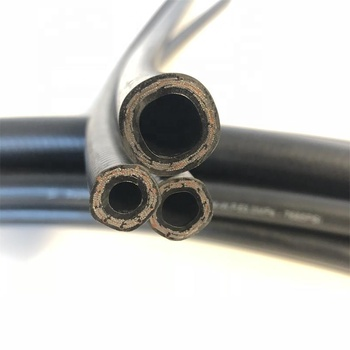
OEM SAE100R5 hose represents a critical component in hydraulic fluid conveyance systems across a diverse range of industrial and mobile applications. Classified under the Society of Automotive Engineers (SAE) J517 standard, this hose is characterized by its synthetic rubber construction, typically incorporating a blend of nitrile rubber (NBR) for inner tube compatibility with petroleum-based hydraulic fluids, reinforced with multiple layers of high-tensile steel wire for pressure resistance, and protected by an abrasion-resistant synthetic rubber cover. Its position in the industrial chain is as a vital link between hydraulic power sources – pumps, valves, and actuators – enabling the efficient and reliable transmission of fluid power. Core performance characteristics include its working pressure capacity (ranging typically from 1000 to 5000 PSI depending on construction), temperature range (typically -40°C to +100°C), and resistance to hydraulic fluid degradation. A key pain point in the industry is maintaining hose integrity under dynamic loading and prolonged exposure to harsh environmental conditions. Premature hose failure leads to costly downtime, fluid leaks, and potential safety hazards.
Material Science & Manufacturing
The core material for the inner tube of SAE100R5 hose is typically Nitrile Rubber (NBR), selected for its excellent resistance to petroleum-based hydraulic fluids, abrasion, and aging. NBR’s acrylonitrile content dictates its oil resistance – higher acrylonitrile content enhances resistance but decreases flexibility at low temperatures. The reinforcement layer comprises multiple spirals of high-tensile steel wire, often coated with zinc for corrosion protection. Steel wire grade and ply configuration directly impact the hose’s burst pressure and flexibility. The cover material is commonly a synthetic rubber compound, often a blend of Chloroprene (CR) and NBR, chosen for abrasion resistance, weather resistance (ozone and UV exposure), and oil resistance. Manufacturing involves several key processes. The inner tube is extruded through a die to achieve the desired inner diameter and wall thickness. Steel wire is then spirally wound around the extruded tube, meticulously controlling pitch and tension to achieve the target pressure rating. The cover is subsequently extruded over the reinforced tube, followed by vulcanization – a curing process using heat and pressure to crosslink the rubber polymers, enhancing strength, elasticity, and resistance to chemical degradation. Critical parameters include extrusion temperature, vulcanization time and temperature, wire tension, and dimensional accuracy. Variations in these parameters directly impact hose performance and longevity. Proper control requires automated process monitoring and rigorous quality control testing at each stage.
Performance & Engineering
Performance of SAE100R5 hose is fundamentally governed by force analysis under pressure. The hoop stress within the rubber tube and the tensile stress within the steel wire reinforcement are critical parameters. Hoop stress, determined by the formula σ = (P D) / (2 t) where P is pressure, D is inner diameter, and t is wall thickness, dictates the burst pressure capability. Steel wire’s tensile strength and yield strength define its ability to withstand longitudinal stress. The hose’s flexibility is inversely proportional to the number of wire spirals and the wire diameter. Environmental resistance is paramount. Hydraulic fluids can degrade rubber compounds over time, leading to swelling, softening, and cracking. Temperature extremes affect both the rubber’s flexibility and the steel wire’s strength. Ozone and UV exposure can cause surface cracking and degradation of the cover material. Compliance requirements are stringent. SAE J517 dictates minimum performance criteria for pressure ratings, temperature range, and impulse testing (resistance to repeated pressure pulses). EN 856 and DIN EN 856 are European equivalents. Functional implementation necessitates careful consideration of hose assembly techniques. Improper crimping of hose ends can compromise the seal and lead to leakage or failure. Correct fitting selection is also crucial to ensure compatibility with the hose end and the hydraulic system.
Technical Specifications
| Parameter | Unit | SAE 100R5 (Typical) | SAE 100R5 AT (Typical) |
|---|---|---|---|
| Working Pressure | PSI | 2000 | 2500 |
| Burst Pressure | PSI | 8000 | 10000 |
| Temperature Range | °C | -40 to +100 | -40 to +121 |
| Inner Tube Material | - | NBR | NBR |
| Reinforcement | Layers | Multiple Steel Wire Spiral | Multiple Steel Wire Spiral |
| Cover Material | - | CR/NBR Blend | CR/NBR Blend |
Failure Mode & Maintenance
Common failure modes for SAE100R5 hose include fatigue cracking due to repeated flexing and pressure pulsations. This often initiates at the inner tube/reinforcement interface. Another frequent failure is hose end separation due to improper crimping or corrosion of the fitting. External abrasion can degrade the cover, exposing the reinforcement to corrosion. Internal degradation of the rubber due to incompatible hydraulic fluids or high temperatures can cause swelling, softening, and cracking. Oxidation of the rubber due to prolonged exposure to air and ozone can also lead to premature failure. Delamination – separation of the layers within the hose wall – is less common but can occur due to manufacturing defects or prolonged exposure to harsh chemicals. Maintenance is critical for extending hose life. Regular visual inspections should identify any signs of cracking, abrasion, or swelling. Pressure testing should be performed periodically to check for leaks. Hose assemblies should be replaced if any damage is detected. Correct fluid compatibility should be ensured. Avoid exceeding the hose's working pressure or temperature limits. Proper storage conditions – avoiding direct sunlight and extreme temperatures – are also important. Periodic cleaning removes contaminants that can accelerate degradation.
Industry FAQ
Q: What is the difference between SAE 100R5 and SAE 100R5 AT hose?
A: SAE 100R5 AT hose offers an extended temperature range, typically up to +121°C, compared to standard SAE 100R5. The "AT" designation signifies "Automotive Technology" and indicates improved heat and oil resistance, making it suitable for more demanding applications.
Q: How does the number of wire spirals affect hose performance?
A: Increasing the number of wire spirals generally increases the hose’s pressure rating but reduces its flexibility. A higher spiral count provides greater reinforcement but makes bending more difficult. Hose selection involves a trade-off between pressure capacity and flexibility based on the application's requirements.
Q: What is the best way to prevent hose end separation?
A: Proper crimping is paramount. The correct crimp size and type must be selected based on the hose and fitting specifications. Regular inspection of crimp connections for corrosion or damage is also crucial. Using corrosion-resistant fittings can extend service life.
Q: Can I use SAE 100R5 hose with biodegradable hydraulic fluids?
A: Generally, no. Most biodegradable hydraulic fluids are incompatible with NBR rubber. Using incompatible fluids will cause the inner tube to swell, soften, and degrade, leading to premature failure. Specialty hoses with alternative inner tube materials (e.g., FKM) are required for biodegradable fluids.
Q: What is the typical service life of an SAE 100R5 hose?
A: Service life varies significantly depending on the application, operating conditions, and maintenance practices. Under ideal conditions, a well-maintained SAE 100R5 hose can last 5-7 years. However, in harsh environments or with improper use, the lifespan can be considerably shorter. Regular inspection is key to identifying potential problems before they lead to failure.
Conclusion
The OEM SAE100R5 hose remains a cornerstone of hydraulic systems, offering a balance of pressure capacity, flexibility, and cost-effectiveness. Understanding its material science, manufacturing processes, and performance characteristics is vital for selecting the appropriate hose for specific applications and ensuring reliable operation. Careful attention to potential failure modes and proactive maintenance practices are essential for maximizing service life and minimizing downtime.
Future advancements in hose technology are likely to focus on developing more durable rubber compounds, improving reinforcement materials, and incorporating smart monitoring systems to detect early signs of degradation. These developments will enhance hose reliability, reduce environmental impact, and contribute to safer and more efficient hydraulic systems.