
Apr . 01, 2024 17:55 Back to list
oem sae100r13 Hydraulic Hose Performance Analysis

Introduction
OEM SAE100R13 hose designates a hydraulic hose conforming to the Society of Automotive Engineers (SAE) J517 standard, specifically the R13 type. It's a critical component within fluid power systems, functioning as a flexible conduit for the transmission of hydraulic fluid to operate machinery. Its positioning within the industry chain is as a key downstream component, reliant on upstream production of synthetic rubber compounds, reinforcement materials (typically steel wire), and fitting manufacturers. Core performance characteristics of SAE100R13 hoses include high working pressure capability (typically up to 3000 psi), broad temperature range compatibility (-40°C to +100°C), and resistance to hydraulic fluids commonly employed in industrial, mobile hydraulic, and agricultural applications. The selection criteria for SAE100R13 hinges on factors like fluid compatibility, pressure requirements, operating temperature, and bend radius, and is often a direct replacement component dictated by OEM specifications. A crucial industry pain point is ensuring consistent adherence to the SAE J517 standard across different manufacturers, particularly regarding dimensional accuracy and burst pressure ratings, to prevent system failures and maintain operational safety.
Material Science & Manufacturing
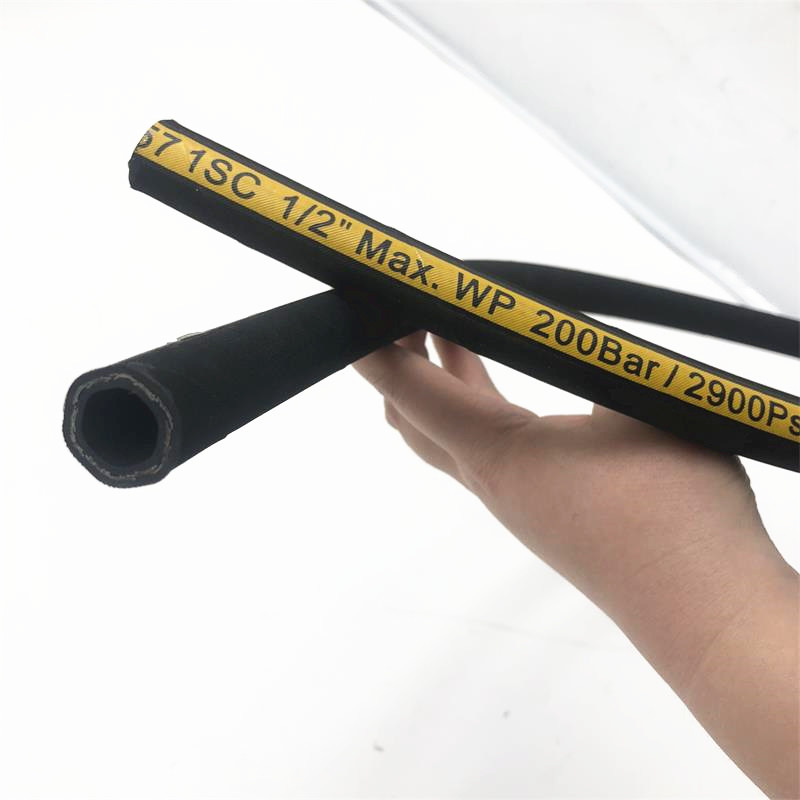
SAE100R13 hose construction fundamentally involves three key material groups: the inner tube, the reinforcement layer, and the outer cover. The inner tube is commonly composed of nitrile rubber (NBR), known for its excellent resistance to petroleum-based hydraulic fluids, water, and abrasion. However, variations using polychloroprene (CR) or other specialized elastomers are utilized for specific fluid compatibility requirements (e.g., phosphate ester fluids). NBR’s physical properties include a hardness range of 40-90 Shore A, tensile strength of 15-30 MPa, and an elongation at break of 200-500%. The reinforcement layer is almost exclusively constructed from multiple layers of high-tensile steel wire, providing the hose’s pressure-withstanding capability. Wire diameter, ply count, and winding angle are critical parameters, directly impacting burst pressure and fatigue life. Steel wire typically utilizes carbon steel with a tensile strength exceeding 1700 MPa. The outer cover typically utilizes a synthetic rubber blend, commonly a mixture of chloroprene (CR) and ethylene propylene diene monomer (EPDM), offering resistance to abrasion, weathering, ozone, and oil. Manufacturing involves a continuous extrusion process. The inner tube, reinforcement, and cover are simultaneously extruded, forming a multi-layered structure. Post-extrusion, the hose undergoes vulcanization (curing) – a process involving heat and pressure to cross-link the rubber polymers, achieving desired mechanical properties. Key parameters during vulcanization include temperature, time, and pressure. Precise control of these parameters is vital to prevent under-curing (resulting in poor mechanical properties) or over-curing (leading to brittleness). Fitting attachment, typically crimping, requires precise tooling and calibration to ensure a secure and leak-free connection. Incorrect crimping can lead to premature failure.
Performance & Engineering
The performance of SAE100R13 hose is directly tied to its ability to withstand internal pressure and external stresses without failure. Force analysis considers hoop stress (resulting from internal pressure), longitudinal stress (due to pressure and external forces), and bending stress (induced by hose routing). The reinforcement layer is engineered to handle the majority of the hoop stress. Burst pressure, typically four times the working pressure, is a critical performance metric, validated through hydrostatic testing. Environmental resistance is also paramount. Exposure to extreme temperatures (both high and low) impacts rubber elasticity and can lead to cracking or stiffening. Ozone degradation is a significant concern for the outer cover, necessitating the use of protective additives. SAE J517 specifies test procedures for evaluating temperature and ozone resistance. Compliance requirements extend beyond pressure and temperature. RoHS (Restriction of Hazardous Substances) and REACH (Registration, Evaluation, Authorisation and Restriction of Chemicals) regulations restrict the use of certain substances in hose construction. Functional implementation considerations include hose bend radius, which must be maintained within specified limits to prevent kinking and flow restriction. Correct hose routing minimizes abrasion and exposure to harsh environments. Hose assemblies must also be properly supported to prevent sagging and excessive stress on fittings. A significant industry pain point lies in accurately predicting hose life under dynamic loading conditions (pressure pulsations, vibrations), requiring sophisticated finite element analysis (FEA) and accelerated life testing.
Technical Specifications
| Parameter | Unit | Typical Value (SAE100R13) | Test Standard |
|---|---|---|---|
| Working Pressure | psi | Up to 3000 | SAE J517 |
| Burst Pressure | psi | 12000 (minimum 4:1 safety factor) | SAE J517 |
| Temperature Range | °C | -40 to +100 | SAE J517 |
| Inner Tube Material | - | Nitrile Rubber (NBR) | SAE J517 |
| Reinforcement | - | Multiple Layers of High-Tensile Steel Wire | SAE J517 |
| Outer Cover Material | - | Chloroprene (CR) / EPDM Blend | SAE J517 |
Failure Mode & Maintenance
SAE100R13 hose failure modes are diverse, stemming from both internal and external factors. Fatigue cracking, initiated by repeated pressure cycling and bending, is a common failure mechanism, particularly near fittings. Delamination, separation of the reinforcement layers from the rubber matrix, can occur due to inadequate bonding during vulcanization or prolonged exposure to aggressive fluids. Oxidation of the rubber compounds, accelerated by elevated temperatures and ozone exposure, leads to hardening, cracking, and loss of elasticity. Abrasion of the outer cover, caused by contact with abrasive surfaces, compromises the hose’s protection against environmental degradation. Internal hose degradation can occur due to chemical attack from incompatible fluids, leading to swelling, softening, and eventual rupture. Pinholes can develop in the inner tube due to internal corrosion or erosion. Maintenance practices crucial for prolonging hose life include regular visual inspection for cracks, abrasions, and leaks. Proper hose routing, minimizing bending and contact with abrasive surfaces, is essential. Avoiding over-bending and exceeding the specified bend radius prevents fatigue cracking. Flushing the hydraulic system periodically removes contaminants that can accelerate hose degradation. When replacing a hose, ensure compatibility with the hydraulic fluid and operating conditions. Always use properly crimped fittings and torque to the manufacturer's specifications. Failure analysis, employing techniques like fractography, can identify the root cause of failure and prevent recurrence.
Industry FAQ
Q: What is the significance of the “dash size” designation (e.g., -10, -12) in SAE100R13 hose identification?
A: The dash size indicates the inner diameter of the hose in sixteenths of an inch. For example, a -10 hose has an inner diameter of 10/16 inch (or 5/8 inch). This is a critical parameter for determining flow capacity and compatibility with fittings.
Q: How does fluid temperature affect the working pressure of SAE100R13 hose?
A: Higher temperatures generally reduce the working pressure rating of the hose. This is because elevated temperatures decrease the rubber's tensile strength and elasticity. SAE J517 provides derating factors for different temperature ranges.
Q: What are the typical causes of fitting leakage in SAE100R13 hose assemblies?
A: Common causes include improper crimping (insufficient or excessive), damaged threads on fittings or hoses, incompatible fitting types, and contamination between the fitting and hose sealing surfaces. Ensuring correct crimping procedures and using appropriate thread sealant are crucial for preventing leaks.
Q: Is SAE100R13 hose suitable for use with synthetic lubricants, such as phosphate ester fluids?
A: Standard SAE100R13 hose with NBR inner tube is not generally compatible with phosphate ester fluids. Phosphate ester fluids require a specialized inner tube material, such as fluoroelastomer (FKM), to prevent swelling and degradation. Always verify fluid compatibility before use.
Q: What is the role of the steel wire reinforcement in preventing hose burst?
A: The steel wire reinforcement bears the majority of the circumferential stress generated by internal pressure. The ply count and wire diameter directly correlate to the hose's burst pressure. The reinforcement prevents the hose from expanding excessively under pressure, maintaining its structural integrity and preventing catastrophic failure.
Conclusion
The SAE100R13 hydraulic hose represents a foundational element in numerous fluid power applications, offering a balance of performance, durability, and cost-effectiveness. Its construction, dictated by the stringent requirements of SAE J517, relies on a synergistic interplay between rubber compounds, high-tensile steel reinforcement, and precise manufacturing controls. Understanding the material science, performance characteristics, and potential failure modes of SAE100R13 hose is paramount for engineers and procurement professionals seeking to ensure system reliability and operational safety.
Future advancements in hydraulic hose technology are likely to focus on developing lighter-weight materials, enhancing fluid compatibility, and improving resistance to extreme environmental conditions. The increasing demand for higher operating pressures and more complex hydraulic systems will necessitate further refinement of hose design and manufacturing processes. Continuous adherence to industry standards and rigorous quality control measures will remain critical to ensuring the long-term performance and safety of SAE100R13 and other hydraulic hose products.