
Apr . 01, 2024 17:55 Back to list
oem sae100r12 Performance Analysis
Introduction
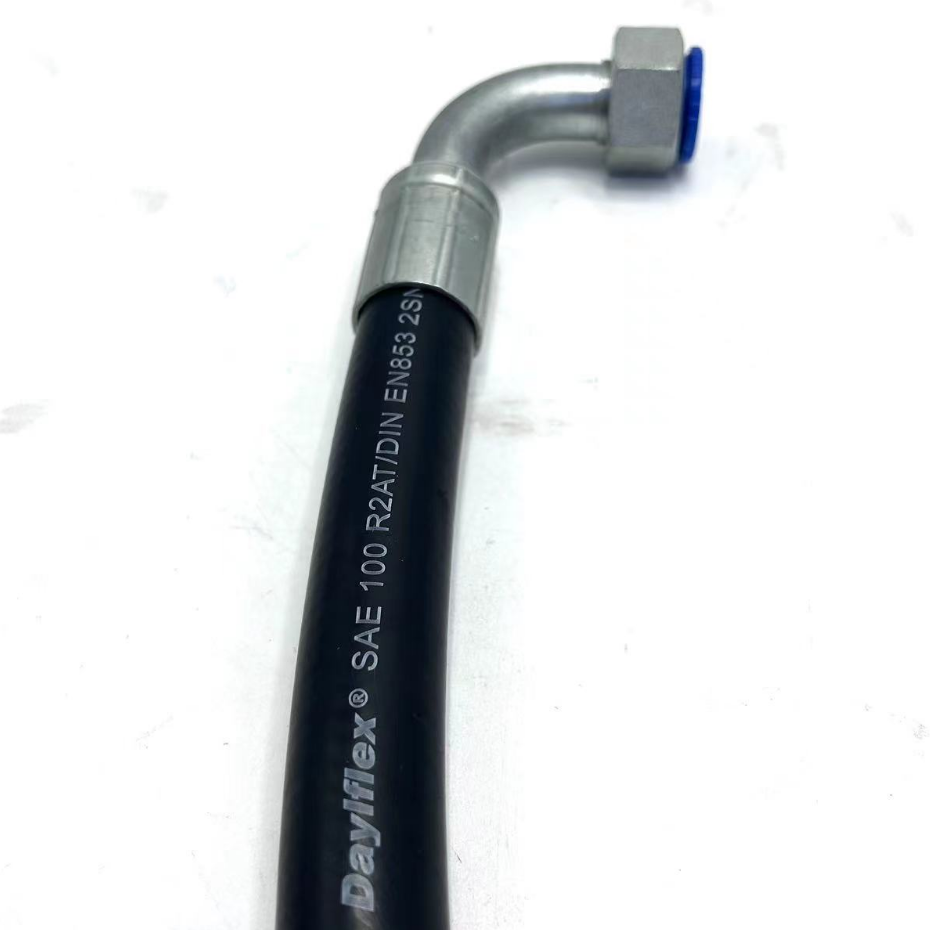
OEM SAE100R12 hose represents a critical component in hydraulic power transmission systems across a multitude of industrial applications. Designated by the Society of Automotive Engineers (SAE) standard 100R12, this hose is a non-reinforced, synthetic rubber tube designed for medium-pressure applications. It is utilized extensively in construction machinery, agricultural equipment, material handling, and various manufacturing processes where reliable fluid conveyance is paramount. Positioned within the fluid power industry chain, it acts as the interface between pumps, valves, and actuators. Core performance characteristics include burst pressure, working pressure, temperature range resilience, and fluid compatibility, all of which are critical factors impacting system efficiency and safety. The inherent flexibility of SAE100R12 hose facilitates ease of installation and routing in confined spaces, a significant advantage in many machine designs. This guide provides a comprehensive technical overview of SAE100R12 hose, covering material science, manufacturing processes, performance parameters, potential failure modes, and relevant industry standards.
Material Science & Manufacturing
SAE100R12 hose construction primarily utilizes a synthetic rubber compound, typically a blend of Nitrile (NBR) or Ethylene Propylene Diene Monomer (EPDM). NBR offers excellent resistance to petroleum-based fluids, fuels, and oils, making it suitable for hydraulic systems employing these media. EPDM provides superior resistance to heat, ozone, and weathering, expanding its utility to environments with elevated temperatures or prolonged outdoor exposure. The specific polymer selection dictates the hose's overall fluid compatibility and temperature operating range.
Manufacturing commences with the extrusion of the inner tube, meticulously controlled to maintain consistent wall thickness and dimensional accuracy. Key parameters include extrusion temperature, screw speed, and die design. Following extrusion, the tube undergoes curing (vulcanization) – a chemical process involving cross-linking of the polymer chains using sulfur or peroxide-based curing agents. This process enhances the rubber's elasticity, tensile strength, and resistance to degradation. Curing time and temperature are critical variables impacting the final material properties. The outer surface is often treated with a smooth finish to minimize abrasion and facilitate hose routing. Quality control measures throughout the manufacturing process include dimensional checks, burst pressure testing, and material analysis (e.g., infrared spectroscopy to verify polymer composition). The absence of reinforcement layers necessitates precise control over the rubber compound formulation to achieve the required pressure ratings. Deviations in curing processes can lead to inconsistent mechanical properties and premature failure.

Performance & Engineering
The performance of SAE100R12 hose is fundamentally governed by its ability to withstand internal pressure without failure. Burst pressure, typically rated between 600 and 800 psi, represents the maximum pressure the hose can endure before rupturing. Working pressure, significantly lower (e.g., 400 psi), is the recommended maximum operational pressure, factoring in a safety margin. The hose’s flexibility, characterized by its bend radius, is crucial for installation in constrained environments. Excessive bending can lead to kinking and flow restriction. Temperature resistance is another critical parameter; NBR-based hoses generally operate effectively between -40°C and 100°C, while EPDM compounds extend this range to -50°C to 135°C.
Engineering considerations encompass fluid compatibility, which determines the hose’s resistance to swelling, softening, or degradation upon exposure to the hydraulic fluid. Incompatible fluids can compromise the hose's structural integrity. Environmental resistance includes protection against ozone cracking, UV degradation, and abrasion. Prolonged exposure to these elements can reduce the hose’s service life. Force analysis focuses on evaluating the stresses induced by internal pressure, bending, and external loads. Finite element analysis (FEA) can be employed to optimize hose design and predict stress concentrations. Compliance with SAE J517 standard, which defines dimensional requirements and performance characteristics for hydraulic hoses, is essential. Proper hose assembly, including the selection of compatible fittings and correct crimping procedures, is vital to ensure a leak-free and reliable connection.
Technical Specifications
| Parameter | NBR Compound | EPDM Compound | SAE J517 Specification |
|---|---|---|---|
| Working Pressure (psi) | 400 | 400 | Up to 800 psi (depending on size) |
| Burst Pressure (psi) | 800 | 800 | Typically 3:1 safety factor over working pressure |
| Temperature Range (°C) | -40 to 100 | -50 to 135 | -40 to 100 (NBR), -50 to 135 (EPDM) |
| Inner Tube Material | Nitrile Rubber (NBR) | Ethylene Propylene Diene Monomer (EPDM) | Synthetic Rubber |
| Reinforcement | None | None | Not Reinforced |
| Fluid Compatibility | Petroleum-based fluids, oils | Water, glycol, phosphate ester fluids | Dependent on compound selection |
Failure Mode & Maintenance
SAE100R12 hose, lacking reinforcement, is particularly susceptible to failure modes associated with over-pressurization, excessive bending, and fluid incompatibility. Fatigue cracking can occur from repeated flexing and pressure cycling, initiating at stress concentrations near fittings or kinks. Pinholes and localized ruptures can develop due to abrasion or damage from external objects. Swelling or softening of the rubber compound arises from exposure to incompatible fluids, compromising the hose's structural integrity. Ozone cracking, evident as surface cracks, results from prolonged exposure to ozone in the atmosphere. Oxidation, caused by exposure to oxygen and heat, leads to gradual degradation of the rubber matrix. Delamination is less common in non-reinforced hoses, but can occur if the rubber compound is improperly cured or contaminated.
Preventive maintenance includes regular visual inspections for signs of cracking, swelling, abrasion, or leakage. Hose assemblies should be replaced if any damage is detected. Proper storage, avoiding direct sunlight and extreme temperatures, minimizes degradation. Maintaining clean hydraulic fluid, free from contaminants, extends hose life. When replacing hoses, ensure compatibility with the hydraulic fluid and operating conditions. Employ correct installation practices, including proper fitting selection and crimping procedures. Regular pressure testing can identify potential leaks before they escalate into major failures. Record keeping of hose replacement dates and operating conditions aids in predicting future maintenance requirements.
Industry FAQ
Q: What is the primary difference between SAE100R12 and SAE100R2AT hose?
A: The key difference lies in reinforcement. SAE100R12 is a non-reinforced hose, suitable for lower-pressure applications. SAE100R2AT features two steel wire braid reinforcements, enabling it to withstand significantly higher pressures and temperatures. R2AT hoses are preferred for heavy-duty hydraulic systems, while R12 is suited for lighter-duty applications where flexibility is paramount.
Q: How does fluid compatibility affect the lifespan of an SAE100R12 hose?
A: Incompatible fluids can cause the rubber compound to swell, soften, or degrade, leading to reduced tensile strength and premature failure. For instance, using a petroleum-based fluid in an EPDM hose will likely cause swelling and cracking. Selecting the appropriate rubber compound (NBR for oil, EPDM for water-based fluids) is critical for maximizing hose lifespan.
Q: What is the significance of the "SAE J517" standard in relation to SAE100R12 hose?
A: SAE J517 defines the dimensional requirements, performance characteristics, and testing procedures for hydraulic hoses. Compliance with this standard ensures that the hose meets minimum industry standards for safety and reliability. It specifies parameters like burst pressure, working pressure, and temperature range.
Q: What are the common causes of hose kinking and how can it be prevented?
A: Kinking occurs when the hose is bent beyond its minimum bend radius, restricting fluid flow and potentially causing internal damage. Prevention involves ensuring adequate space for hose routing, avoiding sharp bends, and utilizing hose guards or supports to maintain the correct bend radius.
Q: What maintenance checks should be performed on SAE100R12 hoses during routine equipment inspections?
A: Routine inspections should include a visual check for cracks, abrasions, swelling, or leaks. Fittings should be inspected for tightness and corrosion. The hose should be checked for proper routing and adequate support. Any signs of damage warrant immediate replacement of the hose assembly.
Conclusion
The OEM SAE100R12 hose remains a foundational element in many hydraulic systems, providing a cost-effective solution for medium-pressure fluid conveyance. Its performance is intimately linked to material selection, precise manufacturing control, and adherence to industry standards such as SAE J517. Understanding the hose’s limitations, particularly its susceptibility to fatigue and fluid incompatibility, is crucial for maximizing its operational lifespan and preventing catastrophic failures. Proper maintenance practices, including regular inspections and appropriate fluid selection, significantly contribute to system reliability and safety.
Looking ahead, advancements in rubber technology may lead to improved compound formulations with enhanced resistance to degradation and broader fluid compatibility. The continued emphasis on safety and reliability will necessitate rigorous quality control measures throughout the manufacturing process. Implementing predictive maintenance strategies, leveraging sensor data and machine learning algorithms, offers the potential to optimize hose replacement schedules and minimize unplanned downtime. Ultimately, a comprehensive understanding of SAE100R12 hose characteristics is vital for engineers and procurement professionals alike.

