
Apr . 01, 2024 17:55 Back to list
oem rubber hose Performance Analysis
Introduction
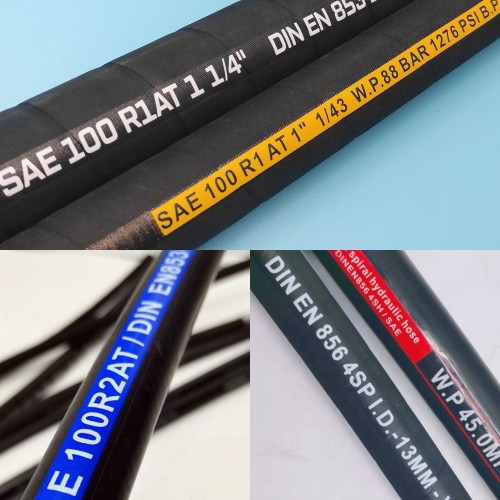
OEM rubber hoses are custom-manufactured flexible conduits designed for the conveyance of fluids and gases across a diverse spectrum of industrial applications. Unlike standardized rubber hoses, OEM versions are engineered to precise specifications dictated by the equipment or system they serve, representing a critical component integrated within a larger assembly. These hoses are pivotal in industries including automotive, agricultural machinery, construction equipment, and industrial manufacturing, functioning as essential elements in fluid power systems, cooling circuits, and air intake/exhaust systems. The core performance characteristics – pressure rating, temperature resistance, chemical compatibility, and dimensional accuracy – are paramount to system reliability and are determined by the rubber compound formulation and manufacturing process employed. The increasing demand for specialized hose solutions, coupled with stricter regulatory requirements regarding material safety and environmental impact, necessitates a comprehensive understanding of OEM rubber hose technology.
Material Science & Manufacturing
The selection of rubber compounds is the foundational element of OEM rubber hose production. Common elastomers include Nitrile (NBR) for oil resistance, Ethylene Propylene Diene Monomer (EPDM) for heat and weathering resistance, Silicone (VMQ) for extreme temperature applications, and Chloroprene (CR) for ozone and chemical resistance. The polymer is compounded with reinforcing fillers – typically carbon black or aramid fibers – to enhance tensile strength, tear resistance, and abrasion resistance. Plasticizers are incorporated to improve flexibility and low-temperature performance, while curing agents (sulfur-based or peroxide-based) initiate vulcanization, the process of cross-linking polymer chains to achieve desired elasticity and structural integrity. Manufacturing processes vary depending on hose complexity. Extrusion is commonly used for simple hoses, where the rubber compound is forced through a die to form a continuous tube. Braiding with textile or wire reinforcement layers significantly increases burst pressure capability. Spiral winding offers flexibility and high-pressure capacity. Post-processing operations include cutting to length, fitting attachment (crimping, swaging, or bonding), and rigorous quality control inspections. Key parameter control during manufacturing includes maintaining consistent compound temperature and pressure during extrusion, ensuring precise braid angle and tension, and verifying dimensional accuracy and uniformity of the cured rubber.
Performance & Engineering
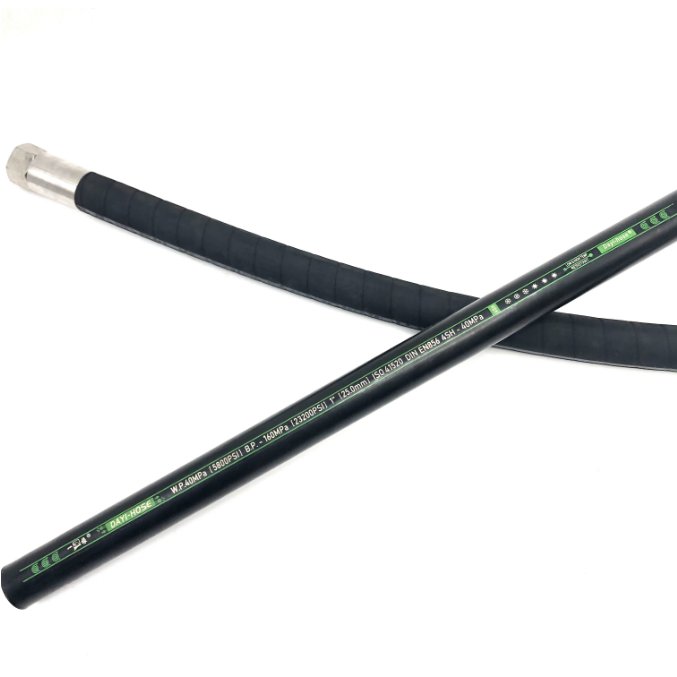
OEM rubber hose performance is dictated by a complex interplay of factors including internal pressure, external pressure (vacuum applications), temperature fluctuations, fluid compatibility, and dynamic bending/flexing. Force analysis is critical to determine the required reinforcement layers to withstand anticipated burst pressures and prevent hose failure. Finite Element Analysis (FEA) is frequently employed to model stress distribution and optimize hose construction. Environmental resistance is a crucial consideration; exposure to ozone, UV radiation, and corrosive chemicals can degrade the rubber compound, reducing its service life. Compliance requirements vary by industry and application. Automotive hoses must meet FMVSS 301 and SAE J20 standards for fuel and coolant lines. Agricultural hoses often require compliance with EPA regulations regarding fluid containment and environmental protection. Functional implementation necessitates careful attention to hose routing, bend radius, and fitting compatibility. Excessive bending or kinking can restrict flow and induce premature failure. Hose assemblies must be designed to accommodate thermal expansion and contraction without generating excessive stress on connections.
Technical Specifications
| Parameter | Unit | Typical Value (NBR Liner, Textile Braid) | Testing Standard |
|---|---|---|---|
| Working Pressure | PSI | 300 | SAE J30R9 |
| Burst Pressure | PSI | 900 | SAE J30R9 |
| Temperature Range | °F | -40 to 250 | ASTM D2000 |
| Inner Diameter | Inches | 0.5 - 4 | Dimensional Control per Customer Specification |
| Outer Diameter | Inches | 0.75 - 5 | Dimensional Control per Customer Specification |
| Tensile Strength | PSI | 800 | ASTM D412 |
Failure Mode & Maintenance
Common failure modes in OEM rubber hoses include fatigue cracking due to repeated bending and flexing, particularly at the connection points. Hose delamination can occur when the bond between the rubber liner and reinforcement layers weakens, leading to fluid leakage and eventual hose rupture. Chemical degradation results from incompatibility between the hose material and the conveyed fluid, causing swelling, softening, or cracking. Oxidation, induced by exposure to oxygen and ozone, leads to surface cracking and loss of elasticity. Abrasion, caused by contact with abrasive surfaces, weakens the hose wall. Maintenance strategies are crucial to extending hose service life. Regular visual inspections should identify signs of cracking, swelling, or abrasion. Pressure testing can reveal leaks or weakening of the hose wall. Proper hose routing and support mechanisms can minimize bending stress and prevent abrasion. Fluid compatibility checks should be performed to ensure the hose material is suitable for the intended application. Replacement of hoses at predetermined intervals, based on operating conditions and fluid type, is essential to prevent catastrophic failure.
Industry FAQ
Q: What is the impact of fluid velocity on the lifespan of a rubber hose?
A: Higher fluid velocities increase the erosive forces on the inner liner of the hose, accelerating wear and potentially leading to premature failure. This is particularly pronounced with abrasive fluids or fluids containing particulate matter. Careful selection of hose materials with enhanced abrasion resistance and limitations on fluid velocity are crucial mitigation strategies.
Q: How does the choice of reinforcement material affect hose pressure rating and flexibility?
A: Textile braiding (e.g., polyester, nylon) provides moderate pressure resistance and good flexibility. Wire reinforcement (steel or stainless steel) offers significantly higher pressure ratings but reduces flexibility. The number of braid layers and the wire diameter directly influence the pressure capacity. The optimal reinforcement material depends on the specific application requirements.
Q: What is the significance of ‘ozone cracking’ in rubber hoses, and how can it be prevented?
A: Ozone cracking is a form of surface degradation caused by the reaction of ozone with unsaturated bonds in the rubber compound. It manifests as small cracks on the outer surface of the hose, leading to reduced strength and eventual failure. Prevention strategies include using ozone-resistant rubber compounds (e.g., EPDM), applying protective coatings, and minimizing exposure to ozone-rich environments.
Q: How do I determine the correct hose fitting type and size for an OEM application?
A: Correct fitting selection is paramount to ensure a leak-proof and reliable connection. The fitting type (e.g., crimp, swage, barb) depends on the hose material, pressure rating, and application. The fitting size must precisely match the hose inner diameter and outer diameter to prevent slippage or over-compression. Consult fitting manufacturers’ specifications and industry best practices.
Q: What are the key considerations when selecting a rubber hose for use with aggressive chemicals?
A: Chemical compatibility is critical. Consult chemical resistance charts to verify the hose material is resistant to the specific chemicals being conveyed. Consider the concentration, temperature, and exposure duration. Testing the hose material with a representative sample of the fluid is recommended to confirm compatibility and prevent premature degradation.
Conclusion
OEM rubber hoses represent a sophisticated engineering solution requiring meticulous material selection, precise manufacturing control, and a thorough understanding of operational parameters. The proper specification and implementation of these hoses are essential for ensuring the reliability, safety, and longevity of complex fluid and gas handling systems. Addressing the potential failure modes through proactive maintenance and regular inspection routines is fundamental to mitigating risk and maximizing return on investment.
Looking forward, advancements in rubber compound technology, including the development of novel elastomers and nanocomposites, will continue to enhance the performance characteristics of OEM rubber hoses. Increased emphasis on sustainable materials and environmentally friendly manufacturing processes will drive innovation in this sector, aligning with growing industry demands for responsible product stewardship. A continued focus on standardized testing methodologies and rigorous quality control will be crucial for maintaining product integrity and ensuring compliance with evolving regulatory standards.

