
Apr . 01, 2024 17:55 Back to list
oem resin hose Performance Analysis
Introduction
OEM resin hoses are engineered fluid transfer components utilized across diverse industrial applications, including chemical processing, automotive cooling systems, and agricultural irrigation. Positioned within the broader hose and tubing manufacturing industry, they represent a specialized segment focusing on custom formulations and performance characteristics tailored to specific client requirements. Core performance attributes encompass fluid compatibility, pressure resistance, temperature tolerance, and dimensional stability. The increasing demand for lighter weight, corrosion-resistant, and application-specific hoses drives innovation in resin formulations and manufacturing techniques. This guide provides a comprehensive technical overview of OEM resin hoses, encompassing material science, manufacturing processes, performance analysis, failure modes, and relevant industry standards.
Material Science & Manufacturing
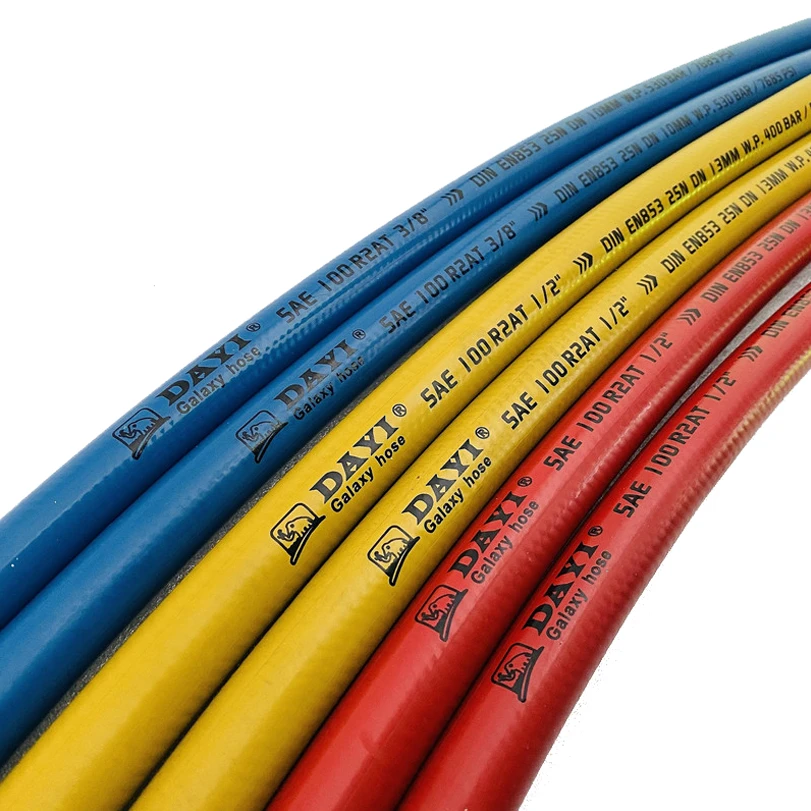
OEM resin hoses are commonly constructed from a variety of thermoplastic resins, including Polypropylene (PP), Polyethylene (PE), Polyvinyl Chloride (PVC), Polyamide (Nylon), and Polyurethane (PU). Resin selection is critically dependent on the intended application and the fluid being conveyed. PP offers good chemical resistance and low cost, while PE excels in flexibility and impact resistance. PVC provides a balance of properties and is widely used in general-purpose applications. Nylon exhibits high tensile strength and abrasion resistance, making it suitable for demanding environments. PU offers superior flexibility, oil resistance, and high-pressure capabilities. Reinforcement layers, typically comprised of textile braiding (polyester, nylon) or spiral-wound wire (steel, stainless steel), enhance pressure resistance and prevent kinking. Manufacturing processes vary depending on the resin and desired hose configuration. Extrusion is the primary method for producing seamless hoses, involving melting the resin and forcing it through a die. Braiding is then applied, followed by curing or cooling. Spiral winding involves wrapping a reinforcing wire around a core tube, followed by encapsulation with the resin. Critical parameters during manufacturing include resin melt temperature, die pressure, braiding tension, and cooling rate, all of which influence the final product's physical and mechanical properties. Precise control over these parameters is essential to ensure consistent quality and performance.
Performance & Engineering
The performance of OEM resin hoses is governed by several engineering principles. Burst pressure, determined by the resin’s tensile strength and the reinforcement layer's capacity, is a critical safety parameter. Hose wall thickness, reinforcement material, and braiding angle all contribute to burst pressure resistance. Tensile strength, measured in MPa or PSI, dictates the hose's ability to withstand pulling forces. Elongation at break, expressed as a percentage, indicates the material's ductility. Environmental resistance, including UV exposure, ozone degradation, and chemical compatibility, is crucial for long-term durability. Accelerated aging tests, conducted according to ASTM standards, simulate long-term exposure to these factors. Temperature resistance is defined by the resin's glass transition temperature (Tg) and decomposition temperature. Operation beyond these limits can lead to softening, cracking, or failure. Fluid compatibility assessment is essential to prevent swelling, leaching, or chemical attack. Finite Element Analysis (FEA) is frequently employed to optimize hose design, predict stress distributions, and identify potential failure points. Furthermore, compliance with industry-specific regulations, such as those governing food contact materials (FDA) or automotive fluid systems (SAE), is paramount.
Technical Specifications
| Parameter | Unit | Typical Value (PVC Hose) | Typical Value (Nylon Hose) |
|---|---|---|---|
| Working Pressure | PSI | 300 | 800 |
| Burst Pressure | PSI | 900 | 2400 |
| Tensile Strength | MPa | 20 | 80 |
| Elongation at Break | % | 300 | 200 |
| Temperature Range | °C | -20 to 60 | -40 to 120 |
| Chemical Resistance | Rating (1-5) | 3 | 4 |
Failure Mode & Maintenance
Common failure modes for OEM resin hoses include fatigue cracking due to repeated bending and flexing, particularly near fittings. This is exacerbated by improper installation or exceeding the hose's bend radius. Chemical attack, resulting in swelling, softening, or degradation, occurs when the hose is exposed to incompatible fluids. UV degradation, causing embrittlement and cracking, is prevalent in outdoor applications. Abrasion damage, stemming from contact with abrasive surfaces, can compromise the hose wall. Kinking, leading to flow restriction and potential rupture, arises from insufficient reinforcement or improper support. Delamination, the separation of reinforcement layers from the resin matrix, reduces pressure resistance. Maintenance practices to mitigate these failures include regular visual inspection for cracks, swelling, or abrasion. Proper storage in a cool, dry, and dark environment is essential to prevent UV degradation. Avoid exceeding the hose’s pressure and temperature limits. Use appropriate fittings and ensure correct installation procedures. Periodic pressure testing can identify leaks or weaknesses. When a hose exhibits signs of damage, it should be replaced immediately to prevent catastrophic failure.
Industry FAQ
Q: What is the significance of the ‘durometer’ rating for a resin hose?
A: Durometer, measured using the Shore hardness scale, indicates the hose’s resistance to indentation. A higher durometer value signifies a harder, more rigid hose, while a lower value indicates greater flexibility. Selecting the appropriate durometer is crucial based on the application. Stiffer hoses are suitable for applications requiring dimensional stability and resistance to collapse, while flexible hoses are preferred for tight bends and dynamic environments.
Q: How does the reinforcement material impact the hose’s performance?
A: The reinforcement material significantly influences the hose’s pressure resistance, burst strength, and resistance to kinking. Textile braiding (polyester, nylon) provides moderate reinforcement and flexibility. Spiral-wound wire (steel, stainless steel) offers superior pressure resistance and kink resistance but reduces flexibility. The material selection must align with the intended operating pressure and environmental conditions.
Q: What testing is performed to verify chemical compatibility?
A: Chemical compatibility testing typically involves immersing hose samples in the target fluid for a specified duration at a defined temperature. The samples are then evaluated for changes in weight, volume, hardness, tensile strength, and visual appearance. These tests determine the hose’s resistance to swelling, degradation, and chemical attack.
Q: How does temperature affect the operational lifespan of a resin hose?
A: Elevated temperatures can accelerate the degradation of resin materials, reducing their tensile strength, elongation, and chemical resistance. Conversely, low temperatures can cause embrittlement and cracking. Operating the hose within its specified temperature range is crucial for maximizing its lifespan. Continuous exposure to temperatures near the upper or lower limits will significantly reduce service life.
Q: What standards govern the safety and performance of OEM resin hoses used in automotive applications?
A: In automotive applications, OEM resin hoses must comply with SAE International standards, particularly J2044 for automotive fuel hoses and J30R7 for power steering hoses. These standards specify requirements for pressure resistance, temperature tolerance, fluid compatibility, and dimensional stability. Compliance ensures the hose's safe and reliable operation within the vehicle’s system.
Conclusion
OEM resin hoses represent a critical component in countless industrial systems, demanding a thorough understanding of material science, manufacturing processes, and performance characteristics. Selecting the appropriate resin, reinforcement, and manufacturing technique is paramount to ensuring optimal performance, longevity, and safety. Proper maintenance, including regular inspection and adherence to operating guidelines, is equally vital for preventing premature failure and maximizing service life.
The ongoing drive for enhanced durability, chemical resistance, and sustainable materials will continue to shape the evolution of OEM resin hose technology. Future developments may include the integration of advanced materials, such as fluoropolymers and nanocomposites, to address increasingly demanding applications. The adoption of predictive maintenance techniques, leveraging sensor data and machine learning, will further optimize hose performance and minimize downtime.