
Apr . 01, 2024 17:55 Back to list
oem red high pressure hydraulic hose Performance Analysis

Introduction
OEM red high pressure hydraulic hose represents a critical component in fluid power systems across numerous industries, including construction, agriculture, manufacturing, and materials handling. These hoses are engineered to reliably transmit hydraulic fluid under extreme pressure and in demanding operating conditions. Unlike general-purpose hoses, high pressure hydraulic hose is specifically designed to withstand repeated pressure cycling, temperature variations, and exposure to hydraulic fluids, abrasions, and potential chemical attack. The red color is commonly used as a visual indicator for hydraulic applications, differentiating them from pneumatic or other fluid transfer hoses. The selection of appropriate hose construction – including reinforcement layers, inner tube materials, and outer cover compounds – is crucial to ensuring long service life and preventing catastrophic failure. This guide provides an in-depth technical overview of OEM red high pressure hydraulic hose, covering material science, manufacturing processes, performance characteristics, failure modes, and relevant industry standards.
Material Science & Manufacturing
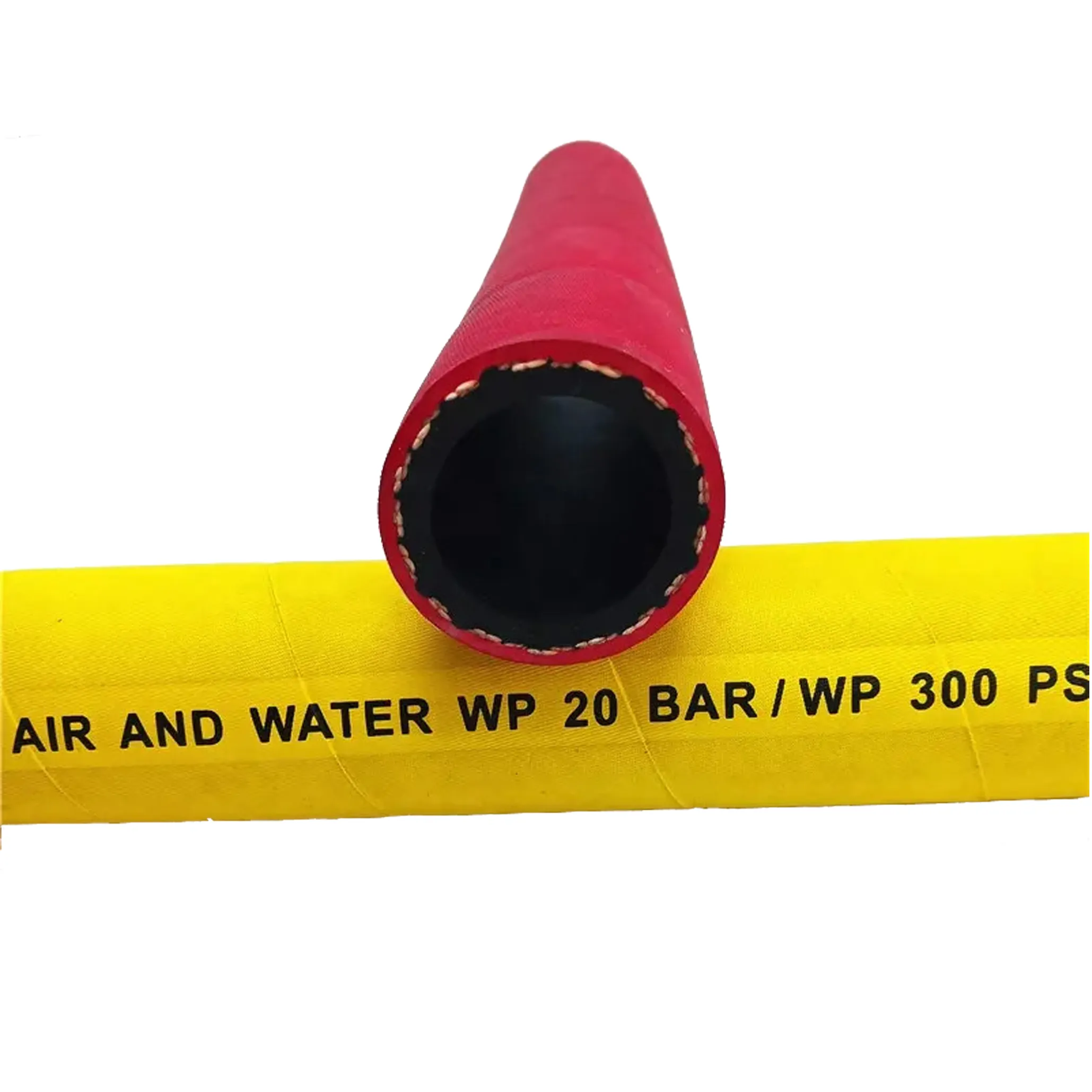
The construction of OEM red high pressure hydraulic hose typically involves four key layers: the inner tube, reinforcement layers, outer cover, and fittings. The inner tube is commonly composed of synthetic rubbers designed for compatibility with hydraulic fluids. Nitrile rubber (NBR) is widely used due to its excellent resistance to petroleum-based oils, but other materials like Chloroprene (CR) for improved weathering resistance and Ethylene Propylene Diene Monomer (EPDM) for phosphate ester fluids are also utilized. The reinforcement layer is the critical element defining the pressure rating and burst strength. Traditionally, multiple layers of high-tensile steel wire, spirally wound, provide the necessary reinforcement. The number of layers and the wire gauge directly correlate with the working pressure capability. More recently, synthetic fiber reinforcement, such as aramid (Kevlar) or polyester, has gained prominence, offering a higher strength-to-weight ratio and increased flexibility, though typically at a higher cost. The outer cover is typically a synthetic rubber compound, often based on CR or polyurethane, providing abrasion resistance, weather protection (UV and ozone resistance), and resistance to oil and chemicals. Manufacturing processes involve extrusion of the inner tube and outer cover, followed by the winding of the reinforcement layers. Precise control of the winding tension and helix angle is critical for ensuring uniform pressure distribution and preventing premature failure. Finally, fittings are crimped onto the hose ends using specialized tooling, creating a secure and leak-proof connection. The quality of the crimp is paramount and is dictated by fitting standards (SAE J514). Quality control during manufacturing includes hydrostatic testing to verify burst pressure and impulse testing to assess the hose’s ability to withstand repeated pressure fluctuations.
Performance & Engineering
The performance of a high-pressure hydraulic hose is governed by several key engineering principles. Burst pressure, working pressure, and impulse pressure are critical specifications. Burst pressure is the maximum pressure the hose can withstand before catastrophic failure, typically specified as a multiple (e.g., 4:1) of the working pressure. Working pressure is the maximum continuous operating pressure. Impulse pressure represents the hose’s ability to withstand pressure spikes and pulsations, a common occurrence in hydraulic systems. These pressures are heavily influenced by the reinforcement layer material and construction. Tensile strength, measured in MPa or PSI, is crucial for resisting axial loads and preventing hose elongation or breakage. Fatigue life, the number of pressure cycles a hose can endure before failure, is a significant factor in long-term reliability, especially in applications with frequent start-stop cycles. Temperature range is another critical parameter. Hydraulic fluids operate at varying temperatures, and the hose material must maintain its flexibility and strength across the specified range. Flexibility (bend radius) is essential for ease of installation and routing. A tight bend radius can induce stress concentrations and lead to premature failure. Compatibility with the hydraulic fluid is paramount; improper fluid selection can cause the inner tube to swell, degrade, or crack. Furthermore, the hose must be engineered to resist external factors such as abrasion, ozone cracking, and UV degradation, especially in outdoor applications. Finite element analysis (FEA) is commonly used during the design phase to simulate stress distribution and optimize hose geometry and reinforcement to maximize performance and durability.
Technical Specifications
| Parameter | Unit | Typical Value (DN20, 2-Wire Braid) | Typical Value (DN32, 4-Wire Braid) |
|---|---|---|---|
| Working Pressure | MPa | 31.5 | 63 |
| Burst Pressure | MPa | 126 | 252 |
| Inner Diameter | mm | 13 | 20 |
| Outer Diameter | mm | 19 | 28 |
| Minimum Bend Radius | mm | 45 | 75 |
| Temperature Range | °C | -40 to +100 | -40 to +100 |
Failure Mode & Maintenance
High-pressure hydraulic hoses are susceptible to several failure modes. Pinholing, the formation of tiny leaks, is often caused by internal abrasion from particulate contamination in the hydraulic fluid. Bursting results from exceeding the working pressure or gradual weakening of the reinforcement layers due to fatigue. Twisting can induce localized stress concentrations, leading to cracking or separation of layers. Kinking, caused by excessive bending, damages the reinforcement and weakens the hose. External abrasion can compromise the outer cover, exposing the reinforcement to corrosion. Ozone cracking occurs due to exposure to ozone in the atmosphere, particularly in CR covers. Fitting failure, either due to improper crimping or corrosion, results in leaks. Maintenance is crucial to preventing these failures. Regular visual inspections should be conducted to identify any signs of damage, such as cracks, abrasions, bulges, or leaks. Hydraulic fluid should be regularly filtered to remove contaminants. Hoses should be routed correctly to avoid twisting, kinking, and abrasion. The hose should be replaced if any damage is detected, or if it reaches the end of its service life. Proper storage is also important; hoses should be stored in a cool, dry place away from direct sunlight and ozone sources. When replacing hoses, always ensure that the new hose meets or exceeds the original specifications, and that the fittings are compatible. Periodic pressure testing can also help to identify hoses that are nearing failure.
Industry FAQ
Q: What is the impact of hydraulic fluid type on hose selection?
A: Hydraulic fluid compatibility is paramount. Using an incompatible fluid can cause the inner tube to swell, soften, or degrade, leading to leaks and premature failure. For example, phosphate ester fluids require EPDM inner tubes, while petroleum-based fluids are typically compatible with NBR. Always consult the hose manufacturer's chemical compatibility chart to ensure the chosen fluid is suitable for the hose materials.
Q: How does temperature affect hose performance?
A: Temperature extremes can significantly impact hose performance. High temperatures can reduce the hose’s strength and flexibility, while low temperatures can cause the rubber to stiffen and crack. The hose must be rated for the expected operating temperature range. Consider both ambient temperature and fluid temperature when selecting a hose.
Q: What is the difference between single-wire and multi-wire braided hoses?
A: Single-wire braid hoses are typically used for lower pressure applications and offer greater flexibility. Multi-wire braid hoses, with two, four, or even six wire braids, provide significantly higher pressure ratings and burst strengths but are less flexible. The choice depends on the specific application requirements.
Q: How important is proper hose fitting crimping?
A: Proper crimping is absolutely critical. An improperly crimped fitting can leak, loosen, or even cause the hose to burst. The crimp must create a secure and leak-proof connection between the hose and the fitting, meeting the specifications outlined in SAE J514. Using calibrated crimping tools and following the manufacturer's instructions are essential.
Q: What are the signs that a hydraulic hose needs to be replaced?
A: Signs of wear or damage indicating replacement include: visible cracks, abrasions, bulges, oil leaks, twisted hoses, or kinks. If the hose has been exposed to excessive heat or chemicals, or if it has exceeded its service life, it should also be replaced, even if no visible damage is present.
Conclusion
OEM red high pressure hydraulic hose is a sophisticated engineered product demanding careful selection and maintenance. Its performance is critically dependent on material properties, manufacturing precision, and operating conditions. Understanding the interplay between pressure ratings, reinforcement construction, fluid compatibility, and environmental factors is crucial for ensuring reliable operation and preventing costly failures. Choosing the correct hose for the application, adhering to proper installation practices, and implementing a proactive maintenance program are essential for maximizing service life and minimizing downtime.
Future advancements in hydraulic hose technology are likely to focus on lighter-weight materials, improved abrasion resistance, and enhanced chemical compatibility. The development of smart hoses with integrated sensors for pressure and temperature monitoring could provide valuable real-time data for predictive maintenance and improved system performance. Continued adherence to evolving industry standards and best practices will remain paramount to ensuring the safety and reliability of hydraulic systems.