
Apr . 01, 2024 17:55 Back to list
oem ptfe hose Performance Analysis
Introduction
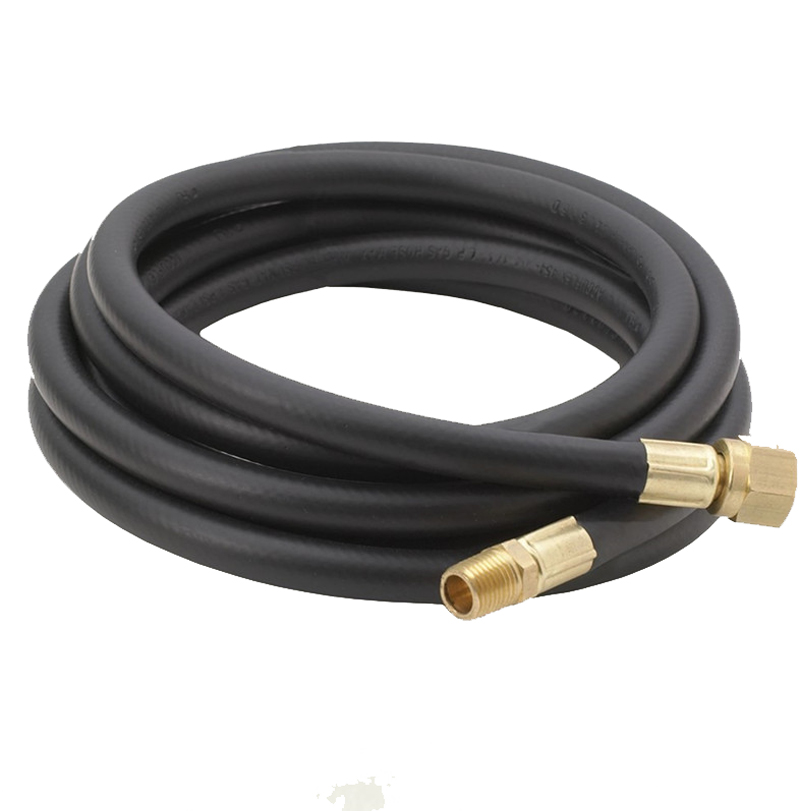
OEM PTFE hose, or polytetrafluoroethylene hose, represents a critical component in fluid transfer systems across diverse industries including chemical processing, automotive, aerospace, and pharmaceuticals. Its technical positioning within the industrial chain is as a specialized conduit designed to contain and convey aggressive fluids, gases, and high-purity substances where contamination risks are paramount. Unlike rubber or metallic hoses, PTFE offers exceptional chemical inertness and a broad operating temperature range. Core performance characteristics center around maintaining fluid integrity, resisting permeation, and ensuring long-term reliability even under demanding operational conditions. The rise of OEM customization reflects a growing demand for precise dimensional control, specific end-fitting integration, and tailored material formulations to meet increasingly stringent application requirements. The industry faces consistent pressure to optimize hose performance regarding flexibility, pressure resistance, and longevity while simultaneously reducing overall system costs.
Material Science & Manufacturing
The primary raw material for PTFE hose is PTFE resin, a synthetic fluoropolymer of tetrafluoroethylene. Key physical properties include exceptional chemical resistance (virtually unaffected by most chemicals, acids, and bases), a low coefficient of friction (reducing flow resistance), a wide temperature range (-200°C to +260°C), excellent dielectric properties, and inherent non-stick characteristics. Manufacturing processes vary based on hose construction. Extrusion is the most common method, where PTFE resin is melted and forced through a die to create a seamless tube. For convoluted or multi-layer hoses, specialized extrusion techniques are employed. Sintering is critical; after extrusion, the PTFE tube undergoes a sintering process – heating to a temperature below the melting point – to fuse the particles together, achieving desired density and mechanical strength. For braided hose construction, a stainless steel or other alloy braid is helically wound around the PTFE core, providing burst strength and kink resistance. The braid’s density (wires per inch) directly impacts pressure capacity. End fitting attachment is a crucial step. Methods include crimping, swaging, or specialized PTFE bonding techniques ensuring a leak-proof seal. Parameter control during extrusion (temperature, speed, die geometry) and sintering (temperature profile, duration) are paramount to achieving consistent wall thickness, dimensional accuracy, and optimal material properties. Raw material purity and molecular weight distribution of the PTFE resin also significantly affect the final product's performance.
Performance & Engineering
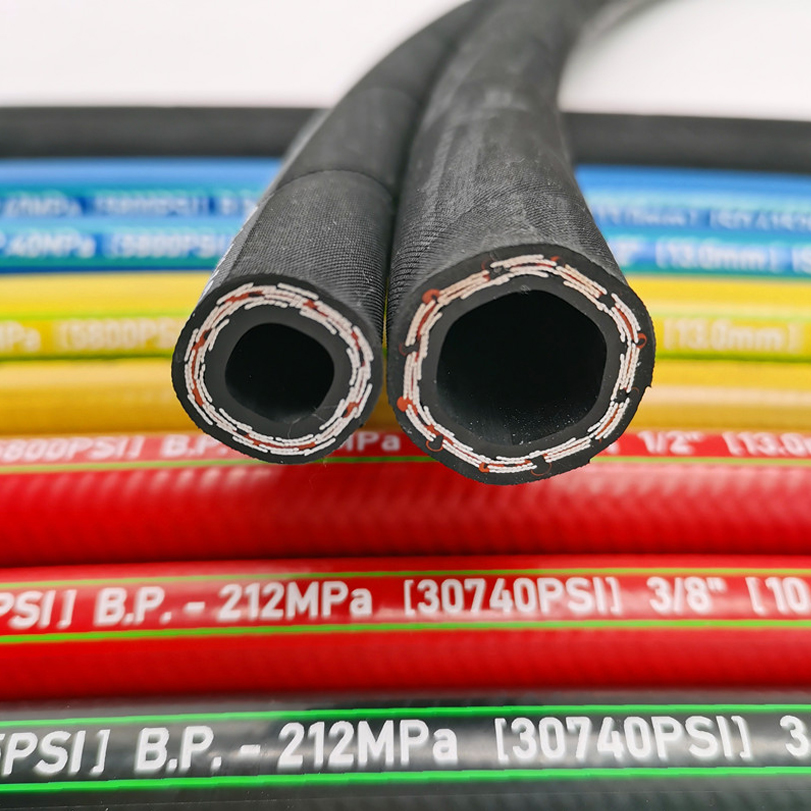
Performance of PTFE hose is governed by several engineering principles. Burst pressure, determined by the hose’s construction (PTFE wall thickness, braid density, end fitting strength), is a primary design consideration. Force analysis involves calculating hoop stress within the PTFE wall under internal pressure. The stainless steel braid contributes significantly to tensile strength and resistance to expansion. Environmental resistance is crucial. While PTFE itself is chemically inert, the hose’s end fittings must also be compatible with the conveyed fluid. Temperature cycling introduces thermal stresses, potentially leading to fatigue failure. Permeation, the diffusion of fluids through the hose wall, is a critical concern for high-purity applications; PTFE exhibits very low permeability compared to other polymers. Compliance requirements, particularly in the food, pharmaceutical, and automotive industries, dictate specific material certifications (e.g., FDA, USP Class VI, REACH, RoHS). Functional implementation requires careful selection of hose diameter, length, and end fitting type to ensure compatibility with the overall fluid transfer system. Static electricity buildup can be problematic with PTFE; conductive PTFE formulations or grounding techniques are often employed to dissipate charge. Flexibility is also a key parameter, affecting ease of installation and resistance to kinking.
Technical Specifications
| Parameter | Unit | Typical Value (Standard Grade PTFE) | Value (Conductive PTFE) |
|---|---|---|---|
| Operating Pressure (Burst) | PSI | 4000 | 3500 |
| Temperature Range | °C | -200 to +260 | -200 to +260 |
| Tensile Strength | MPa | 20 | 18 |
| Elongation at Break | % | 300 | 250 |
| Permeation Rate (Helium) | cc-mil/ft²/day | 0.001 | 0.001 |
| Volume Resistivity | ohm-cm | 10^10 – 10^12 | 10^2 – 10^4 |
Failure Mode & Maintenance
Failure modes in PTFE hose typically fall into several categories. Fatigue cracking, induced by repeated flexing and pressure cycling, often occurs near end fittings or at points of stress concentration. Creep, the slow deformation under sustained pressure, can lead to dimensional changes and eventual failure. Chemical attack, although rare, can occur with highly aggressive fluids at elevated temperatures. Permeation, while generally low, can increase with temperature and prolonged exposure to certain solvents, leading to swelling and degradation of the PTFE matrix. End fitting failure, due to corrosion, improper crimping, or material incompatibility, is another common cause. Oxidation can occur at very high temperatures in the presence of oxygen, leading to embrittlement. Maintenance involves regular visual inspection for cracks, bulges, or discoloration. Pressure testing should be conducted periodically to verify hose integrity. Avoid sharp bends and excessive twisting. Proper storage is critical; PTFE hose should be stored in a cool, dry place away from direct sunlight and oxidizing agents. Cleaning should be performed with mild detergents and water; avoid abrasive cleaners or solvents that could damage the PTFE surface. Replace the hose immediately if any signs of damage or degradation are observed. Implementing a preventative maintenance schedule based on application severity and operating conditions will extend hose service life.
Industry FAQ
Q: What is the impact of PTFE molecular weight on hose performance?
A: Higher molecular weight PTFE generally exhibits improved tensile strength, creep resistance, and chemical inertness. However, it can also be more difficult to process during extrusion and sintering. OEMs often tailor molecular weight to balance processability and performance based on specific application requirements.
Q: How does the braid material affect the hose’s pressure rating?
A: The braid material’s tensile strength and density (wires per inch) directly correlate with the hose's burst pressure. Stainless steel 304 and 316 are commonly used due to their corrosion resistance and strength. Increasing braid density provides greater reinforcement, but also reduces hose flexibility.
Q: Can PTFE hose be used with vacuum applications?
A: While PTFE itself has good vacuum properties, hose collapse is a concern under high vacuum conditions. Reinforcement, such as a spring guard or a thicker wall, is typically required to prevent implosion.
Q: What are the key differences between virgin PTFE and filled PTFE?
A: Virgin PTFE offers the highest purity and chemical resistance. Filled PTFE, incorporating materials like glass fibers or carbon, improves properties such as wear resistance, creep resistance, and dimensional stability, but may compromise chemical inertness.
Q: What are the implications of using conductive PTFE in sensitive applications?
A: Conductive PTFE dissipates static electricity, preventing sparks and reducing the risk of electrostatic discharge (ESD) in environments handling flammable materials or sensitive electronics. It’s crucial to verify the conductivity level meets application-specific ESD safety standards.
Conclusion
OEM PTFE hose stands as a highly specialized fluid transfer solution, offering unparalleled chemical resistance and thermal stability. Its performance is intricately linked to material selection, manufacturing processes, and careful engineering design considerations. Understanding the interplay between PTFE resin properties, braid construction, and end fitting compatibility is crucial for ensuring reliable operation in demanding applications.
The ongoing trend towards customization and miniaturization will drive further innovation in PTFE hose technology. Development of new PTFE formulations with enhanced properties (e.g., improved wear resistance, lower permeability) and advanced manufacturing techniques (e.g., multi-layer extrusion, precision end fitting attachment) will be critical for meeting the evolving needs of industries such as aerospace, automotive, and life sciences. Continued adherence to rigorous quality control and international standards will remain paramount to maintaining the integrity and safety of these critical components.

