
Apr . 01, 2024 17:55 Back to list
oem one wire braided high pressure hydraulic hose Performance Analysis
Introduction
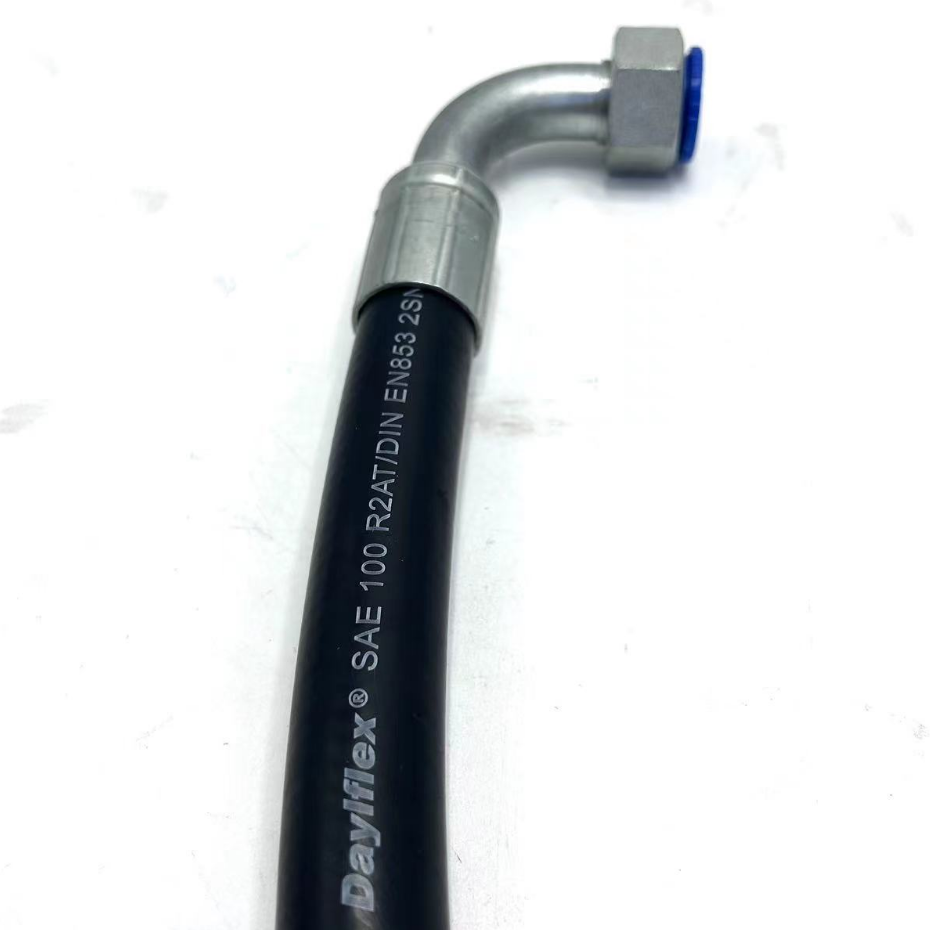
OEM one wire braided high pressure hydraulic hose represents a critical component in fluid power systems across numerous industries, including construction, agriculture, manufacturing, and automotive. Positioned within the hydraulic power transmission chain, these hoses are designed to convey pressurized hydraulic fluid, enabling the operation of actuators, motors, and other hydraulic machinery. Their construction prioritizes high burst pressure, flexibility, and resistance to abrasion, chemicals, and temperature extremes. Core performance characteristics revolve around maintaining fluid integrity, resisting pressure-induced failure, and ensuring longevity in demanding operational environments. A key pain point in the industry is consistently achieving predictable performance across diverse fluid types and operating conditions, particularly minimizing hose failures leading to costly downtime and potential safety hazards.
Material Science & Manufacturing
The fundamental material selection for OEM one wire braided high pressure hydraulic hose centers on a combination of synthetic rubber compounds for the inner tube, high-tensile steel wire for reinforcement, and a durable synthetic rubber or thermoplastic polyurethane (TPU) cover. The inner tube is typically constructed from nitrile rubber (NBR), ethylene propylene diene monomer (EPDM), or chloroprene rubber (CR), chosen for their compatibility with hydraulic fluids – encompassing mineral oils, synthetic oils, and increasingly, environmentally friendly phosphate ester fluids. NBR provides excellent resistance to oil, but exhibits limited temperature range; EPDM excels in high-temperature applications and offers superior weathering resistance; CR balances oil resistance with good flexibility. The single wire braid utilizes high-tensile steel wire, typically conforming to standards like SAE J517, providing the primary reinforcement against internal pressure. Cover materials, such as synthetic rubber (SBR, BR) or TPU, offer abrasion resistance, ozone protection, and resistance to chemical attack.
Manufacturing involves several critical stages. The inner tube is extruded through a die to achieve the desired inner diameter and wall thickness. Following extrusion, the steel wire is spirally wound around the tube, forming the braid. Precise tension control during braiding is paramount to ensure uniform pressure distribution and prevent localized stress concentrations. The braided hose then undergoes vulcanization – a heat-curing process that crosslinks the rubber compounds, enhancing their elasticity, strength, and resistance to degradation. Vulcanization parameters, including temperature, time, and pressure, are meticulously controlled to optimize material properties. Finally, the cover is extruded over the braided structure, and the hose is subjected to quality control tests including burst pressure testing, impulse testing, and dimensional verification. Parameter control during extrusion – particularly maintaining consistent rubber compound temperature and flow rate – is essential for ensuring inner tube integrity. Braiding tension must be monitored continuously to prevent wire breakage or loosening. Careful control of the vulcanization cycle is crucial to avoid under-curing (resulting in poor physical properties) or over-curing (leading to material embrittlement).
Performance & Engineering
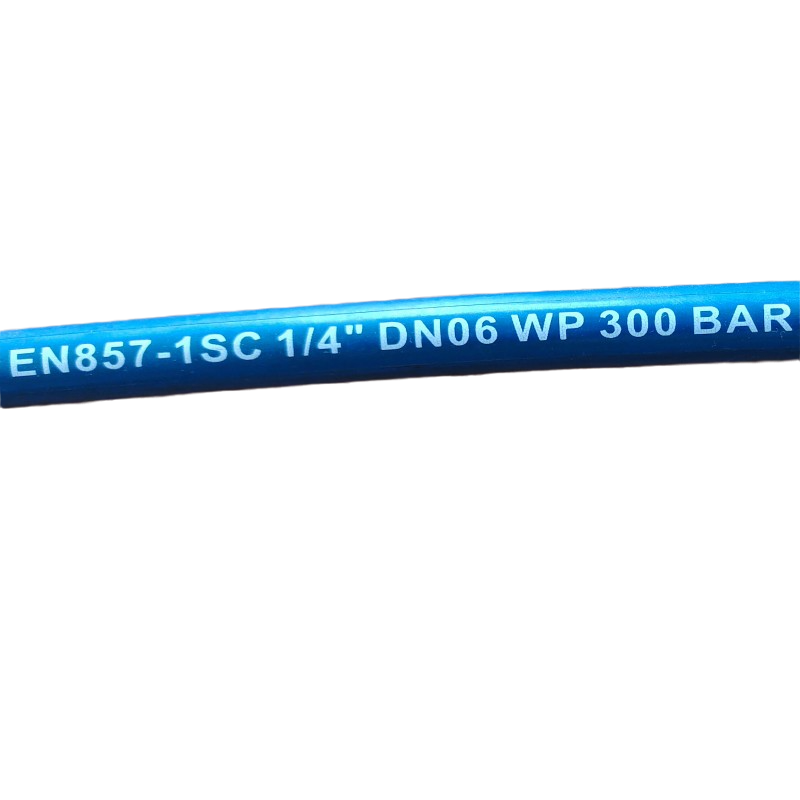
The performance of a one wire braided hydraulic hose is fundamentally governed by its ability to withstand internal pressure without failure. Force analysis focuses on hoop stress within the hose wall, calculated using Barlow's formula (S = PD/2t, where S is hoop stress, P is internal pressure, D is inner diameter, and t is wall thickness). The steel wire braid provides the tensile strength to counteract this stress. Fatigue resistance is also critical, especially in applications involving cyclical pressure variations. Impulse testing, per SAE J343, simulates these pressure pulses to assess hose durability. Environmental resistance is a significant engineering consideration. Exposure to extreme temperatures (both high and low) can affect rubber elasticity and lead to cracking or hardening. Ozone exposure degrades the rubber cover, reducing its protective capabilities. Chemical compatibility dictates the choice of inner tube material to prevent swelling, softening, or dissolution when exposed to the hydraulic fluid. Compliance with industry standards, such as ISO 6897 and EN 856, ensures that the hose meets minimum performance requirements for pressure rating, temperature range, and fluid compatibility. Proper hose assembly is also crucial; incorrect fittings or improper crimping can significantly reduce the hose's pressure capacity and lead to premature failure.
Technical Specifications
| Parameter | Unit | Typical Value (NBR Inner Tube, Steel Wire Braid, Synthetic Rubber Cover) | Testing Standard |
|---|---|---|---|
| Working Pressure | MPa | 20 | SAE J517 |
| Burst Pressure | MPa | 80 | SAE J517 |
| Temperature Range | °C | -40 to +100 | ISO 6897 |
| Inner Diameter | mm | 19 (customizable) | Dimensional Verification per Customer Specification |
| Outer Diameter | mm | 33 | Dimensional Verification per Customer Specification |
| Minimum Bend Radius | mm | 4D (where D is outer diameter) | Manufacturer Recommendation |
Failure Mode & Maintenance
Failure modes in one wire braided hydraulic hoses are diverse. Fatigue cracking, initiated by cyclical pressure fluctuations, often occurs at braid crossover points or near fitting connections. Hose rupture due to exceeding the working or burst pressure is a catastrophic failure mode. Pinholes or cracks in the inner tube can result from chemical attack or abrasion from fluid contaminants. Delamination – separation between the rubber layers – is often caused by inadequate bonding during vulcanization or thermal cycling. Oxidation of the rubber cover leads to cracking and loss of flexibility. Erosion due to fluid velocity or abrasive particles can gradually wear away the inner tube. Maintenance practices are crucial for maximizing hose life. Regular visual inspections should identify signs of cracking, abrasion, or leakage. Fluid cleanliness is paramount; using appropriate filtration systems minimizes abrasive wear. Avoid excessive bending or kinking, which can damage the braid. Proper hose routing prevents rubbing against other components. Hoses should be replaced at predetermined intervals, even if no visible damage is present, as rubber compounds degrade over time. When replacing hoses, ensure compatibility with the hydraulic fluid and use only approved fittings and crimping procedures.
Industry FAQ
Q: What is the impact of hydraulic fluid type on hose selection?
A: Hydraulic fluid compatibility is paramount. NBR is generally suitable for mineral oils, but EPDM is preferred for phosphate ester fluids due to NBR’s susceptibility to degradation. Incompatibility can cause swelling, softening, or cracking of the inner tube, leading to leakage and failure.
Q: How does temperature affect the performance of a braided hose?
A: Extreme temperatures compromise rubber elasticity. High temperatures accelerate degradation, while low temperatures reduce flexibility and increase the risk of cracking. Exceeding the specified temperature range significantly reduces hose life and can lead to sudden failure.
Q: What are the common causes of hose fitting failure?
A: Improper crimping is a primary cause. Insufficient crimping allows fluid leakage and reduces pressure capacity. Over-crimping can damage the hose reinforcement. Using incorrect fittings or fittings not designed for the hose’s pressure rating also leads to failure.
Q: Can a hose with minor abrasion on the cover still be used safely?
A: Minor abrasion on the cover is generally acceptable if the braid is not exposed. However, if the abrasion penetrates the cover and reaches the reinforcement, the hose should be replaced immediately, as the braid is vulnerable to corrosion and fatigue.
Q: What is the significance of impulse testing?
A: Impulse testing simulates the pressure pulsations that occur in many hydraulic systems. It assesses the hose’s ability to withstand repeated pressure surges without fatigue failure, which is crucial for long-term reliability.
Conclusion
OEM one wire braided high pressure hydraulic hoses are engineered components requiring careful consideration of material science, manufacturing precision, and application-specific performance parameters. Achieving reliable operation relies on selecting the appropriate inner tube material for fluid compatibility, ensuring robust reinforcement through precise wire braiding, and maintaining stringent quality control throughout the vulcanization process. Understanding potential failure modes – including fatigue cracking, delamination, and chemical degradation – is crucial for implementing effective preventative maintenance strategies.
Moving forward, advancements in hose technology are focused on developing more durable materials, reducing hose weight, and enhancing resistance to harsh operating conditions. Further research into alternative reinforcement materials, such as synthetic fibers, may offer improved fatigue performance and corrosion resistance. The integration of sensor technology within hoses, enabling real-time monitoring of pressure, temperature, and structural integrity, represents a potential avenue for predictive maintenance and improved system safety.