
Apr . 01, 2024 17:55 Back to list
oem oil hose Performance Analysis

Introduction
OEM oil hose, commonly referred to as Original Equipment Manufacturer oil hose, represents a critical component within fluid transfer systems across diverse industrial applications. Positioned within the supply chain as a customized solution, these hoses are engineered to meet the precise specifications of equipment manufacturers, differing from standardized, off-the-shelf products. Core performance characteristics include resistance to petroleum-based fluids, varying pressure and temperature capabilities, and long-term durability. The industry faces consistent challenges regarding material compatibility with evolving fuel formulations (biofuels, synthetic lubricants), maintaining consistent internal smoothness to minimize pressure drop, and ensuring dimensional stability under extreme operating conditions. The demand for lightweight, high-strength, and environmentally resistant hoses is continually increasing, driven by efficiency targets and increasingly stringent regulatory demands.
Material Science & Manufacturing
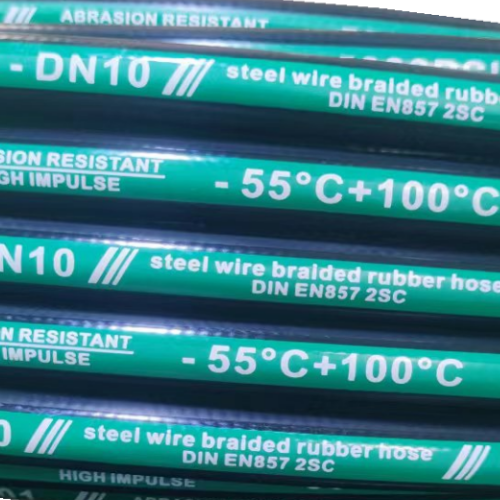
OEM oil hose construction typically employs a multi-layered architecture. The inner tube, in direct contact with the fluid, is commonly composed of nitrile rubber (NBR) due to its excellent resistance to oils, fuels, and hydraulic fluids. Alternative materials include fluorocarbon elastomers (FKM/Viton) for applications demanding higher temperature resistance and compatibility with aggressive chemicals, and ethylene propylene diene monomer (EPDM) for specialized applications like brake fluid lines. The reinforcement layer dictates the hose's pressure handling capabilities. High-tensile strength textile braiding (typically polyester or aramid fibers) is prevalent for moderate pressures, while spiral-wound steel wire reinforcement is employed for high-pressure applications exceeding 3000 PSI. The outer cover provides environmental protection and abrasion resistance. Common materials include Chlorinated Polyethylene (CPE) and Polyurethane (PU). Manufacturing processes vary based on hose complexity. Inner tubes are generally extruded, followed by reinforcement layer application (braiding or winding). Outer covers are then extruded over the reinforcement, and the hose is vulcanized (cured) to achieve the final properties. Critical parameters during extrusion include die temperature, screw speed, and polymer melt viscosity, all influencing wall thickness and homogeneity. Braiding tension and winding angle are crucial for reinforcement integrity. Vulcanization time, temperature, and pressure must be precisely controlled to ensure optimal crosslinking of the rubber compounds, maximizing tensile strength, elongation, and fluid resistance. Post-processing includes dimensional inspection, pressure testing, and leak detection.
Performance & Engineering
The performance of OEM oil hose is dictated by rigorous engineering considerations centered on fluid dynamics and structural integrity. Burst pressure, working pressure, and kink radius are paramount design parameters. Burst pressure represents the maximum pressure the hose can withstand before catastrophic failure, typically determined through hydrostatic testing per SAE J30R standards. Working pressure is a fraction of the burst pressure (often a 4:1 safety factor) and defines the hose’s safe operating limit. Kink radius is critical to prevent flow restriction and hose damage during installation and operation. Finite Element Analysis (FEA) is routinely employed to optimize hose geometry and reinforcement structure to minimize stress concentration under pressure loading and bending. Environmental resistance is a key concern. Exposure to ozone, UV radiation, extreme temperatures, and corrosive fluids can degrade the rubber compounds. Accelerated aging tests (ASTM G154) are used to predict long-term performance under environmental stress. Fluid compatibility is assessed by immersing hose samples in the target fluids for extended periods and monitoring changes in volume, hardness, and tensile strength. Furthermore, permeation testing (SAE J30R9) quantifies the rate at which fluids migrate through the hose wall, crucial for maintaining fluid containment and preventing environmental contamination. Regulatory compliance (e.g., REACH, RoHS) governs the use of restricted substances in hose construction.
Technical Specifications
| Parameter | Unit | Typical Value (NBR, Textile Braid) | Typical Value (FKM, Steel Wire Spiral) |
|---|---|---|---|
| Working Pressure | PSI | 600 | 4500 |
| Burst Pressure | PSI | 2400 | 18000 |
| Temperature Range | °F | -40 to 212 | -20 to 400 |
| Inner Diameter | Inches | 0.25 – 2.0 | 0.5 – 4.0 |
| Outer Diameter | Inches | 0.375 – 2.25 | 0.75 – 4.5 |
| Minimum Bend Radius | Inches | 6 | 12 |
Failure Mode & Maintenance
OEM oil hose is susceptible to several failure modes. Fatigue cracking, induced by repeated pressure cycling and bending, is common, particularly near fittings. This manifests as small cracks propagating through the reinforcement layer. Hose degradation results from exposure to harsh chemicals, ozone, UV radiation, and extreme temperatures, leading to rubber compound embrittlement and loss of flexibility. Internal abrasion occurs when abrasive particles are carried within the fluid stream, gradually eroding the inner tube. Fitting-related failures include leakage due to improper crimping, corrosion of the fitting material, or damage to the sealing surface. Delamination, the separation of hose layers, can occur due to inadequate bonding during vulcanization or exposure to aggressive fluids. Oxidation can cause the rubber to become brittle and crack over time. Preventative maintenance is critical. Regular visual inspections should be conducted to identify cracks, abrasions, bulges, or leaks. Hose pressure should be maintained within specified limits. Avoid sharp bends and kinks. Ensure compatibility between the hose material and the fluid being conveyed. If damage is detected, the hose should be replaced immediately. Proper storage is essential – hoses should be stored in a cool, dry, dark place, away from ozone sources and direct sunlight. Periodically lubricating fittings can prevent corrosion and ensure a secure seal.
Industry FAQ
Q: What is the primary difference between a standard oil hose and an OEM oil hose?
A: The key distinction lies in customization. Standard oil hoses adhere to industry-wide specifications (e.g., SAE J30R), while OEM hoses are engineered to meet the specific dimensional, performance, and fluid compatibility requirements dictated by the equipment manufacturer. This often includes unique lengths, fitting configurations, and material formulations.
Q: How does temperature affect the lifespan of an oil hose?
A: Elevated temperatures accelerate the degradation of rubber compounds, leading to hardening, cracking, and reduced flexibility. Conversely, extremely low temperatures can cause embrittlement and cracking. Maintaining operating temperatures within the hose’s specified range is crucial for maximizing its lifespan. Specific rubber materials like FKM offer superior temperature resistance compared to NBR.
Q: What factors should be considered when selecting a hose reinforcement material?
A: Reinforcement material selection depends primarily on the required working pressure and application environment. Textile braiding is suitable for moderate pressures and general-purpose applications. Steel wire spiral reinforcement is necessary for high-pressure systems. Aramid fibers offer a higher strength-to-weight ratio than polyester but are more expensive.
Q: How do I identify potential hose compatibility issues with new biofuel blends?
A: Biofuel blends can contain components that are incompatible with certain rubber compounds, leading to swelling, softening, and degradation. Conducting compatibility testing, involving immersion studies and monitoring changes in physical properties, is essential before using a hose with a new biofuel blend. Consulting with the hose manufacturer is also recommended.
Q: What are the consequences of exceeding the recommended working pressure of an oil hose?
A: Exceeding the working pressure significantly increases the risk of hose failure, potentially resulting in catastrophic rupture, fluid leaks, and equipment damage. This can also pose a safety hazard to personnel. Always operate hoses within their specified pressure limits and implement pressure relief mechanisms when necessary.
Conclusion
OEM oil hose technology represents a sophisticated intersection of material science, engineering design, and manufacturing precision. Achieving optimal performance requires a deep understanding of fluid dynamics, structural mechanics, and environmental factors. The selection of appropriate materials, meticulous control of manufacturing processes, and adherence to relevant industry standards are critical for ensuring long-term reliability and safety.
Looking forward, innovation in OEM oil hose development will likely focus on lightweight materials, enhanced chemical resistance, and intelligent hose monitoring systems to predict and prevent failures. The increasing demand for environmentally friendly materials and sustainable manufacturing practices will also drive future advancements. Continued collaboration between hose manufacturers and equipment OEMs is essential for developing customized solutions that meet the evolving needs of diverse industrial applications.