
Apr . 01, 2024 17:55 Back to list
oem oem brand hydraulic hose Performance Engineering
Introduction
Hydraulic hose, particularly OEM-branded variants, constitutes a critical component within fluid power systems across diverse industrial applications. These applications span mobile machinery (construction, agriculture, mining), material handling, manufacturing, and specialized industrial equipment. OEM hydraulic hose differs from generic aftermarket options by being specifically engineered and validated for integration into a manufacturer’s complete system, often to stringent performance and quality specifications. The primary function is the reliable and efficient transmission of hydraulic fluid under pressure, facilitating power transfer to actuators and hydraulic motors. Core performance characteristics are defined by pressure rating, temperature range, fluid compatibility, and resistance to abrasion and environmental degradation. This guide provides a comprehensive technical overview of OEM hydraulic hose, covering material science, manufacturing processes, performance engineering, failure modes, and relevant industry standards. Understanding these elements is crucial for procurement managers, engineers, and maintenance personnel involved in hydraulic system design, operation, and upkeep.
Material Science & Manufacturing
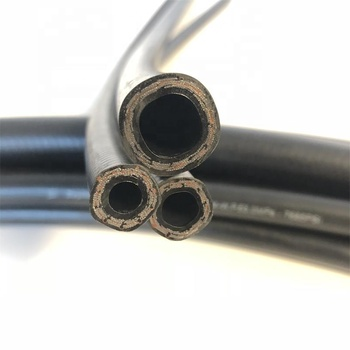
OEM hydraulic hose construction typically involves four primary layers: the inner tube, reinforcement layers, and the outer cover. The inner tube, in direct contact with the hydraulic fluid, is commonly composed of synthetic rubbers such as nitrile (NBR) for general petroleum-based fluids, ethylene propylene diene monomer (EPDM) for phosphate ester fluids, or fluorocarbon (FKM/Viton) for aggressive fluids like synthetic hydrocarbons and corrosive chemicals. NBR offers good abrasion resistance and cost-effectiveness, while EPDM provides superior heat and ozone resistance. FKM provides excellent chemical resistance, but at a higher cost. Reinforcement layers provide the burst strength and pressure containment. These layers are traditionally composed of multiple braids or spirals of high-tensile steel wire. The number and configuration of these layers directly correlate with the hose's working pressure. Textile reinforcement (aramid or polyester) may be incorporated for added flexibility and kink resistance, particularly in lower-pressure applications. The outer cover protects the reinforcement layers from abrasion, weathering, and chemical attack. Common cover materials include synthetic rubbers like chloroprene (CR) offering good oil and ozone resistance, or polyurethane for superior abrasion resistance. Manufacturing processes involve extrusion of the inner tube and cover, followed by helical winding or braiding of the reinforcement layers. Curing (vulcanization) processes using heat and pressure are then applied to crosslink the rubber polymers, achieving desired mechanical properties. Precise control of temperature, pressure, and cure time is paramount to ensure consistent hose performance and dimensional accuracy. Quality control utilizes destructive and non-destructive testing methods (burst pressure testing, impulse testing, dimensional inspection, and visual inspection) to verify adherence to specifications.
Performance & Engineering
Hydraulic hose performance is governed by several key engineering considerations. Burst pressure, defined as the pressure at which the hose fails catastrophically, is a critical safety parameter. Working pressure is typically specified as a fraction (e.g., 1/4) of the burst pressure, providing a safety factor. Hose selection must account for pressure spikes and dynamic loading, which can exceed steady-state operating pressure. Impulse testing, simulating pulsating pressure loads, assesses the hose’s fatigue resistance. Temperature range is another vital factor; both high and low temperatures can affect rubber flexibility and degrade material properties. Fluid compatibility dictates the inner tube material; incorrect material selection can lead to swelling, softening, or cracking. Hose bend radius is crucial to prevent kinking, which restricts flow and can lead to premature failure. Correct fitting selection (e.g., crimped fittings) is essential to ensure a leak-free and structurally sound connection. Finite Element Analysis (FEA) is increasingly used in hose design to optimize reinforcement layer configurations and predict stress distribution under various loading conditions. Compliance with industry standards (SAE J517, DIN EN 853, ISO 6898) is paramount to ensure safety and reliability. Furthermore, electrical conductivity is sometimes a design requirement, necessitating the incorporation of conductive polymers or steel wire in the hose construction to dissipate static electricity and prevent sparking in hazardous environments.
Technical Specifications
| Parameter | Unit | Specification (Typical) | Test Standard |
|---|---|---|---|
| Working Pressure | PSI | 2000-5000 | SAE J517 |
| Burst Pressure | PSI | 8000-20000 | SAE J517 |
| Temperature Range | °F | -40 to +212 | SAE J517 |
| Inner Tube Material | - | NBR, EPDM, FKM | ASTM D2000 |
| Reinforcement | Layers | 2-6 Spiral Wire | SAE J517 |
| Outer Cover Material | - | CR, Polyurethane | ASTM D2000 |
Failure Mode & Maintenance
Hydraulic hose failures can stem from various mechanisms. Fatigue cracking, induced by repeated pressure cycling and bending, is a common cause. This is exacerbated by improper hose routing or exceeding the minimum bend radius. Abrasion, caused by external contact with abrasive surfaces, can wear through the outer cover and expose the reinforcement layers. Chemical attack from incompatible fluids can degrade the inner tube, leading to leaks. Impact damage from physical objects can rupture the hose. Fitting failures, such as corrosion or improper crimping, are also frequent contributors. Internal corrosion from moisture ingress and fluid degradation can weaken the hose structure. Preventative maintenance is crucial. Regular visual inspections should be conducted to identify signs of abrasion, cracking, bulging, or leaks. Hose routing should be optimized to minimize bending and abrasion. Proper fluid filtration is essential to prevent contamination and corrosion. Hose assemblies should be replaced periodically based on manufacturer’s recommendations and operating conditions. When replacing hoses, always use fittings specifically designed for the hose and ensure proper crimping procedures are followed. Periodic pressure testing can identify potential leaks or weaknesses before catastrophic failure occurs. Documenting maintenance activities and tracking hose replacement cycles are essential for maintaining hydraulic system reliability.
Industry FAQ
Q: What is the impact of using a hose with a lower temperature rating than the application requires?
A: Using a hose with an insufficient temperature rating can lead to premature degradation of the rubber compounds, resulting in loss of flexibility, cracking, and ultimately, hose failure. Low temperatures can cause brittleness, while high temperatures can cause softening and swelling, compromising the hose's structural integrity and pressure-holding capacity.
Q: How does steel wire reinforcement affect the hose's flexibility versus kink resistance?
A: Increasing the number of steel wire reinforcement layers enhances the hose's burst pressure and kink resistance, but generally reduces its flexibility. A higher steel wire count makes the hose more rigid and less capable of bending without excessive stress. Textile reinforcement (aramid or polyester) can be used in conjunction with steel to improve flexibility while maintaining adequate pressure ratings.
Q: What are the consequences of using an incompatible fluid with the hose’s inner tube material?
A: Incompatible fluids can cause the inner tube material to swell, soften, or degrade, leading to leaks, reduced working pressure, and potential hose rupture. Swelling alters the hose’s dimensions, while softening reduces its strength. Chemical attack from corrosive fluids can cause cracking and permeation, leading to a loss of fluid containment.
Q: What is the proper procedure for inspecting hydraulic hose fittings?
A: Fittings should be inspected for signs of corrosion, damage to the threads, and proper crimp integrity. Check for leaks around the fitting connection. If corrosion is present, the fitting should be replaced. A visual inspection of the crimp should reveal a tight, uniform seal. Improperly crimped fittings are a common cause of hose failure.
Q: How frequently should hydraulic hoses be replaced as part of preventative maintenance?
A: Replacement frequency depends on the application, operating conditions, and hose exposure to harsh environments. A general guideline is to replace hydraulic hoses every 3-5 years, or after 1000 hours of operation, whichever comes first. More frequent replacement may be necessary in demanding applications with high pressures, temperatures, or exposure to abrasive substances. Documenting hose replacement intervals is essential.
Conclusion
OEM hydraulic hose represents a critical, highly-engineered component within fluid power systems. Its performance relies on a complex interplay of material science, manufacturing precision, and adherence to stringent industry standards. Selecting the appropriate hose for a given application requires a thorough understanding of pressure requirements, temperature ranges, fluid compatibility, and potential failure modes. Proactive preventative maintenance, including regular inspections and timely replacement, is paramount to ensure system reliability and safety.
The future of hydraulic hose technology will likely focus on advancements in material science, such as the development of more durable and chemically resistant polymers, and the integration of smart sensors for real-time condition monitoring. These advancements will enable predictive maintenance strategies, further reducing downtime and improving operational efficiency. The continued emphasis on standardization and quality control will remain crucial to ensure the safe and reliable operation of hydraulic systems across all industries.