
Apr . 01, 2024 17:55 Back to list
oem hydraulic oil hose Performance Analysis
Introduction
OEM hydraulic oil hose represents a critical component in fluid power systems across diverse industries, including construction equipment, agricultural machinery, industrial manufacturing, and automotive applications. These hoses are not universally standardized; rather, they are engineered and manufactured to precise specifications dictated by the original equipment manufacturer (OEM) to ensure compatibility, performance, and longevity within a specific system. This guide provides an in-depth technical overview of OEM hydraulic oil hose, encompassing material science, manufacturing processes, performance characteristics, failure modes, and relevant industry standards. Core performance relies on burst pressure resistance, impulse pressure capability, oil resistance, temperature endurance, and dimensional stability. A key industry pain point revolves around ensuring consistent hose performance across varying operating conditions and fluid types, alongside minimizing downtime due to premature failure – often stemming from improper material selection or manufacturing defects. The increasing demand for higher operating pressures and the utilization of bio-based hydraulic fluids further complicates hose design and material choices.
Material Science & Manufacturing
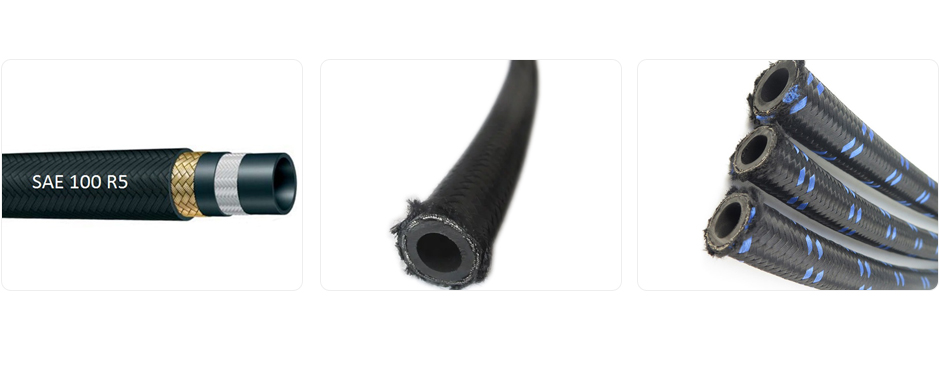
OEM hydraulic oil hoses typically comprise four primary layers: the inner tube, reinforcement layer(s), outer cover, and sometimes, an intermediate layer. The inner tube is almost invariably constructed from synthetic rubbers like nitrile (NBR), hydrogenated nitrile butadiene rubber (HNBR), or fluoroelastomers (FKM/Viton) depending on the hydraulic fluid compatibility requirements. NBR offers excellent resistance to petroleum-based fluids, while HNBR provides enhanced heat and ozone resistance. FKM offers superior chemical resistance but at a higher cost. The reinforcement layer provides the hose’s strength and pressure-bearing capacity. Common materials include multiple braids of high-tensile steel wire, spiraled steel wire, or synthetic fiber reinforcement (aramid or polyester). Steel wire provides significantly higher pressure ratings but is heavier and less flexible. The outer cover, usually made of synthetic rubber such as chloroprene (CR) or polyurethane (PU), provides abrasion, weather, and oil resistance. Manufacturing processes vary based on hose type and reinforcement. Braided hoses are created by interlacing individual wires around a mandrel, followed by rubber extrusion and vulcanization. Spiraled hoses utilize a single continuous wire spiraled around the inner tube, also followed by rubber extrusion and vulcanization. Key parameter control during manufacturing includes precise wire tension, rubber compound mixing ratios, curing time and temperature, and dimensional tolerances. Inconsistent curing can lead to reduced rubber elasticity and premature failure. Improper wire winding introduces stress concentrations, potential initiation points for fatigue cracking.

Performance & Engineering
Hydraulic hose performance is governed by several critical engineering parameters. Burst pressure, defined as the pressure at which the hose fails catastrophically, is a primary specification. Working pressure is significantly lower, typically 50-75% of the burst pressure, to account for safety factors and pressure surges. Impulse pressure resistance, the hose’s ability to withstand cyclical pressure fluctuations, is crucial in applications like hydraulic hammers or pumps. This is evaluated using impulse testing that simulates real-world operating conditions. Environmental resistance is also vital; hoses must maintain performance across a wide temperature range (-40°C to +120°C is common) and resist degradation from exposure to ozone, UV radiation, and various chemicals. Hose bend radius is an important consideration to prevent kinking and stress concentration. Force analysis focuses on calculating hoop stress (stress in the circumferential direction) and longitudinal stress (stress along the hose length) under pressure. Compliance requirements vary by region and application. For example, automotive hoses must meet stringent standards for fluid compatibility and temperature resistance as defined by SAE International. Industrial hoses are often subject to standards set by ISO or DIN. The selection of hose fittings plays a crucial role in overall system performance. Fittings must be properly crimped to ensure a leak-free and secure connection. Improper crimping can lead to premature failure at the fitting interface.
Technical Specifications
| Parameter | Unit | Typical Value (NBR Inner Tube, Steel Wire Reinforcement) | Typical Value (FKM Inner Tube, Aramid Reinforcement) |
|---|---|---|---|
| Working Pressure | MPa | 20 | 15 |
| Burst Pressure | MPa | 80 | 60 |
| Temperature Range | °C | -40 to +100 | -20 to +150 |
| Inner Diameter | mm | 19 | 12 |
| Outer Diameter | mm | 28 | 20 |
| Minimum Bend Radius | mm | 150 | 80 |
Failure Mode & Maintenance
Common failure modes in OEM hydraulic oil hose include burst failure (catastrophic rupture due to exceeding pressure limits), impulse failure (fatigue cracking due to cyclical pressure), abrasion (wear of the outer cover), kinking (restriction of fluid flow due to excessive bending), and chemical degradation (attack of the inner tube by incompatible fluids). Fatigue cracking initiates at stress concentrations, often near fittings or defects in the reinforcement layer. Delamination, the separation of layers within the hose, can occur due to poor bonding or exposure to harsh chemicals. Oxidation of the rubber compounds leads to loss of elasticity and cracking. Regular inspection is crucial for preventative maintenance. Look for signs of abrasion, cracking, swelling, or leakage. Hose should be replaced immediately if any of these signs are observed. Proper storage is also important. Hoses should be stored in a cool, dry, and dark location, away from direct sunlight and ozone sources. Avoid storing hoses bent or compressed, as this can cause permanent deformation. Crimped fittings should be inspected for proper tightness and corrosion. When replacing a hose, always use the correct replacement specified by the OEM, ensuring compatibility with the hydraulic fluid and operating conditions. Incorrect replacement can lead to premature failure and potentially hazardous situations. Record keeping of hose replacement dates can aid in establishing a proactive maintenance schedule.
Industry FAQ
Q: What are the key differences between DIN EN 853 and SAE J517 hydraulic hose standards?
A: DIN EN 853 (European standard) and SAE J517 (American standard) are both widely used, but differ in testing methodologies and performance classifications. SAE J517 uses a dash number system to define hose size and pressure ratings, focusing primarily on burst pressure. DIN EN 853 categorizes hoses based on performance classes (R1, R2, R3, etc.), considering both burst pressure and impulse pressure ratings, offering a more comprehensive assessment of dynamic performance. Additionally, the acceptance criteria for impulse testing can vary between the two standards.
Q: How does the selection of the inner tube material impact compatibility with different hydraulic fluids?
A: The inner tube material must be chemically compatible with the hydraulic fluid to prevent swelling, softening, or degradation. NBR is suitable for petroleum-based fluids, but can be attacked by phosphate ester fluids. HNBR offers improved resistance to heat and ozone, and wider fluid compatibility. FKM (Viton) provides the highest level of chemical resistance, making it ideal for aggressive fluids like synthetic esters and certain fire-resistant fluids. Incorrect material selection leads to premature failure and fluid contamination.
Q: What is the effect of wire helix pitch on hose flexibility and pressure rating?
A: A tighter wire helix pitch (more wires per inch) generally increases the hose's pressure rating, as it provides greater reinforcement. However, it also reduces the hose's flexibility, making it more difficult to route in tight spaces. Conversely, a wider pitch increases flexibility but lowers the pressure rating. The optimal pitch is a compromise between these two factors, dictated by the application requirements.
Q: What are the best practices for crimping hydraulic hose fittings?
A: Proper crimping is essential for a leak-free connection. The correct die size and crimping machine settings must be used, as specified by the fitting manufacturer. Fittings should be visually inspected for damage before crimping. After crimping, a pull test should be performed to verify the integrity of the connection. Over-crimping can damage the hose reinforcement, while under-crimping can result in leakage.
Q: How can I identify potential hose failures before they occur?
A: Regular visual inspections are crucial. Look for cracks, abrasions, bulges, kinks, oil weeping, or any signs of damage. Check fittings for tightness and corrosion. Perform pressure testing periodically to verify hose integrity. Keep a maintenance log to track hose replacement dates and identify potential problem areas. Implement a preventative maintenance program to address potential issues before they lead to catastrophic failures.
Conclusion
OEM hydraulic oil hose plays a pivotal role in ensuring the reliable operation of hydraulic systems. Selecting the appropriate hose, based on a comprehensive understanding of material properties, manufacturing processes, and performance requirements, is paramount. Failure to do so can result in costly downtime, safety hazards, and reduced system efficiency. Careful consideration must be given to fluid compatibility, pressure ratings, temperature range, and environmental conditions.
Ongoing inspection and maintenance are vital for prolonging hose life and preventing catastrophic failures. Implementing a proactive maintenance program, adhering to industry standards, and utilizing high-quality components are essential for maximizing the performance and longevity of OEM hydraulic oil hose systems. The continued development of new materials and manufacturing techniques promises further advancements in hydraulic hose technology, enabling even higher performance and reliability.