
Apr . 01, 2024 17:55 Back to list
oem high pressure steel wire braided hydraulic hose Performance Analysis

Introduction
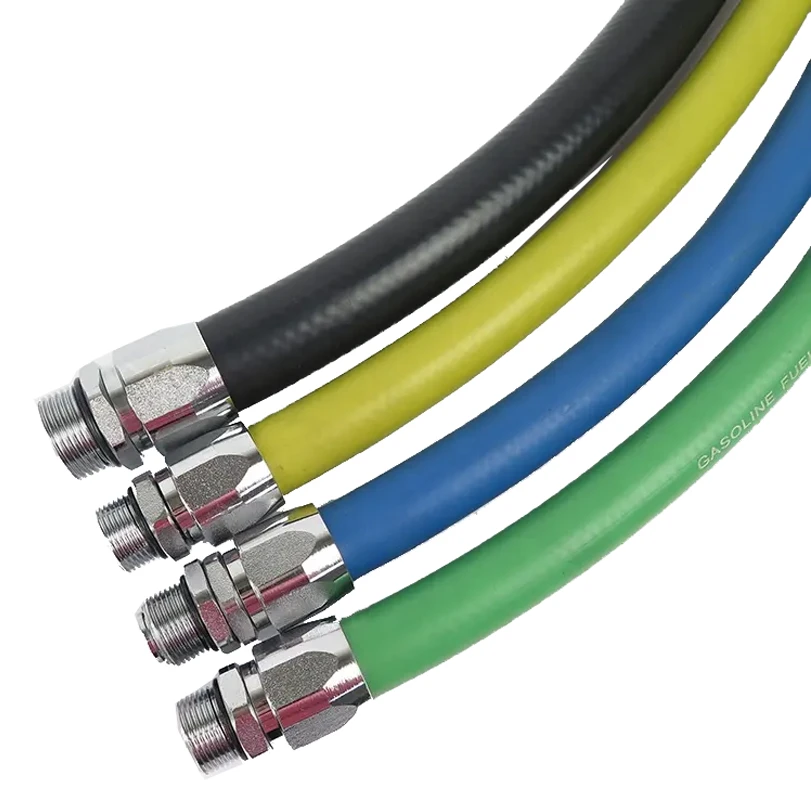
OEM high pressure steel wire braided hydraulic hose is a critical component in fluid power systems, designed to transmit hydraulic fluid to operate machinery. Positioned within the hydraulic system as the conduit between the pump, valves, and actuators, its performance directly impacts system efficiency, reliability, and safety. These hoses differ significantly from standard rubber hoses due to the reinforcement provided by multiple layers of high-tensile steel wire braid, enabling operation at substantially higher pressures and temperatures. Core performance characteristics include burst pressure, working pressure, impulse resistance, and temperature range. This guide details the materials, manufacturing processes, performance parameters, failure modes, and maintenance practices relevant to these specialized hoses, targeting engineers, procurement managers, and maintenance personnel in industries utilizing hydraulic power.
Material Science & Manufacturing
The construction of a high-pressure steel wire braided hydraulic hose comprises several key material layers. The inner tube, typically composed of synthetic rubber compounds such as nitrile (NBR), chloroprene (CR), or fluoroelastomer (FKM - Viton), provides fluid resistance. NBR is common for petroleum-based fluids, CR offers better ozone and weathering resistance, and FKM excels in high-temperature and aggressive chemical environments. The reinforcement layer consists of one or more braids of high-tensile steel wire, generally drawn to a specific diameter and treated for corrosion resistance. The steel’s yield strength and tensile strength are critical parameters determining the hose’s pressure capacity. An intermediate layer, often a synthetic rubber compound, provides adhesion between the inner tube and the steel braid. Finally, the outer cover, usually a synthetic rubber like CR or polyurethane, offers abrasion, weathering, and oil resistance.
Manufacturing begins with the extrusion of the inner tube to precise dimensions. The steel wire is then wound helically around a mandrel to form the braid, with braid angle being a critical control parameter; tighter angles increase pressure resistance but reduce flexibility. Subsequent layers are applied, culminating in the extrusion of the outer cover. Vulcanization, a chemical process involving heat and pressure, is then performed to crosslink the rubber compounds, achieving desired elasticity, strength, and chemical resistance. Quality control during manufacturing involves rigorous testing of each layer and the finished hose, including burst pressure tests, impulse tests, and dimensional inspections. Precise control of vulcanization time, temperature, and pressure is paramount to prevent defects like porosity or incomplete curing. Furthermore, adherence to geometric tolerances is essential for proper fitting and sealing in hydraulic systems.
Performance & Engineering
The performance of a steel wire braided hydraulic hose is governed by several key engineering principles. Force analysis focuses on the hoop stress developed within the hose walls when subjected to internal pressure. The steel wire braid is designed to counteract this hoop stress, preventing hose expansion and failure. The number of braids directly correlates with pressure capacity; increasing braids increases resistance to hoop stress. Impulse resistance is vital, especially in systems with pulsating flows. The hose must withstand repeated pressure surges without fatigue or rupture. This is achieved through the damping effect of the rubber layers and the flexibility of the steel braid. Environmental resistance is another critical factor. Exposure to extreme temperatures, UV radiation, and corrosive fluids can degrade the rubber compounds, reducing their elasticity and strength. Hose selection must consider the specific operating environment.
Compliance requirements vary depending on the application and geographic location. Hoses intended for critical applications, such as aircraft hydraulics, are subject to stringent testing and certification standards. The selection of materials must comply with relevant environmental regulations, such as REACH and RoHS, restricting the use of hazardous substances. Furthermore, proper hose assembly, including the selection of compatible fittings and correct crimping procedures, is essential for ensuring safe and reliable operation. Incorrect crimping can lead to premature failure at the fitting interface. Finite element analysis (FEA) is frequently employed in the design process to optimize hose geometry and material selection for specific operating conditions.
Technical Specifications
| Parameter | Unit | Typical Value (DN20, 2-Wire Braid) | Testing Standard |
|---|---|---|---|
| Working Pressure | MPa | 25 | SAE J517 |
| Burst Pressure | MPa | 100 | SAE J517 |
| Temperature Range | °C | -40 to +100 | SAE J517 |
| Inner Tube Material | - | NBR | ASTM D2000 |
| Reinforcement Material | - | Steel Wire | ASTM A228 |
| Outer Cover Material | - | CR | ASTM D2000 |
Failure Mode & Maintenance
Failure modes in steel wire braided hydraulic hoses are diverse and can stem from several causes. Fatigue cracking, particularly at the braid crossover points, is a common issue due to cyclic pressure fluctuations. Corrosion, both internal and external, can degrade the steel wire, reducing its tensile strength. The ingress of moisture can accelerate corrosion, especially in environments with chloride ions. Abrasion damage to the outer cover can expose the steel braid to corrosion. Delamination, the separation of the rubber layers, can occur due to poor adhesion or exposure to incompatible fluids. Oxidation of the rubber compounds, caused by exposure to heat and oxygen, leads to hardening and cracking. Kinking or excessive bending can cause localized stress concentrations and premature failure.
Preventative maintenance is crucial for extending hose life and ensuring system reliability. Regular visual inspections should identify abrasion, cracks, or swelling. Leak testing should be performed to detect any fluid loss. Hose routing should be designed to minimize bending and avoid contact with abrasive surfaces. Fluid compatibility must be verified to prevent degradation of the rubber compounds. Crimped fittings should be inspected for proper seating and tightness. If a hose exhibits signs of damage, it should be replaced immediately. When replacing a hose, ensure the new hose has the same or higher pressure and temperature ratings as the original. Proper storage of hoses, protected from UV radiation and extreme temperatures, is also essential.
Industry FAQ
Q: What is the impact of braid angle on hose performance?
A: A tighter braid angle (closer to 90 degrees) provides higher pressure resistance by increasing the axial force resisting hoop stress. However, it also reduces the hose’s flexibility and makes it more susceptible to kinking. A shallower angle provides greater flexibility but reduces pressure capacity. The optimal angle is a compromise based on the specific application requirements.
Q: What is the significance of impulse testing?
A: Impulse testing simulates the effects of pressure pulsations in a hydraulic system. The hose is subjected to repeated pressure surges, and its ability to withstand these surges without failure is evaluated. This testing is critical for identifying hoses that are prone to fatigue cracking and premature failure in dynamic applications.
Q: How do different inner tube materials affect fluid compatibility?
A: Nitrile (NBR) is suitable for petroleum-based fluids, but its compatibility with phosphate ester hydraulic fluids is limited. Chloroprene (CR) offers wider compatibility, including with ozone and weathering, but has lower temperature resistance. Fluoroelastomer (FKM/Viton) provides excellent chemical resistance and high-temperature performance but is more expensive.
Q: What are the consequences of using improper crimping procedures?
A: Improper crimping, whether over-crimping or under-crimping, can lead to premature failure at the fitting interface. Under-crimping results in a loose connection prone to leakage, while over-crimping can damage the hose reinforcement and reduce its pressure capacity. Correct crimping requires calibrated tooling and adherence to the fitting manufacturer’s specifications.
Q: How does temperature affect the lifespan of a hydraulic hose?
A: Elevated temperatures accelerate the degradation of rubber compounds, reducing their elasticity and strength. Prolonged exposure to high temperatures can lead to hardening, cracking, and loss of flexibility. Low temperatures can also affect performance, making the rubber less pliable and more susceptible to damage. Maintaining the hose within its specified temperature range is critical for maximizing its lifespan.
Conclusion
OEM high pressure steel wire braided hydraulic hoses are essential components in demanding fluid power applications. Their performance relies heavily on a combination of material science, precise manufacturing controls, and adherence to rigorous engineering principles. Understanding the interplay between pressure rating, temperature range, fluid compatibility, and environmental factors is critical for selecting the appropriate hose for a given application.
Proactive maintenance, including regular inspections and adherence to recommended operating practices, is vital for maximizing hose lifespan and preventing catastrophic failures. Continued advancements in materials and manufacturing techniques are leading to the development of hoses with enhanced performance characteristics, contributing to increased system reliability and safety in a wide range of industries.