
Apr . 01, 2024 17:55 Back to list
oem high pressure rubber hydraulic hose Performance Engineering
Introduction
OEM high pressure rubber hydraulic hoses are critical components in fluid power systems, responsible for transmitting hydraulic fluid to actuate machinery and perform work. They are distinguished from standard hoses by their construction designed to withstand significantly higher operating pressures and more demanding environmental conditions. These hoses are not merely conduits; they are engineered systems composed of multiple layers, each contributing to the hose’s overall performance and longevity. Positioned within the industrial chain as a vital link between hydraulic power units (HPUs), pumps, valves, and actuators, their failure can lead to costly downtime, safety hazards, and reduced system efficiency. Core performance characteristics include burst pressure, working pressure, temperature resistance, fluid compatibility, and resistance to abrasion and kinking. The OEM designation indicates these hoses are typically manufactured to specific customer requirements, often integrated into larger systems rather than sold as stand-alone replacements.
Material Science & Manufacturing
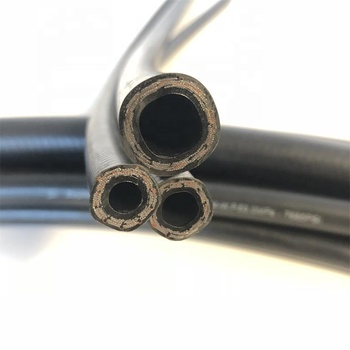
The construction of a high-pressure hydraulic hose typically begins with an inner tube, often formulated from a synthetic rubber compound such as nitrile rubber (NBR) or fluoroelastomer (FKM – Viton), chosen for their resistance to hydraulic fluids, including petroleum-based oils, synthetic fluids, and water-glycol mixtures. NBR provides good general-purpose oil resistance and cost-effectiveness, while FKM offers superior resistance to high temperatures and aggressive fluids. Following the inner tube, a reinforcement layer is crucial for withstanding high pressures. This layer typically consists of multiple plies of high-tensile steel wire, spirally wound or braided. The number and configuration of these wires directly influence the hose’s burst pressure rating. Between the reinforcement and the outer cover, a rubber skim stock is applied to bond the reinforcement to the cover and provide a smooth surface. The outer cover, often made of a synthetic rubber like chloroprene (CR – Neoprene) or polyurethane, provides abrasion resistance, weathering protection, and resistance to ozone and UV degradation. Manufacturing processes are highly controlled. The inner tube is extruded, followed by the application of reinforcement layers via winding or braiding machines. Curing (vulcanization) is a critical step, using heat and pressure to crosslink the rubber compounds, enhancing their strength, elasticity, and chemical resistance. Precise control of temperature, pressure, and cure time is essential to achieve optimal material properties. Quality control involves hydrostatic testing to verify burst pressure, impulse testing to assess fatigue life, and dimensional checks to ensure adherence to specifications.
Performance & Engineering
Hydraulic hose performance is dictated by several critical engineering considerations. Burst pressure, a primary specification, is the pressure at which the hose is expected to rupture during a static test. Working pressure, typically expressed as a percentage of the burst pressure (e.g., 50%), defines the maximum continuous operating pressure. Impulse pressure, representing pressure fluctuations in the hydraulic system, is addressed through impulse testing, evaluating the hose's ability to withstand repeated pressure surges without failure. Fatigue life is also a key performance metric, determined by conducting cyclic pressure testing. The hose’s bend radius is critical; exceeding the minimum bend radius can cause kinking and premature failure. Environmental factors significantly impact performance. High temperatures can accelerate rubber degradation, reducing the hose’s flexibility and burst strength. Exposure to ozone, UV radiation, and harsh chemicals can also lead to material breakdown. Fluid compatibility is paramount; selecting a hose with an inner tube material compatible with the hydraulic fluid is essential to prevent swelling, softening, or cracking. Force analysis considers the tensile stress on the reinforcement layers under pressure. Finite element analysis (FEA) is often employed to optimize hose construction and predict stress distribution. Compliance with industry standards (SAE J517, EN 856, ISO 6393) is a non-negotiable aspect of performance and safety.
Technical Specifications
| Parameter | Unit | Specification Range (Typical) | Test Standard |
|---|---|---|---|
| Working Pressure | MPa | 10 - 420 | SAE J517 |
| Burst Pressure | MPa | 30 - 1260 | SAE J517 |
| Temperature Range | °C | -40 to +100 | ISO 6393 |
| Inner Tube Material | - | NBR, FKM, EPDM | ASTM D2000 |
| Reinforcement | - | 2-6 Spiral Steel Wire Layers | SAE J517 |
| Outer Cover Material | - | CR, Polyurethane | ASTM D2000 |
Failure Mode & Maintenance
Common failure modes in high-pressure hydraulic hoses include burst failure due to exceeding pressure limits, fatigue cracking from repeated pressure cycles, pinhole leaks caused by abrasion or damage to the inner tube, and end fitting failure due to corrosion or improper crimping. Delamination, the separation of hose layers, often results from thermal cycling or incompatible materials. Oxidation and weathering can degrade the outer cover, leading to cracking and reduced abrasion resistance. Internal degradation of the rubber compounds can occur due to fluid incompatibility, causing swelling, softening, and eventual failure. Failure analysis often involves microscopic examination of the fracture surface to determine the root cause. Proper maintenance is critical to extending hose life. Regular visual inspections should be conducted to identify signs of wear, abrasion, cracking, or leaks. Hoses should be replaced if damage is detected. Maintain proper fluid cleanliness to prevent internal abrasion and contamination. Ensure correct hose routing to avoid kinking or rubbing against other components. Avoid exceeding the hose’s working pressure and temperature limits. End fittings should be inspected for corrosion and properly crimped to ensure a secure connection. Implement a scheduled replacement program based on operating conditions and hose usage.
Industry FAQ
Q: What is the impact of hose layline markings on traceability and warranty claims?
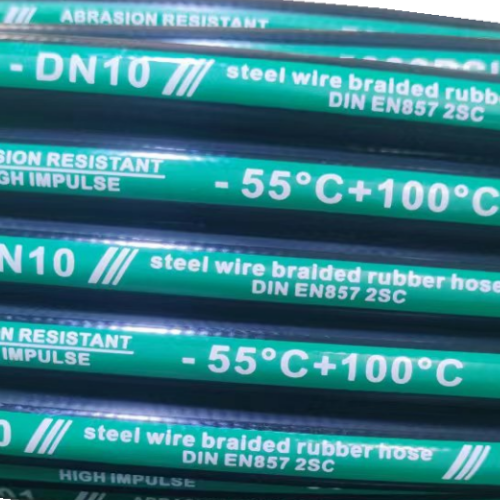
A: Layline markings, permanently embossed onto the hose cover, provide critical traceability information, including manufacturer, date of manufacture, and hose specification. These markings are essential for verifying compliance with standards and facilitating warranty claims. Without proper layline markings, tracing the hose back to its origin and verifying its manufacturing date can be extremely difficult, potentially invalidating a warranty claim.
Q: How does the choice of end fitting material affect hose performance and longevity?
A: End fitting material compatibility with the hydraulic fluid and the hose itself is crucial. Carbon steel fittings are common, but they are susceptible to corrosion, particularly in environments with moisture or corrosive fluids. Stainless steel fittings offer superior corrosion resistance, but are more expensive. Improperly crimped fittings can lead to leakage and premature failure. The fitting must also be appropriately sized for the hose and operating pressure.
Q: What is the significance of impulse testing and how is it performed?
A: Impulse testing simulates the pressure pulsations that occur in hydraulic systems. The hose is subjected to repeated cycles of pressure increase and decrease, typically at a frequency corresponding to the system’s operating cycle. This testing assesses the hose’s ability to withstand fatigue and prevents premature failure due to dynamic loading. The test is performed using specialized impulse testing machines that apply controlled pressure pulses.
Q: What are the key considerations when selecting a hose for a high-temperature hydraulic system?
A: For high-temperature applications, selecting a hose with an inner tube and outer cover formulated from heat-resistant materials (e.g., FKM, silicone) is critical. The hose’s working pressure rating must be derated at elevated temperatures, as the material strength decreases with increasing temperature. Proper insulation and cooling mechanisms may also be necessary to prevent overheating.
Q: How does the hose diameter influence flow rate and pressure drop in a hydraulic system?
A: Increasing the hose diameter reduces flow velocity and, consequently, reduces pressure drop. However, larger diameter hoses are more expensive and require larger fittings. Selecting the optimal hose diameter involves balancing flow rate requirements, pressure drop limitations, and cost considerations. Incorrect hose diameter can lead to inefficiencies and system performance issues.
Conclusion
OEM high-pressure rubber hydraulic hoses are sophisticated engineered components demanding careful material selection, precise manufacturing control, and diligent maintenance. Their performance is inextricably linked to the overall reliability and efficiency of hydraulic systems. Understanding the interplay between material properties, manufacturing processes, operating conditions, and potential failure modes is paramount for ensuring safe and prolonged operation.
Future trends in hydraulic hose technology include the development of lighter-weight materials, improved abrasion resistance, and smart hoses equipped with sensors for real-time condition monitoring. The integration of advanced materials and monitoring capabilities will further enhance hose performance, reduce downtime, and improve safety in demanding industrial applications.