
Apr . 01, 2024 17:55 Back to list
oem high pressure rubber hose Performance Analysis

Introduction
OEM high pressure rubber hose constitutes a critical component in fluid power systems across diverse industrial applications, including hydraulics, pneumatics, and material transfer. Positioned as a flexible conduit, it facilitates the transmission of fluids and gases under substantial pressure, connecting source and destination points while accommodating dynamic operational conditions. Its technical position in the supply chain falls between the raw material suppliers (rubber compounds, reinforcement materials) and the system integrators who assemble final equipment like construction machinery, agricultural implements, and industrial robots. Core performance characteristics center around burst pressure, working pressure, temperature resistance, chemical compatibility, and dimensional stability. A key pain point within the industry revolves around achieving consistent performance and longevity in harsh operating environments, demanding robust material selection, precise manufacturing controls, and comprehensive quality assurance protocols. Furthermore, increasingly stringent environmental regulations are driving the need for hoses with reduced environmental impact, necessitating the development of sustainable materials and manufacturing processes.
Material Science & Manufacturing
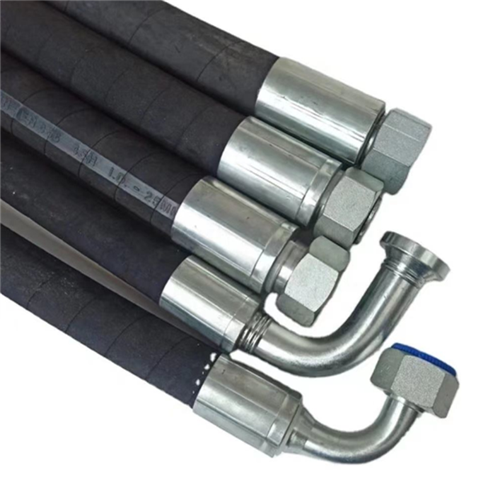
The composition of OEM high pressure rubber hose is multi-layered, each contributing to overall performance. The inner tube typically utilizes materials exhibiting excellent resistance to the conveyed fluid, commonly employing synthetic rubbers like nitrile (NBR) for oil-based fluids, ethylene propylene diene monomer (EPDM) for water and steam, or fluorocarbon (FKM) for aggressive chemicals. The reinforcement layer provides structural integrity to withstand pressure; options include single or multiple braids of high-tensile steel wire, spiral-wound steel wire, or aramid fiber. The cover, the outermost layer, protects against abrasion, weathering, and chemical attack, often employing a blend of synthetic rubbers like chloroprene (CR) or styrene-butadiene rubber (SBR). Manufacturing processes vary based on hose complexity. Braided hoses involve precisely winding steel wire helically around a mandrel, followed by rubber extrusion over the braid. Spiral-wound hoses utilize a continuous strand of steel wire wrapped at a steep angle, providing superior flexibility. Critical parameters during extrusion include temperature control to ensure proper rubber vulcanization, braid tension to achieve desired burst strength, and dimensional accuracy to guarantee proper fitting compatibility. Vulcanization, the chemical crosslinking of rubber molecules using sulfur or peroxides, is crucial for developing the desired mechanical properties. Post-vulcanization, rigorous testing for tensile strength, elongation, and hardness ensures adherence to specifications. Chemical compatibility testing, involving exposure to representative fluids for extended durations, verifies material resistance and prevents premature degradation.
Performance & Engineering
Performance of high pressure rubber hose is fundamentally governed by its ability to withstand internal pressure without failure. This is dictated by the reinforcement layer's tensile strength and the hose's geometry. Force analysis involves calculating hoop stress within the hose wall, proportional to the internal pressure and radius, inversely proportional to the wall thickness. Fatigue analysis is critical for applications involving cyclical pressure fluctuations, predicting hose lifespan based on stress amplitude and number of cycles. Environmental resistance is a major consideration; exposure to extreme temperatures can affect rubber elasticity and strength. Ultraviolet (UV) radiation can cause polymer degradation, leading to cracking and reduced flexibility. Ozone attack also degrades rubber compounds. Compliance requirements vary by industry and region. Hydraulic hoses in mobile machinery must meet Society of Automotive Engineers (SAE) standards, while industrial hoses may adhere to standards set by the International Organization for Standardization (ISO). Functional implementation details depend on the specific application. For example, hydraulic hoses in heavy equipment require high flexibility for maneuvering, while hoses used in chemical processing plants demand superior chemical resistance and leak-tight connections. Leakage is a significant concern, often addressed through the use of optimized fitting designs and proper hose assembly procedures, including correct crimping parameters.
Technical Specifications
| Parameter | Unit | Typical Value | Test Standard |
|---|---|---|---|
| Working Pressure | MPa | 20 | SAE J517 |
| Burst Pressure | MPa | 80 | SAE J517 |
| Temperature Range | °C | -40 to +100 | ISO 6807 |
| Inner Tube Material | - | NBR | ASTM D2000 |
| Reinforcement | - | 2 Wire Braid | SAE J517 |
| Cover Material | - | CR | ASTM D2000 |
Failure Mode & Maintenance
Common failure modes in OEM high pressure rubber hose include burst failure due to exceeding pressure limits, fatigue cracking from cyclical loading, and degradation of rubber compounds from exposure to chemicals, UV radiation, or extreme temperatures. Delamination, the separation of layers within the hose wall, can occur due to inadequate bonding between materials or improper vulcanization. Oxidation leads to hardening and cracking of the rubber, reducing flexibility and increasing the risk of failure. Failure analysis typically involves visual inspection for cracks and bulges, followed by destructive testing to determine burst pressure and tensile strength. Microscopic examination can reveal material degradation mechanisms. Preventive maintenance is crucial for extending hose lifespan. Regular visual inspections should identify signs of wear, such as cracks, abrasion, or swelling. Hoses should be replaced if any damage is detected. Proper storage conditions, avoiding direct sunlight and extreme temperatures, can minimize degradation. Regular flushing of the hose with a compatible fluid can remove contaminants that accelerate wear. Correct hose routing, avoiding sharp bends and kinks, prevents stress concentration and reduces the risk of fatigue failure. Appropriate fitting selection and proper crimping are also vital for ensuring leak-free connections and maximizing hose performance.
Industry FAQ
Q: What is the impact of hydraulic fluid type on hose selection?
A: The hydraulic fluid’s chemical compatibility with the inner tube material is paramount. Using an incompatible fluid can cause the rubber to swell, soften, or degrade, leading to leakage and premature failure. For phosphate ester fluids, for example, a specialized FKM inner tube is typically required. Viscosity and temperature also play a role; higher viscosity fluids require larger hose diameters to minimize pressure drop, and elevated temperatures necessitate materials with higher temperature resistance.
Q: How does the number of reinforcement braids affect hose performance?
A: Increasing the number of reinforcement braids directly increases the hose’s burst pressure capacity. Each braid layer adds tensile strength, allowing the hose to withstand higher internal pressures. However, increasing braid count also reduces flexibility. A balance must be achieved between pressure rating and flexibility based on the application requirements.
Q: What are the key considerations for selecting a hose cover material?
A: The cover material must provide protection against abrasion, weathering (UV radiation, ozone), and chemical exposure. CR (Chloroprene) offers good all-around resistance, while SBR (Styrene-Butadiene Rubber) is more cost-effective but less resistant to oils and chemicals. Specialized covers, such as those based on polyurethane, provide superior abrasion resistance.
Q: How does temperature affect the working pressure of a high-pressure hose?
A: Elevated temperatures generally reduce the working pressure rating of a rubber hose. The rubber material loses elasticity and strength at higher temperatures, diminishing its ability to withstand internal pressure. Manufacturers provide derating factors that adjust the working pressure based on operating temperature.
Q: What are the best practices for hose assembly and crimping?
A: Proper hose assembly requires using fittings specifically designed for the hose type and size. Crimping must be performed according to the manufacturer's specifications, ensuring a secure and leak-tight connection. Incorrect crimping (under-crimping or over-crimping) can significantly reduce hose performance and lead to premature failure. Using calibrated crimping equipment and trained personnel is essential.
Conclusion
OEM high pressure rubber hose is a sophisticated engineered product whose performance hinges on a complex interplay of material science, manufacturing precision, and adherence to rigorous industry standards. Selecting the appropriate hose for a given application requires a thorough understanding of the operating conditions, including pressure, temperature, fluid compatibility, and environmental factors. Failure to adequately address these considerations can result in premature failure, system downtime, and potential safety hazards.
Moving forward, innovations in rubber compound technology, reinforcement materials, and manufacturing processes will continue to drive improvements in hose performance, durability, and sustainability. The increasing demand for lighter, more flexible, and chemically resistant hoses will spur the development of advanced materials like thermoplastic composites and bio-based rubbers. Furthermore, the integration of sensor technologies into hoses will enable real-time monitoring of pressure, temperature, and structural integrity, facilitating predictive maintenance and enhancing system reliability.