
Apr . 01, 2024 17:55 Back to list
oem high pressure hydraulic rubber hose Performance Analysis

Introduction
OEM high pressure hydraulic rubber hose is a critical component in fluid power systems, engineered to transmit hydraulic fluid to actuators and other components. Positioned within the broader industrial supply chain as a specialized sub-assembly, it represents a crucial link between hydraulic power units and operational machinery. These hoses are specifically manufactured to meet stringent performance criteria including pressure capacity, temperature resistance, and fluid compatibility. Core performance characteristics center around burst pressure, working pressure, impulse resistance, and resistance to chemical degradation – defining its suitability for applications ranging from construction equipment and agricultural machinery to aerospace and industrial manufacturing. The inherent challenge within the industry lies in balancing cost-effectiveness with reliability and longevity, particularly given the demanding operating environments these hoses are subjected to. OEM specifications often necessitate bespoke designs tailored to specific machine parameters, adding complexity to the manufacturing process.
Material Science & Manufacturing
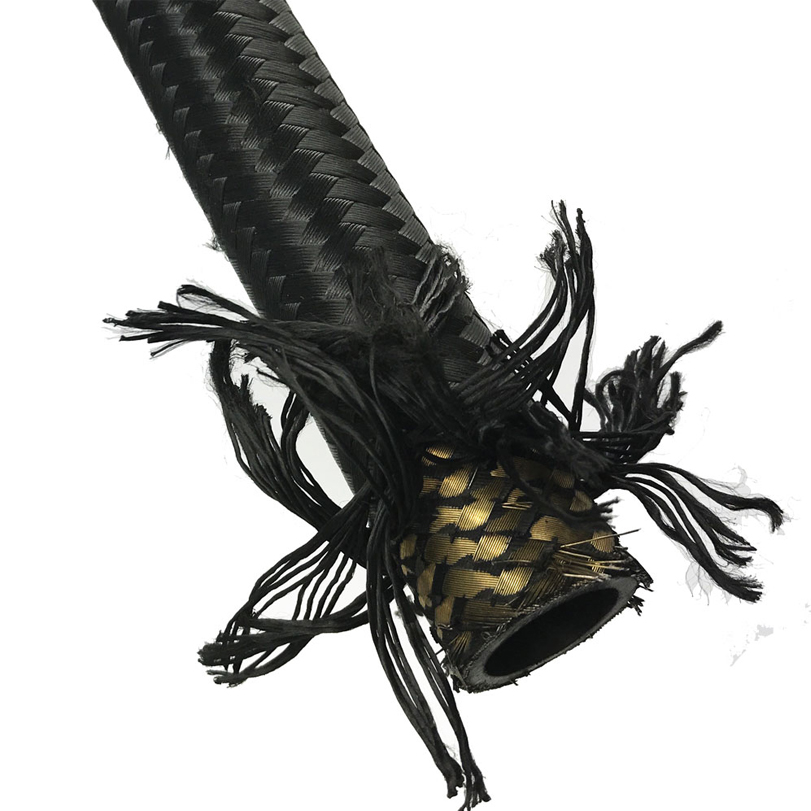
The construction of high pressure hydraulic rubber hose fundamentally relies on a layered composite structure. The innermost layer, the tube, typically utilizes a synthetic rubber compound such as Nitrile (NBR), Ethylene Propylene Diene Monomer (EPDM), or Fluoroelastomer (FKM) – selected based on fluid compatibility. NBR offers excellent resistance to petroleum-based fluids, EPDM excels in phosphate ester compatibility, while FKM provides superior performance with aggressive chemicals and high temperatures. The reinforcement layer is critical for pressure containment and utilizes multiple plies of high-tensile strength steel wire, often spiraled or braided. Wire gauge and ply configuration directly correlate with the hose's maximum working pressure. An outer cover, typically composed of Chloroprene (CR) or a polyurethane blend, provides abrasion, ozone, and weather resistance.
Manufacturing processes begin with extrusion of the inner tube. Precise control of polymer viscosity, temperature, and screw speed is crucial to ensure uniform wall thickness and minimize imperfections. The reinforcement layer is then applied through a helical winding or braiding process; tension control is paramount to achieve the desired pressure rating. Finally, the outer cover is extruded, and the entire assembly is vulcanized – a process involving heating under pressure to crosslink the rubber polymers, enhancing strength, elasticity, and chemical resistance. Critical process parameters during vulcanization include temperature ramp rate, dwell time, and pressure. Post-vulcanization, hoses undergo rigorous testing, including hydrostatic pressure testing, impulse testing, and dimensional inspection. Quality control involves microscopic examination for wire breaks and rubber defects.
Performance & Engineering
The performance of a high-pressure hydraulic hose is governed by complex interplay of forces and environmental factors. Burst pressure, defined as the pressure at which the hose fails catastrophically, is a fundamental design criterion. Working pressure is significantly lower, typically 50-75% of burst pressure, providing a safety factor. Impulse pressure, representing pressure fluctuations within the hydraulic system, induces fatigue stress on the reinforcement layer. Hose design must mitigate fatigue failure through appropriate ply configuration and material selection.
Environmental resistance is also critical. Exposure to extreme temperatures (both high and low) can affect rubber elasticity and reduce pressure capacity. Ozone and UV degradation can compromise the outer cover, leading to cracking and reduced abrasion resistance. Chemical compatibility dictates the suitability of the inner tube material for specific hydraulic fluids. Furthermore, hose assembly integrity—the quality of crimped fittings—is paramount. Improper crimping can lead to leakage, premature failure, and safety hazards. Finite Element Analysis (FEA) is routinely employed during the design phase to model stress distributions and optimize hose geometry. Compliance requirements vary depending on the application; industries like aerospace demand adherence to stringent certifications (e.g., AS9100) and rigorous testing protocols.
Technical Specifications
| Parameter | Unit | Typical Value (NBR/Steel Wire/CR) | Typical Value (FKM/Stainless Steel/Polyurethane) |
|---|---|---|---|
| Working Pressure | MPa | 20.7 | 34.5 |
| Burst Pressure | MPa | 82.7 | 138 |
| Temperature Range | °C | -40 to +100 | -20 to +150 |
| Inner Tube Material | - | Nitrile Rubber (NBR) | Fluoroelastomer (FKM) |
| Reinforcement | - | Steel Wire (Spiral) | Stainless Steel Wire (Spiral) |
| Outer Cover | - | Chloroprene Rubber (CR) | Polyurethane |
Failure Mode & Maintenance
High-pressure hydraulic hoses are susceptible to several failure modes. Fatigue cracking, originating from cyclic pressure fluctuations, is a common cause of failure in the reinforcement layer. This is often initiated at points of stress concentration, such as at the crimp connections. Rubber degradation, caused by exposure to heat, ozone, UV radiation, or incompatible fluids, leads to loss of elasticity and cracking. Abrasion damage to the outer cover exposes the reinforcement layer to corrosion and can initiate fatigue cracks. Pinholes in the inner tube, caused by internal corrosion or manufacturing defects, lead to fluid leakage. Delamination, separation of the layers, indicates a failure of the bonding process during manufacturing or a consequence of severe operating conditions.
Preventative maintenance is crucial. Regular visual inspections should identify cracks, abrasions, bulges, or leaks. Hose assemblies should be periodically pressure tested to verify integrity. Proper routing and support mechanisms prevent kinking and abrasion. Fluid contamination should be minimized through filtration. When replacing hoses, ensure compatibility with the hydraulic fluid and operating conditions. Crimped fittings should be inspected for proper seating and crimp integrity. Incorrect installation—over-tightening or under-tightening—can lead to premature failure. A comprehensive maintenance program significantly extends hose life and minimizes the risk of catastrophic failure.
Industry FAQ
Q: What is the impact of impulse pressure on hose life?
A: Impulse pressure significantly reduces hose life by inducing fatigue in the reinforcement layer. High-frequency pressure spikes create cyclic stress, leading to crack initiation and propagation. Hose designs incorporating higher ply counts and materials with improved fatigue resistance mitigate this effect. Dampening devices within the hydraulic system can also reduce impulse pressure.
Q: How does fluid compatibility affect hose selection?
A: Fluid compatibility is paramount. Incompatible fluids can cause the inner tube to swell, soften, or degrade, leading to leakage and failure. The hose material must be chemically resistant to the specific hydraulic fluid being used. For example, phosphate ester fluids require EPDM tubes, while petroleum-based fluids are compatible with NBR.
Q: What are the key considerations for hose fitting selection and crimping?
A: Fitting selection must match the hose ID and pressure rating. The crimp process must apply the correct pressure and geometry to ensure a leak-proof seal without damaging the hose. Improper crimping—under-crimping or over-crimping—leads to premature failure. Regularly calibrated crimping equipment and trained personnel are essential.
Q: How does temperature impact hose performance?
A: Extreme temperatures affect rubber elasticity and pressure capacity. High temperatures can cause rubber to soften and lose strength, reducing the burst pressure. Low temperatures can cause rubber to stiffen and become brittle, increasing the risk of cracking. The hose material must be selected to withstand the operating temperature range.
Q: What safety precautions should be taken when handling a failed hydraulic hose?
A: Failed hydraulic hoses can contain pressurized fluid and pose a significant safety hazard. Before disconnecting a hose, always relieve the system pressure. Wear appropriate personal protective equipment (PPE), including safety glasses and gloves. Contain any leaking fluid and dispose of it properly. Inspect the surrounding area for potential damage caused by the fluid spray.
Conclusion
OEM high-pressure hydraulic rubber hose represents a sophisticated engineered component vital for the reliable operation of countless hydraulic systems. Achieving optimal performance and longevity necessitates a deep understanding of material science, manufacturing processes, and failure mechanisms. Careful consideration must be given to fluid compatibility, temperature range, impulse pressure, and proper hose assembly to ensure safe and efficient operation.
The industry trend towards increased miniaturization, higher operating pressures, and more aggressive fluid formulations will continue to drive innovation in hose materials and manufacturing techniques. Adoption of advanced modeling techniques, such as FEA, and implementation of robust quality control procedures will remain critical for meeting increasingly demanding performance requirements and ensuring long-term reliability.