
Apr . 01, 2024 17:55 Back to list
oem high pressure hose Performance Analysis

Introduction
OEM high pressure hose is a critical component in fluid power systems, serving as a flexible conduit for the transmission of hydraulic fluid under substantial pressure. Positioned within the broader industrial supply chain, it interfaces directly with hydraulic pumps, valves, cylinders, and other actuators, functioning as the circulatory system of heavy machinery. These hoses are differentiated from standard hoses by their robust construction, incorporating multiple layers of reinforcement to withstand extreme pressures, temperature variations, and corrosive fluids. Core performance characteristics include burst pressure, working pressure, temperature range, and fluid compatibility. The industry faces consistent pressure to improve hose longevity, reduce weight, and enhance safety features, driving innovation in material science and manufacturing techniques. The selection and implementation of appropriate high-pressure hose are paramount for ensuring system reliability, minimizing downtime, and preventing catastrophic failures.
Material Science & Manufacturing
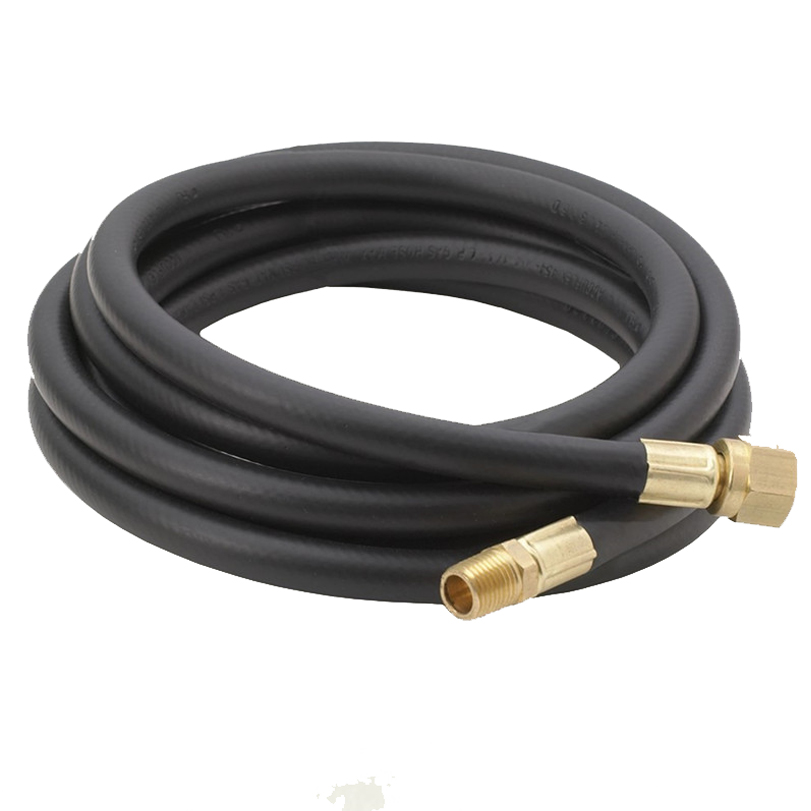
High-pressure hose construction typically begins with an inner tube, commonly composed of synthetic rubber compounds such as nitrile (NBR), ethylene propylene diene monomer (EPDM), or fluorocarbon (FKM), selected for their compatibility with the intended fluid and operating temperature. NBR offers excellent resistance to petroleum-based fluids, while EPDM excels in applications involving water, steam, and phosphate ester fluids. FKM provides superior resistance to high temperatures and aggressive chemicals. Reinforcement layers are the key to withstanding pressure, traditionally consisting of multiple braids or spirals of high-tensile steel wire. The number and configuration of these layers directly correlate with the hose's burst pressure. Increasingly, aramid fiber reinforcement is used to reduce weight without compromising strength. An outer cover, typically made of abrasion-resistant synthetic rubber like polyurethane, provides protection against environmental factors and physical damage.
Manufacturing processes vary depending on the hose construction. Braided hoses are produced by simultaneously spiraling multiple wires around a mandrel, followed by vulcanization to bond the layers together. Spiral-cut hoses are manufactured by winding a single wire at a specific angle around a mandrel, creating a continuous helix. Injection molding is used for attaching fittings. Key parameter control during manufacturing includes precise wire tension during braiding/spiraling, consistent rubber compound mixing, accurate vulcanization temperatures and times, and rigorous quality control checks for dimensional accuracy and pressure testing. Non-destructive testing methods, such as ultrasonic flaw detection, are employed to identify potential defects in the reinforcement layers.
Performance & Engineering
The performance of high-pressure hose is governed by fundamental principles of fluid mechanics and materials science. Force analysis focuses on hoop stress generated by internal pressure, which is proportional to the pressure and radius of the hose, and inversely proportional to the wall thickness and reinforcement. Fatigue life is a critical consideration, as hoses are subjected to cyclical pressure loading. Factors influencing fatigue life include pressure amplitude, frequency of loading, temperature, and the presence of stress concentrations at fittings. Environmental resistance is crucial; exposure to ozone, UV radiation, and chemicals can degrade the rubber compounds, reducing flexibility and increasing the risk of failure. Compliance requirements are stringent, often dictated by industry-specific standards (detailed in the footer) and regulatory bodies. Functional implementation necessitates careful consideration of hose bend radius to avoid kinking or excessive stress, proper fitting selection to ensure a leak-proof seal, and adequate support to prevent hose whipping or abrasion.
Engineering design also incorporates safety factors to account for uncertainties in operating conditions and material properties. Burst pressure testing is a standard procedure to verify the hose's ultimate strength. Impulse testing simulates rapid pressure fluctuations to assess the hose's ability to withstand shock loads. Fluid compatibility testing ensures that the hose material does not degrade or swell when exposed to the intended fluid. Finite element analysis (FEA) is increasingly used to model the stress distribution within the hose and optimize its design for specific applications.
Technical Specifications
| Parameter | Unit | Typical Value (Hydraulic Application) | Testing Standard |
|---|---|---|---|
| Working Pressure | MPa | 20 - 40 | SAE J517 |
| Burst Pressure | MPa | 60 - 120 | SAE J517 |
| Temperature Range | °C | -40 to +100 | ISO 6898 |
| Inner Tube Material | - | NBR / EPDM | ASTM D2000 |
| Reinforcement Material | - | Steel Wire (1/2/4 Spiral) / Aramid Fiber | ISO 4671 |
| Outer Cover Material | - | Polyurethane | ISO 6898 |
Failure Mode & Maintenance
Common failure modes for high-pressure hose include burst failure due to exceeding the working pressure, fatigue cracking caused by cyclical loading, pinhole leaks resulting from abrasion or corrosion, and fitting failures due to improper installation or material degradation. Burst failure is often sudden and catastrophic, posing a significant safety hazard. Fatigue cracking typically initiates at stress concentration points, such as near fittings or at areas of localized damage. Pinholes can develop in the inner tube or cover due to abrasion from rubbing against other components or corrosion from exposure to aggressive fluids. Fitting failures can occur due to thread stripping, seal degradation, or material fatigue.
Preventive maintenance is crucial for extending hose life and preventing failures. Regular visual inspections should be conducted to identify signs of wear, such as cracks, abrasions, swelling, or leaks. Hose should be replaced if any of these signs are observed. Proper routing and support are essential to prevent hose rubbing or kinking. Fittings should be tightened to the correct torque specification. Fluid cleanliness is also critical, as contaminants can accelerate wear and damage the hose. Periodic pressure testing can be performed to verify the hose's integrity. Record keeping of inspections, maintenance, and replacements is recommended. In the event of a failure, a thorough root cause analysis should be conducted to identify the underlying cause and prevent recurrence.
Industry FAQ
Q: What is the impact of fluid velocity on hose life?
A: Higher fluid velocities can increase erosion of the inner tube, leading to premature failure. Increased velocity also contributes to higher pressure drops and increased heat generation, potentially accelerating degradation of the hose materials. Proper hose sizing and flow rate control are crucial for minimizing these effects.
Q: How does hose bend radius affect performance?
A: Exceeding the minimum bend radius can cause kinking, restricting fluid flow and creating a stress concentration point that can lead to fatigue failure. Excessive bending also increases stress on the reinforcement layers. Maintaining the recommended bend radius is essential for optimal hose performance and longevity.
Q: What are the advantages of using aramid fiber reinforcement over steel wire?
A: Aramid fiber reinforcement offers a significant weight reduction compared to steel wire, which can be particularly beneficial in mobile applications. Aramid also provides excellent corrosion resistance and flexibility. However, steel wire generally provides higher burst pressure capabilities for equivalent weight.
Q: What considerations are important when selecting a hose for a specific fluid?
A: Fluid compatibility is paramount. The inner tube material must be resistant to chemical attack and swelling from the fluid. Temperature also plays a crucial role; the hose material must be able to withstand the operating temperature range of the fluid. Fluid viscosity and pressure drop should also be considered when selecting the appropriate hose size.
Q: How can I determine the correct working pressure for my application?
A: The working pressure should be selected based on the maximum system pressure, with an appropriate safety factor. A safety factor of 4:1 is typically recommended, meaning the hose's working pressure should be at least four times the maximum system pressure. Consider pressure spikes and surges when determining the maximum system pressure.
Conclusion
OEM high pressure hose represents a complex interplay of material science, manufacturing precision, and engineering design. The selection and application of these hoses require a thorough understanding of operating conditions, fluid compatibility, and relevant industry standards. Failure to adequately consider these factors can result in premature failure, system downtime, and potential safety hazards. Continued innovation in materials and manufacturing processes is focused on enhancing hose performance, reducing weight, and improving reliability.
Looking ahead, the trend towards more environmentally friendly materials and sustainable manufacturing practices will likely drive further developments in high-pressure hose technology. Increased adoption of sensor-based monitoring systems will enable proactive maintenance and early detection of potential failures. The integration of digital technologies, such as predictive modeling and data analytics, will further optimize hose performance and extend service life.