
Apr . 01, 2024 17:55 Back to list
oem high pressure car washer hose Performance Analysis
Introduction
OEM high pressure car washer hoses are critical components in vehicle washing systems, delivering pressurized water to nozzles for effective cleaning. Positioned within the broader industrial hose sector, these hoses represent a specialized application demanding robust construction and reliable performance. Core performance characteristics center around burst pressure, working pressure, temperature resistance, and abrasion resistance. Unlike general-purpose hoses, car wash hoses are specifically engineered to withstand high-frequency pulsing pressure, exposure to detergents and cleaning agents, and a wide range of environmental conditions. The primary industry pain points revolve around premature hose failure due to material degradation, connection point leaks, and insufficient pressure capacity leading to ineffective cleaning. Meeting increasingly stringent environmental regulations regarding material leaching and waste management also poses a significant challenge. This guide provides a comprehensive technical overview of OEM high pressure car washer hoses, covering material science, manufacturing processes, performance specifications, failure modes, and industry standards.
Material Science & Manufacturing
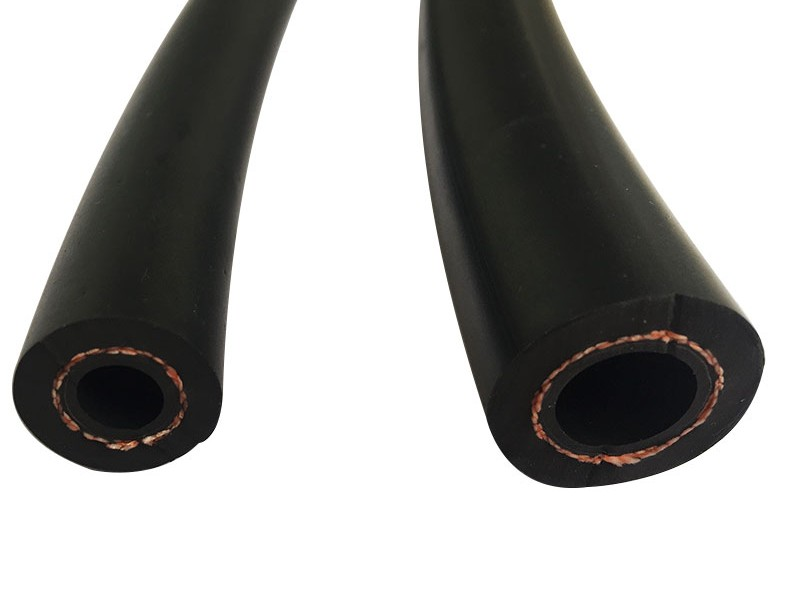
The construction of OEM high pressure car washer hoses typically involves multiple layers, each serving a specific function. The inner tube is commonly composed of synthetic rubber compounds, primarily Nitrile (NBR) or Chloroprene (CR), chosen for their excellent resistance to water, detergents, and hydraulic fluids. NBR offers superior oil resistance, while CR exhibits better weathering and ozone resistance. The reinforcement layer is crucial for withstanding high pressures and preventing hose expansion or bursting. This layer traditionally consists of high-tensile strength textile braiding (polyester or nylon) or spiral-wound steel wire. Steel wire reinforcement provides significantly higher pressure capabilities but also increases hose stiffness and weight. The outer cover is typically made of a blend of PVC and rubber, providing abrasion resistance, UV protection, and a durable exterior finish.
Manufacturing processes begin with rubber compounding, where raw rubber is mixed with reinforcing fillers (carbon black, silica), plasticizers, antioxidants, and curing agents. Extrusion is then used to form the inner tube, followed by the application of the reinforcement layer through braiding or winding machinery. Precise tension control during braiding is critical to ensure uniform pressure resistance. Finally, the outer cover is extruded over the reinforcement layer, and the hose is vulcanized (cured) to crosslink the rubber molecules and achieve the desired mechanical properties. Key parameters during vulcanization include temperature, pressure, and time, all of which significantly impact the hose's final performance characteristics. Quality control measures throughout the process involve dimensional checks, pressure testing (hydrostatic and impulse testing), and material analysis to verify compliance with specifications.
Performance & Engineering
Performance of OEM high pressure car washer hoses is dictated by several key engineering principles. Hose burst pressure is determined by the tensile strength of the reinforcement layer and the adhesion between layers. Working pressure is typically specified as a fraction of the burst pressure, allowing for a safety factor. Impulse pressure testing assesses the hose's ability to withstand repeated pressure fluctuations without failure, a critical consideration in car wash applications. Temperature resistance is another crucial parameter, as hoses can be exposed to both hot and cold water. Material selection plays a significant role in maintaining flexibility and preventing cracking at extreme temperatures.
Force analysis involves evaluating the hoop stress within the hose wall under pressure. Hoop stress is directly proportional to the pressure and radius of the hose and inversely proportional to the wall thickness. Engineering designs aim to minimize hoop stress to prevent failure. Chemical compatibility is also essential; the hose materials must be resistant to the detergents, cleaning agents, and water additives commonly used in car washes. Environmental resistance encompasses UV exposure, ozone degradation, and resistance to abrasion from contact with vehicle surfaces. Compliance requirements, such as REACH and RoHS, restrict the use of certain hazardous substances in hose materials, necessitating careful material selection and testing.
Technical Specifications
| Parameter | Unit | Typical Value | Test Method |
|---|---|---|---|
| Working Pressure | MPa | 15-20 | ISO 3827 |
| Burst Pressure | MPa | 60-80 | ISO 3827 |
| Inner Diameter | mm | 8-12 | Visual Inspection |
| Outer Diameter | mm | 14-18 | Visual Inspection |
| Temperature Range | °C | -40 to +100 | ASTM D1430 |
| Tensile Strength (Reinforcement) | MPa | 1500-2000 | ASTM D790 |
Failure Mode & Maintenance
Common failure modes for OEM high pressure car washer hoses include burst failure due to exceeding the working pressure, fatigue cracking from repeated pressure cycles, delamination between layers caused by poor adhesion, and degradation of the rubber material due to exposure to UV radiation, ozone, and harsh chemicals. Oxidation of the rubber can lead to embrittlement and cracking. Connection point failures are also frequent, often resulting from improper installation, corrosion of fittings, or wear and tear on the coupling mechanisms. Internal abrasion can occur if abrasive particles are present in the water stream.
Preventative maintenance involves regular visual inspections for signs of cracking, blistering, or delamination. Hose connections should be checked for leaks and tightness. The hose should be stored properly when not in use, avoiding direct sunlight and extreme temperatures. Avoid kinking or sharply bending the hose, as this can weaken the reinforcement layer. Periodic pressure testing can identify potential weaknesses before catastrophic failure. In the event of a failure, the entire hose assembly should be replaced, not just the damaged section. Proper cleaning after each use, flushing out any residual detergents, can prolong hose life. Using a hose reel can prevent kinking and abrasion during storage.
Industry FAQ
Q: What is the significance of impulse testing and how does it relate to car wash hose performance?
A: Impulse testing simulates the repeated pressure pulsations inherent in car wash operation. Unlike static burst pressure, impulse testing assesses the hose's ability to withstand cyclical loading without fatigue failure. A hose that passes impulse testing is more likely to maintain its integrity over extended use in a high-frequency car wash environment. The test involves applying repeated pressure cycles at a specified frequency and amplitude, and the hose must withstand a defined number of cycles without failure.
Q: How do different reinforcement materials (textile braid vs. steel wire) impact hose performance and application suitability?
A: Textile braid reinforcement (polyester, nylon) provides good flexibility and is suitable for lower pressure applications. It is generally lighter and less expensive than steel wire reinforcement. However, steel wire reinforcement offers significantly higher burst pressure and is essential for high-pressure car wash systems. Steel wire hoses are more rigid and heavier, potentially requiring larger hose reels and more robust mounting hardware.
Q: What is the impact of chemical resistance on hose lifespan, and what materials offer the best protection against common car wash chemicals?
A: Chemical resistance is paramount, as car wash detergents and cleaning agents can degrade rubber compounds over time. NBR and CR rubber compounds offer good general resistance, but specific formulations are optimized for different chemical exposures. EPDM rubber provides excellent resistance to a wider range of chemicals, including strong acids and bases. The outer cover material also plays a role in protecting the inner tube from chemical attack.
Q: How does UV exposure affect hose performance, and what measures can be taken to mitigate its effects?
A: Prolonged UV exposure can cause rubber compounds to degrade, leading to cracking, embrittlement, and loss of flexibility. The outer cover material should incorporate UV stabilizers to absorb or reflect UV radiation. Storing hoses indoors when not in use and avoiding prolonged direct sunlight exposure are also effective mitigation strategies. Darker colored hoses generally offer better UV protection than lighter colored hoses.
Q: What are the key considerations for selecting the appropriate hose diameter for a specific car wash application?
A: Hose diameter impacts water flow rate and pressure drop. A smaller diameter hose will result in a higher pressure drop, reducing cleaning effectiveness. A larger diameter hose will increase flow rate but may be less maneuverable. The optimal diameter depends on the pump capacity, nozzle type, hose length, and desired cleaning performance. Careful hydraulic calculations are necessary to ensure adequate water delivery.
Conclusion
OEM high pressure car washer hoses are sophisticated engineered products, critical for reliable and efficient vehicle cleaning operations. The selection process necessitates a deep understanding of material science, manufacturing processes, and performance specifications. Failure to consider factors such as burst pressure, impulse resistance, chemical compatibility, and UV protection can lead to premature failure and costly downtime. Implementing preventative maintenance practices, including regular inspections and proper storage, is essential for maximizing hose lifespan and ensuring continued operational efficiency.
The industry trend is moving towards more durable, chemically resistant, and environmentally friendly hose materials. Advancements in rubber compounding and reinforcement technologies are continuously improving hose performance and extending service life. Compliance with increasingly stringent environmental regulations will continue to drive innovation in material selection and manufacturing processes. Understanding these evolving trends is crucial for procuring high-quality, long-lasting OEM high pressure car washer hoses.