
Apr . 01, 2024 17:55 Back to list
oem gasoline hose Performance Engineering
Introduction
OEM gasoline hose represents a critical component in fuel delivery systems across automotive, marine, and industrial applications. Positioned within the automotive supply chain as a Tier 2 or 3 supplier, its function is to safely and reliably transfer gasoline from the fuel tank to the engine. Core performance parameters center around fuel resistance, burst pressure, temperature stability, and permeation characteristics. The industry faces increasing pressure to meet stringent emissions regulations, requiring hoses with exceptionally low permeation rates to minimize evaporative emissions. Furthermore, the demand for lightweight materials and longer service life drives material innovation and manufacturing process optimization. This guide provides a comprehensive technical overview of OEM gasoline hose, covering material science, manufacturing techniques, performance engineering, failure modes, and relevant industry standards.
Material Science & Manufacturing
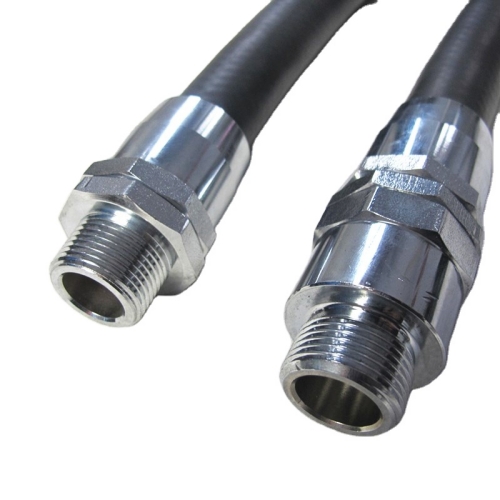
OEM gasoline hose construction typically involves a multi-layered design. The innermost layer, in direct contact with gasoline, is usually composed of a fluoropolymer such as Viton (fluoroelastomer) or PTFE (polytetrafluoroethylene) due to their exceptional chemical resistance to hydrocarbon fuels, including ethanol-blended gasoline. Mid-layers commonly utilize a synthetic rubber, often nitrile rubber (NBR), offering flexibility and resistance to abrasion. The outer cover is typically made of chloroprene rubber (CR), also known as Neoprene, providing excellent resistance to weathering, ozone, and abrasion. Reinforcement layers, crucial for burst pressure resistance, consist of braided textile fibers (typically polyester or nylon) or spirally wound steel wire.
Manufacturing processes begin with material compounding, where raw polymers are blended with reinforcing fillers (carbon black, silica), plasticizers, curatives, and processing aids. The inner and outer layers are often extrusion molded, carefully controlling temperature, pressure, and screw speed to ensure dimensional accuracy and uniform material distribution. The reinforcement layer is applied via braiding or winding machinery, precisely controlling fiber tension and pitch. Post-extrusion, the hose undergoes vulcanization (curing), a process involving heat and pressure to cross-link the rubber polymers, enhancing their strength, elasticity, and chemical resistance. Critical process parameters include curing temperature, time, and pressure, which directly impact the final hose properties. Quality control measures include dimensional checks, pressure testing, permeation testing, and chemical resistance assessment at each stage of the manufacturing process.

Performance & Engineering
The performance of gasoline hose is dictated by several key engineering considerations. Burst pressure, defined as the maximum pressure the hose can withstand before failure, is critical for safety. This is directly related to the reinforcement layer material and construction. Finite element analysis (FEA) is routinely employed to optimize reinforcement design for maximum burst pressure with minimal weight. Permeation, the rate at which gasoline molecules diffuse through the hose wall, is a major factor in evaporative emissions. Lower permeation rates are achieved through the use of fluoropolymers and optimized rubber formulations. Temperature resistance is crucial, as gasoline hoses operate in a wide temperature range, from sub-zero conditions to high engine bay temperatures. Rubber compounds are engineered to maintain flexibility and integrity across this temperature spectrum. Another key performance metric is resistance to fuel additives, such as oxygenates (ethanol, MTBE) which can degrade rubber compounds over time. Hose flex fatigue is also a significant concern; repeated bending and flexing can lead to cracking and failure. The hose’s bend radius and flexibility are engineered to minimize stress concentration during bending.
Compliance requirements, such as those outlined by the EPA (Environmental Protection Agency) and SAE International, mandate specific performance standards for gasoline hoses, including permeation limits, burst pressure requirements, and fuel resistance. These standards are continually evolving to address environmental concerns and improve vehicle safety. Static Dissipation is also a critical engineering requirement; hoses must be conductive enough to prevent static electricity build-up, minimizing ignition risks.
Technical Specifications
| Parameter | Unit | Typical Value (Gasoline Hose) | Testing Standard |
|---|---|---|---|
| Inner Tube Material | - | Viton/PTFE | SAE J30BL |
| Reinforcement | - | Polyester Braid/Steel Wire Helix | SAE J30BL |
| Outer Cover Material | - | Chloroprene (Neoprene) | SAE J30BL |
| Working Pressure | psi | 150 | SAE J30BL |
| Burst Pressure | psi | 600 | SAE J30BL |
| Permeation Rate (Gasoline) | g/m²/day | <0.5 | SAE J30BL |
| Temperature Range | °F | -40 to 250 | SAE J30BL |
Failure Mode & Maintenance
Common failure modes for gasoline hoses include permeation-induced swelling and degradation of the inner tube, leading to increased permeation rates and eventual leakage. Cracking, particularly in the outer cover, can occur due to ozone degradation, weathering, or excessive bending. Fatigue cracking in the reinforcement layer is a concern in applications involving repeated flexing. Delamination, the separation of layers, can result from poor adhesion between materials or incompatibility of compounds. Oxidation of rubber compounds can occur over time, leading to loss of elasticity and increased brittleness.
Preventative maintenance involves regular visual inspection for cracks, swelling, or signs of degradation. Avoid excessive bending or kinking of the hose. Protect the hose from direct sunlight and exposure to harsh chemicals. If any damage is detected, the hose should be replaced immediately. Long-term storage requires keeping the hose in a cool, dry, and dark environment, away from ozone sources. Periodic pressure testing can also help identify potential weaknesses before they lead to catastrophic failure. The use of appropriate hose clamps is critical to prevent leaks at connection points.
Industry FAQ
Q: What is the impact of ethanol-blended gasoline on hose lifespan?
A: Ethanol is a strong solvent and can cause swelling and degradation of certain rubber compounds. Hoses specifically designed for ethanol-blended fuels utilize materials like Viton or specialized NBR formulations that are resistant to ethanol's corrosive effects. Using a non-compatible hose with high ethanol blends will significantly reduce its service life and increase the risk of failure.
Q: How does hose permeation affect vehicle emissions?
A: Gasoline permeation through the hose allows fuel vapors to escape into the atmosphere, contributing to evaporative emissions. Regulations like those from the EPA limit allowable permeation rates. Lower permeation hoses, typically those using fluoropolymers, are essential for meeting these emissions standards and reducing environmental impact.
Q: What is the role of the reinforcement layer in gasoline hose performance?
A: The reinforcement layer provides the hose with its burst pressure resistance. Braided textile reinforcements (polyester, nylon) offer good flexibility, while spirally wound steel wire provides higher burst strength. The material, construction, and tension of the reinforcement layer are critical design parameters.
Q: What are the key considerations when selecting a hose for a specific application?
A: Key considerations include the operating pressure, temperature range, fuel type (including ethanol content), and bend radius. Compliance with relevant industry standards (SAE, EPA) is also essential. Selecting a hose with appropriate chemical resistance and permeation characteristics is paramount.
Q: How can I identify a failing gasoline hose?
A: Common signs of failure include cracking in the outer cover, swelling or softness of the inner tube, visible leaks, and difficulty maintaining pressure. Regular visual inspection and pressure testing are crucial for early detection of potential problems.
Conclusion
OEM gasoline hose is a deceptively complex component, demanding meticulous material selection, precise manufacturing control, and thorough performance engineering. Its role extends beyond simple fuel transport; it’s integral to vehicle safety, emissions control, and overall system reliability. Understanding the interplay between material science, manufacturing processes, and operational stresses is paramount for ensuring long-term performance and preventing costly failures.
Looking ahead, advancements in material technology, such as the development of novel fluoropolymers with even lower permeation rates, will drive further improvements in gasoline hose performance. The trend towards lightweight materials and increased fuel efficiency will necessitate ongoing optimization of hose design and manufacturing processes. Adherence to stringent industry standards and proactive maintenance practices will remain critical for ensuring the safe and reliable operation of gasoline fuel systems.

