
Apr . 01, 2024 17:55 Back to list
oem gasoline fuel hose Performance Analysis

Introduction
OEM gasoline fuel hose constitutes a critical component within automotive fuel delivery systems, responsible for the safe and reliable transfer of gasoline from the fuel tank to the engine. Positioned between the tank and the engine’s fuel rail, these hoses must adhere to stringent performance and safety standards due to the inherent hazards associated with fuel handling. This technical guide details the material science, manufacturing processes, performance characteristics, potential failure modes, and relevant industry standards pertaining to OEM gasoline fuel hose. Core performance attributes include fuel resistance (permeation and degradation), pressure handling capabilities, burst strength, temperature tolerance, and long-term durability. The primary industry pain points revolve around ensuring long-term compatibility with evolving fuel formulations (including ethanol blends), maintaining consistent quality across high-volume production runs, and adhering to increasingly demanding environmental regulations regarding volatile organic compound (VOC) emissions.
Material Science & Manufacturing
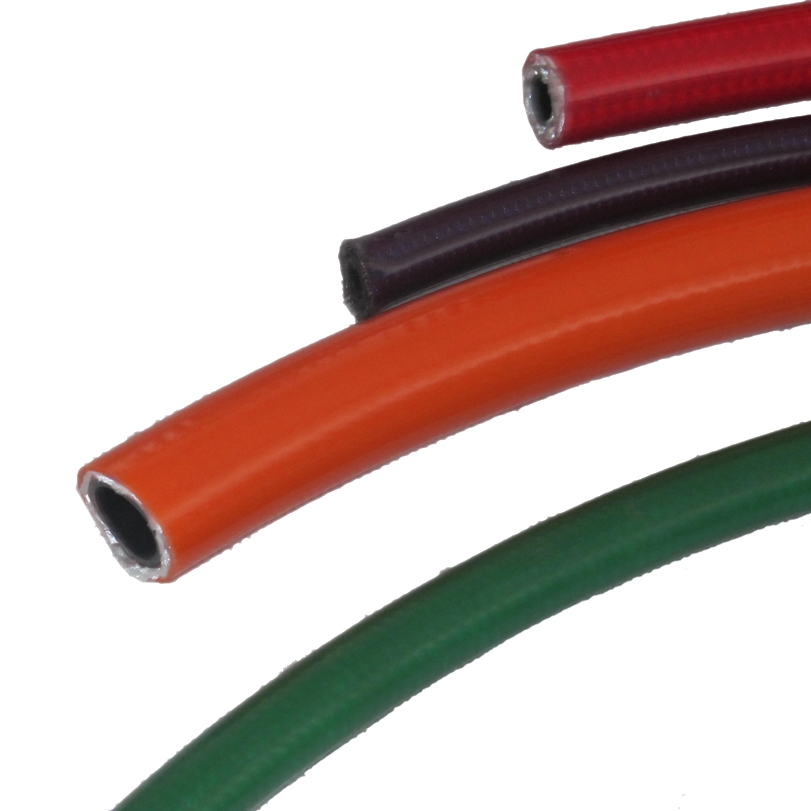
OEM gasoline fuel hose is predominantly constructed from multi-layered composites. The inner layer, in direct contact with gasoline, is typically formulated from a fuel-resistant synthetic rubber, most commonly Chlorinated Polyethylene (CPE) or Fluoroelastomer (FKM, commonly Viton). CPE offers a cost-effective balance of fuel resistance and flexibility, while FKM provides superior resistance to aggressive fuels and high temperatures but at a higher cost. The middle layer generally consists of a high-strength reinforcement, commonly a braided or spiraled layer of polyester or aramid fibers (e.g., Kevlar). This layer provides burst strength and resistance to kinking. The outer cover is typically made of Chloroprene rubber (CR, Neoprene) or Ethylene Propylene Diene Monomer (EPDM) rubber, chosen for its resistance to abrasion, weathering, ozone, and UV exposure. Manufacturing processes involve extrusion for the inner and outer layers, followed by reinforcement application (braiding or spiraling). Critical parameters during extrusion include temperature control to ensure proper polymer melt flow, die design to achieve consistent wall thickness, and curing parameters (temperature and time) to optimize rubber properties. Reinforcement application requires precise tension control to ensure uniform distribution of strength. Post-processing includes dimensional inspection, pressure testing (burst and leak tests), and visual inspection for defects. Material selection is heavily influenced by fuel composition – the increasing prevalence of ethanol-blended gasoline (E10, E15, E85) necessitates materials with excellent ethanol resistance to prevent swelling, degradation, and permeation.
Performance & Engineering
The performance of gasoline fuel hose is governed by several critical engineering considerations. First, burst pressure, typically measured in PSI (pounds per square inch) or bar, defines the hose's ability to withstand extreme pressure surges. SAE J30R9 is a key standard defining burst pressure requirements. Second, permeation resistance is paramount; fuels readily permeate through rubber, contributing to VOC emissions and potential fuel loss. Permeation rates are quantified in grams of fuel per square meter of hose surface area per day. Third, flexibility, measured by bend radius, dictates ease of installation and resistance to kinking. Fourth, temperature resistance is vital, as hoses are exposed to a wide range of temperatures depending on engine location and ambient conditions. Testing involves subjecting hoses to both high and low temperatures and assessing changes in physical properties. Force analysis during hose design involves finite element analysis (FEA) to model stress distribution under pressure and bending loads. Compliance requirements include adherence to environmental regulations (e.g., CARB – California Air Resources Board – regulations on VOC emissions), and safety standards (e.g., FMVSS – Federal Motor Vehicle Safety Standards). Hose end fitting compatibility and secure crimping are also key engineering factors influencing long-term performance and preventing fuel leaks.
Technical Specifications
| Parameter | Unit | Typical Value (CPE Based Hose) | Typical Value (FKM Based Hose) |
|---|---|---|---|
| Inner Diameter | mm | 8-16 | 6-12 |
| Wall Thickness | mm | 2.5-4.0 | 3.0-5.0 |
| Burst Pressure | PSI | 450-600 | 600-800 |
| Working Pressure | PSI | 150-200 | 200-300 |
| Tensile Strength (Reinforcement) | MPa | 1500-2000 | 2000-2500 |
| Fuel Permeation Rate (Gasoline) | g/m²/day | <5 | <2 |
| Temperature Range | °C | -40 to +125 | -40 to +150 |
Failure Mode & Maintenance
Gasoline fuel hose is susceptible to several failure modes. The most common is rubber degradation due to prolonged exposure to fuel, heat, and ozone. This leads to cracking, hardening, and ultimately, leakage. Ethanol-blended fuels accelerate this degradation process. Another failure mode is reinforcement failure (e.g., fiber breakage) resulting from repeated bending and flexing, or exposure to extreme temperatures. This can lead to hose collapse or bursting. Kinking, especially in tight spaces, can also cause localized stress and eventual failure. Permeation-induced swelling can compromise dimensional stability and reduce burst strength. Failure analysis often involves microscopic examination of fractured surfaces to identify the root cause (e.g., oxidative degradation, fatigue cracking, fiber pull-out). Maintenance is typically limited to visual inspection for cracks, swelling, or abrasion. Regular inspection is crucial, especially in older vehicles. Hoses should be replaced if any signs of degradation are observed. Avoiding excessive bending and ensuring proper hose routing can extend service life. Use of fuel additives designed to protect rubber components can also be beneficial, though their effectiveness varies. Replacing hoses in pairs is recommended to maintain balanced system performance.
Industry FAQ
Q: What is the impact of increasing ethanol content in gasoline on fuel hose longevity?
A: Increasing ethanol content significantly reduces fuel hose longevity. Ethanol acts as a plasticizer for many rubber compounds, causing them to swell, soften, and become more susceptible to cracking and permeation. FKM (Viton) exhibits superior ethanol resistance compared to CPE, but even FKM can be affected by prolonged exposure to high ethanol concentrations (e.g., E85).
Q: How is burst pressure testing conducted and what does it simulate?
A: Burst pressure testing involves gradually increasing the internal pressure of the hose until it fails. It simulates extreme pressure surges that can occur in the fuel system due to events like fuel pump malfunctions or sudden engine deceleration. The test is conducted at both ambient and elevated temperatures to assess temperature sensitivity.
Q: What role does the reinforcement layer play in preventing hose collapse?
A: The reinforcement layer (typically braided or spiraled polyester or aramid fibers) provides radial strength, preventing the hose from collapsing under vacuum or negative pressure conditions. This is particularly important during fuel draw from the tank. Without adequate reinforcement, the hose can collapse, restricting fuel flow and potentially causing engine stalling.
Q: Are there specific regulations regarding VOC emissions from fuel hoses?
A: Yes, regulations like those from the California Air Resources Board (CARB) impose strict limits on VOC emissions from fuel systems, including fuel hoses. These regulations drive the demand for low-permeation hoses and influence material selection and manufacturing processes. Compliance requires rigorous permeation testing and documentation.
Q: How important is the outer cover material in determining hose service life?
A: The outer cover material is critical for protecting the hose from environmental degradation, including ozone, UV radiation, abrasion, and chemical exposure. EPDM offers excellent weathering resistance, while CR (Neoprene) provides better oil and abrasion resistance. A compromised outer cover can accelerate the degradation of the inner layers and lead to premature failure.
Conclusion
OEM gasoline fuel hose represents a complex engineered product critical to safe and reliable vehicle operation. Its performance is dictated by a careful balance of material selection, manufacturing precision, and adherence to stringent industry standards. The ongoing shift towards alternative fuels, particularly ethanol blends, presents a significant challenge, demanding the development of more robust and durable hose materials. Understanding the nuanced interplay between material properties, performance characteristics, and potential failure modes is paramount for ensuring long-term fuel system integrity.
Future development efforts will likely focus on advanced polymer formulations with enhanced fuel resistance and reduced permeability, as well as innovative reinforcement materials offering increased strength and flexibility. Furthermore, advancements in non-destructive testing methods will play a vital role in improving quality control and preventing premature failures. The continued evolution of automotive fuel systems necessitates a commitment to ongoing research and development in the field of gasoline fuel hose technology.