
Apr . 01, 2024 17:55 Back to list
oem four wire spiral hydraulic hose Performance Analysis
Introduction
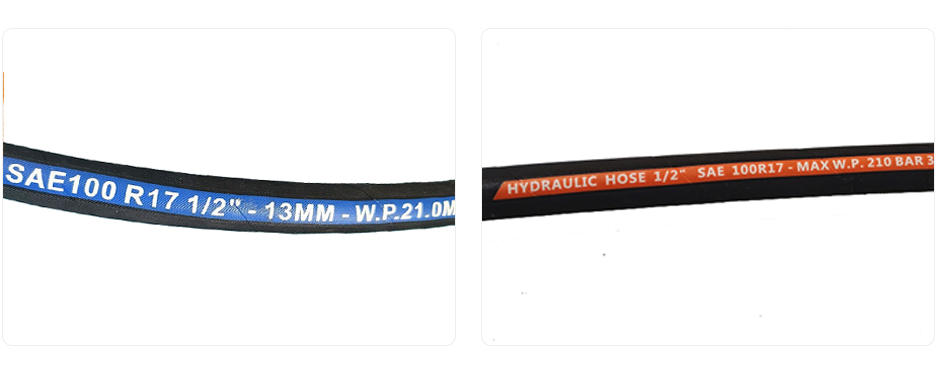
OEM four-wire spiral hydraulic hose is a critical component in fluid power systems, engineered to convey hydraulic fluid under high pressure in diverse industrial and mobile applications. Positioned within the hydraulic system as the pathway for transmitting power, its performance directly impacts system efficiency and reliability. This hose differs from two-wire and six-wire constructions by offering a balance between flexibility and pressure capacity, achieved through its four-layer spiral wire reinforcement. Core performance characteristics include burst pressure, working pressure, temperature resistance, and resistance to fluid compatibility issues. The industry faces challenges related to hose longevity, particularly regarding abrasion, ozone cracking, and compatibility with increasingly complex synthetic hydraulic fluids. Understanding these challenges is vital for selecting the appropriate hose construction for specific operating conditions and mitigating premature failure.
Material Science & Manufacturing
The core construction of a four-wire spiral hydraulic hose relies on a carefully selected combination of materials. The inner tube is typically composed of a synthetic rubber compound, commonly Nitrile (NBR), Chloroprene (CR), or Ethylene Propylene Diene Monomer (EPDM), chosen for their resistance to specific hydraulic fluids. NBR excels with petroleum-based fluids, CR offers superior ozone and weathering resistance, and EPDM is ideal for phosphate ester fluids. The reinforcement layer comprises four helically wound high-tensile steel wires. These wires are crucial for withstanding internal pressure and preventing hose collapse or bursting. The wire’s material composition (high carbon steel, often drawn to specific tensile strengths) and winding pitch are tightly controlled. An intermediate cover layer, often a specialized synthetic rubber blend, provides adhesion between the reinforcement and the outer cover. Finally, the outer cover, frequently a CR or polyurethane blend, protects against abrasion, weathering, ozone, and oil attack.
Manufacturing begins with extrusion of the inner tube to precise dimensions. The steel wires are then spirally wound onto the inner tube with consistent tension and pitch, using automated winding machines. This is a critical process parameter; variations in winding affect pressure resistance. The intermediate cover is extruded over the wire reinforcement, followed by the outer cover. Post-extrusion, the hose undergoes curing, a vulcanization process where heat and pressure crosslink the rubber compounds, imparting elasticity and durability. Quality control involves burst pressure testing (subjecting the hose to pressures significantly exceeding its working pressure), impulse testing (simulating pulsating pressure cycles), and dimensional checks. Parameter control during extrusion (temperature, screw speed, die pressure) and curing (temperature, time, pressure) are paramount to consistent performance.
Performance & Engineering
The performance of a four-wire spiral hydraulic hose is dictated by several engineering principles. Force analysis focuses on hoop stress within the hose wall, resulting from internal fluid pressure. The steel wire reinforcement is engineered to counteract this stress, preventing expansion and potential failure. The number of wire layers directly correlates to the hose's burst pressure capability. Finite Element Analysis (FEA) is commonly employed during the design phase to optimize wire spacing and cover thickness for maximum pressure resistance and minimal weight. Environmental resistance is vital; operating temperature ranges impact rubber compound flexibility and degradation rates. Prolonged exposure to high temperatures can cause hardening and cracking, while low temperatures can lead to brittleness. Fluid compatibility is another critical consideration. Certain hydraulic fluids can swell or degrade the rubber compounds, reducing the hose's effective lifespan. Compliance requirements, such as SAE J517 and EN 853, specify performance standards for burst pressure, pressure drop, and temperature range. These standards ensure the hose meets minimum safety criteria for its intended application.
The hose's bend radius is a key engineering parameter. Exceeding the minimum bend radius introduces stress concentrations, potentially leading to fatigue failure. Furthermore, the hose must withstand axial movement and vibration without kinking or damaging the reinforcement. End fitting attachment methods (crimping, swaging, or field-attachable fittings) also significantly influence performance. Improperly attached fittings can create leak paths or weaken the hose at the connection point.
Technical Specifications
| Parameter | Unit | Typical Value (NBR Inner Tube, CR Outer Cover) | Testing Standard |
|---|---|---|---|
| Working Pressure | MPa | 20 - 35 | SAE J517 |
| Burst Pressure | MPa | 80 - 140 | SAE J517 |
| Temperature Range | °C | -40 to +100 | SAE J517 |
| Inner Tube Material | - | Nitrile (NBR) | ASTM D2000 |
| Reinforcement | Layers | 4 Spiral Steel Wire | SAE J517 |
| Outer Cover Material | - | Chloroprene (CR) | ASTM D2000 |
Failure Mode & Maintenance
Common failure modes in four-wire spiral hydraulic hoses include burst failure due to exceeding the working pressure, fatigue cracking resulting from repeated pressure cycling and bending, abrasion from external contact with surfaces, ozone cracking from exposure to atmospheric ozone, and fluid incompatibility leading to swelling or degradation of the rubber compounds. Fatigue cracking often initiates at areas of high stress concentration, such as near end fittings or at bend points. Abrasion typically occurs on the outer cover, compromising its protective function. Oxidation of the rubber compounds, particularly at elevated temperatures, leads to hardening and loss of flexibility, increasing susceptibility to cracking. Delamination, the separation of layers, can occur if adhesion between the rubber compounds and the steel wire is compromised.
Preventative maintenance is critical. Regular visual inspections should be conducted to identify signs of abrasion, cracking, swelling, or leakage. The hose should be checked for proper bend radius and freedom from kinking. Hose routing should be optimized to minimize abrasion and exposure to extreme temperatures. Fluid contamination must be prevented through proper filtration. If damage is detected, the hose should be replaced immediately. Avoid over-bending or twisting the hose during installation or operation. Periodically tighten end fittings to ensure secure connections. Proper storage in a cool, dry, and dark environment is essential to prevent degradation when the hose is not in use. Implement a hose management program that tracks hose age and service history to facilitate timely replacement.
Industry FAQ
Q: What is the impact of hydraulic fluid type on hose selection?
A: Hydraulic fluid compatibility is paramount. Using an incompatible fluid can cause the inner tube to swell, soften, or degrade, leading to premature failure. NBR is generally suitable for petroleum-based fluids, while EPDM is preferred for phosphate ester fluids. Always verify the hose manufacturer’s compatibility chart before selecting a hose.
Q: How does operating temperature affect hose life?
A: Elevated temperatures accelerate rubber degradation, leading to hardening, cracking, and reduced flexibility. Low temperatures can cause the rubber to become brittle and prone to cracking. Exceeding the specified temperature range significantly shortens hose life. Select a hose with a temperature rating appropriate for the application and consider using thermal insulation if necessary.
Q: What are the common causes of hose bursting?
A: The most common cause is exceeding the working pressure, either due to system malfunction or improper hose selection. Other causes include fatigue failure due to repeated pressure cycling, damage from abrasion or kinking, and internal corrosion or blockage. Regular inspections and proper maintenance can help prevent bursting.
Q: What is the role of the steel wire reinforcement?
A: The steel wire reinforcement provides the primary structural support, preventing the hose from collapsing under pressure and resisting bursting. The number of layers, wire diameter, and winding pitch all contribute to the hose's pressure rating. Properly wound and adhered reinforcement is crucial for long-term reliability.
Q: How important are end fittings to overall hose performance?
A: End fittings are critically important. Incorrectly crimped or swaged fittings can create leak paths or weaken the hose at the connection point. Using fittings that meet the hose manufacturer's specifications and ensuring proper installation techniques are essential for maintaining system integrity.
Conclusion
The OEM four-wire spiral hydraulic hose represents a robust and versatile solution for fluid power transmission. Its performance relies heavily on a complex interplay of material science, manufacturing precision, and adherence to stringent engineering principles. Understanding the core properties of the rubber compounds, the function of the steel wire reinforcement, and the potential failure modes is crucial for selecting the appropriate hose for a given application and maximizing its service life.
Future developments in hydraulic hose technology will likely focus on advanced materials with improved temperature and fluid resistance, lighter-weight construction, and enhanced monitoring capabilities for predictive maintenance. Implementing a comprehensive hose management program, emphasizing regular inspections, preventative maintenance, and proper fluid compatibility, remains the most effective strategy for ensuring system reliability and minimizing downtime.