
Apr . 01, 2024 17:55 Back to list
oem flexible hydraulic hose Performance Engineering
Introduction
OEM flexible hydraulic hose constitutes a critical component in fluid power systems across diverse industrial applications, including construction machinery, agricultural equipment, material handling, and manufacturing. These hoses are engineered to transmit hydraulic fluid under significant pressure, facilitating the operation of actuators and motors. Their role transcends simple fluid conveyance; they provide flexibility within a system, accommodate vibration, and mitigate stress concentrations which would otherwise compromise rigid piping. The increasing demands for higher operating pressures, wider temperature ranges, and enhanced chemical resistance drive continuous advancements in hose construction, materials, and manufacturing processes. This guide provides a comprehensive technical overview of OEM flexible hydraulic hose, encompassing material science, manufacturing methodologies, performance characteristics, failure modes, and relevant industry standards. A core industry pain point is ensuring hose compatibility with both the hydraulic fluid and operating environment to prevent premature failure and system downtime.
Material Science & Manufacturing
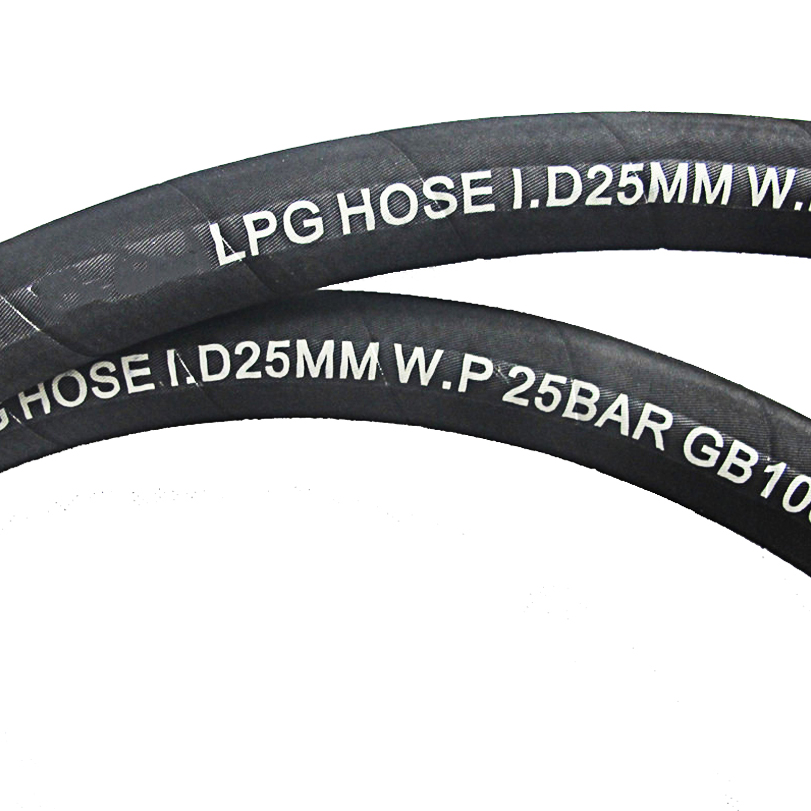
The construction of OEM flexible hydraulic hose typically involves four primary layers: the inner tube, reinforcement layers, and the outer cover. The inner tube is commonly composed of synthetic rubbers, specifically nitrile rubber (NBR) for oil-based hydraulic fluids, or fluorocarbon rubber (FKM, Viton) for applications requiring resistance to aggressive fluids, high temperatures, or fuels. NBR exhibits good abrasion resistance and cost-effectiveness, while FKM offers superior chemical inertness and thermal stability. Reinforcement layers provide the structural integrity to withstand operating pressures. These are typically constructed from multiple plies of high-tensile strength steel wire (braided or spiral wound), or textile materials such as polyester or aramid fibers. Spiral wound construction offers higher pressure ratings than braided construction but less flexibility. The outer cover, usually made of synthetic rubber such as chloroprene (Neoprene) or polyurethane, provides protection against abrasion, weathering, ozone, and chemical exposure.
Manufacturing processes vary based on hose type and reinforcement. Inner tubes are extruded through a die to achieve the desired bore diameter and wall thickness. Reinforcement layers are applied via automated winding or braiding machines, precisely controlling the angle and tension of the reinforcing materials. The outer cover is then extruded over the reinforcement. Critical process parameters include extrusion temperature, curing time and temperature (for rubber vulcanization), and reinforcement tension. Precise control over these parameters directly impacts hose burst pressure, flexibility, and long-term durability. A key challenge in manufacturing is ensuring consistent adhesion between the layers to prevent delamination under pressure cycling. Surface preparation, primer application, and careful control of vulcanization parameters are crucial for achieving strong interlayer bonding.

Performance & Engineering
The performance of a hydraulic hose is primarily defined by its pressure rating, temperature range, and fluid compatibility. Burst pressure, determined through hydrostatic testing according to SAE J517, represents the maximum pressure the hose can withstand before failure. Working pressure is typically 50-75% of the burst pressure, providing a safety factor. Flexibility, often measured by bend radius, is critical in minimizing stress concentrations and preventing kinking, which can lead to flow restriction and premature failure. Temperature range is dictated by the properties of the rubber compounds used in the inner tube and outer cover. Hydraulic fluid compatibility is paramount; incompatible fluids can cause swelling, degradation, and loss of flexibility.
Engineering considerations include fatigue life, impulse pressure resistance, and vibration damping. Fatigue life, assessed through cyclic pressure testing, determines the hose’s ability to withstand repeated pressure cycles without failure. Impulse pressure resistance, representing the hose’s ability to handle pressure spikes, is particularly important in applications with reciprocating components like hydraulic pumps. Vibration damping properties, influenced by the hose’s material and construction, contribute to reducing noise and extending the life of connected components. Finite element analysis (FEA) is increasingly used to optimize hose designs for specific applications, predicting stress distribution and identifying potential failure points. A significant performance concern centers around the effect of fluid pulse on hose life, requiring materials and construction techniques optimized for dynamic loading.
Technical Specifications
| Parameter | Unit | Typical Value (NBR Inner Tube, Steel Wire Reinforcement) | Typical Value (FKM Inner Tube, Aramid Reinforcement) |
|---|---|---|---|
| Working Pressure | MPa | 20 | 15 |
| Burst Pressure | MPa | 80 | 60 |
| Temperature Range | °C | -40 to +100 | -20 to +200 |
| Inner Diameter | mm | 19 | 12 |
| Outer Diameter | mm | 28 | 20 |
| Minimum Bend Radius | mm | 175 | 100 |
Failure Mode & Maintenance
Common failure modes in OEM flexible hydraulic hose include burst failure due to exceeding pressure limits, kink failure resulting from excessive bending, abrasion failure from external contact, and degradation of the rubber compounds due to exposure to heat, ozone, or incompatible fluids. Delamination, the separation of hose layers, is a critical failure mode that significantly reduces burst pressure. Fatigue cracking, initiated by cyclic pressure loading, typically occurs at the reinforcement layer. Oxidation of the rubber compounds can lead to hardening and cracking over time. Identifying the root cause of failure through detailed examination of the fractured hose is essential for preventing recurrence.
Preventative maintenance practices are crucial for maximizing hose life. Regular visual inspections should be conducted to identify signs of abrasion, cracking, or swelling. Hose assemblies should be properly routed and supported to prevent kinking and abrasion. Hydraulic fluid should be maintained at the appropriate level and filtered to remove contaminants. Hose assemblies should be replaced proactively based on manufacturer recommendations or if any signs of degradation are observed. Proper hose assembly techniques, including correct crimping and fitting selection, are vital for ensuring reliable performance. Leak testing after assembly is also recommended. A key maintenance challenge involves early detection of internal degradation, which may not be apparent through visual inspection alone.
Industry FAQ
Q: What is the impact of using an incorrect hose fitting on the overall hose assembly lifespan?
A: Utilizing an incorrect hose fitting – whether in terms of size, thread type, or material compatibility – introduces significant stress concentrations at the connection point. This can lead to premature failure via cracking, leakage, or complete separation of the hose from the fitting. Improper crimping further exacerbates this issue, reducing the effectiveness of the seal and increasing the risk of blowouts. The resulting system downtime and potential safety hazards make correct fitting selection and installation paramount.
Q: How does pulse pressure affect the long-term durability of a hydraulic hose?
A: Pulse pressure, characterized by rapid fluctuations in pressure, induces cyclic fatigue in the hose reinforcement layers. This repeated stress weakens the hose structure over time, leading to cracking and eventual failure. Hoses designed for pulse pressure applications employ specialized reinforcement constructions (e.g., spiral-wound reinforcement) and rubber compounds that exhibit superior fatigue resistance. Regular monitoring of pulse pressure levels and selecting a hose rated for the specific application are critical for maximizing service life.
Q: What are the key considerations when selecting a hose for use with biodegradable hydraulic fluid?
A: Biodegradable hydraulic fluids often exhibit different chemical properties than conventional mineral oil-based fluids. Therefore, compatibility with the hose's inner tube material is crucial. Many biodegradable fluids can cause swelling or degradation of standard NBR compounds. FKM or other specialized rubber formulations may be required to ensure long-term compatibility and prevent leakage. Furthermore, the fluid's temperature range and operating pressures must be considered.
Q: Can a hydraulic hose be repaired if it develops a small leak, or is replacement always necessary?
A: Generally, repairing a hydraulic hose is not recommended for safety-critical applications. While temporary repairs might seem feasible, they often compromise the hose’s structural integrity and can lead to catastrophic failure. Even a small leak indicates damage to the hose's layers, and attempting to repair it can introduce further stress concentrations. Replacement with a new, properly specified hose assembly is the safest and most reliable solution.
Q: What is the significance of the hose 'layline' marking, and how should it be interpreted?
A: The hose layline marking is a continuous, colored stripe running along the length of the hose. It serves as a visual indicator of the hose's manufacturing date and often includes the manufacturer's name and specific hose construction details. This information is critical for traceability, quality control, and determining the hose's age and potential service life. Following manufacturer recommendations regarding hose replacement intervals, based on age, is crucial for maintaining system safety and reliability.
Conclusion
OEM flexible hydraulic hose plays a fundamental role in modern fluid power systems, demanding careful consideration of material science, manufacturing precision, and performance characteristics. Selection must be tailored to the specific application, accounting for operating pressure, temperature, fluid compatibility, and environmental conditions. Understanding potential failure modes and implementing robust preventative maintenance practices are vital for ensuring system reliability and minimizing downtime. Continued innovation in hose materials and construction techniques will drive further improvements in performance, durability, and safety.
The future of hydraulic hose technology will likely focus on developing lighter-weight materials, enhancing resistance to aggressive fluids, and integrating smart sensing capabilities for real-time monitoring of hose condition. Adherence to relevant industry standards, coupled with rigorous quality control procedures, will remain essential for ensuring the safe and efficient operation of hydraulic systems. Furthermore, a proactive approach to failure analysis and root cause investigation will contribute to continuous improvement in hose design and manufacturing processes.