
Apr . 01, 2024 17:55 Back to list
oem en856 4sp Material Science
Introduction
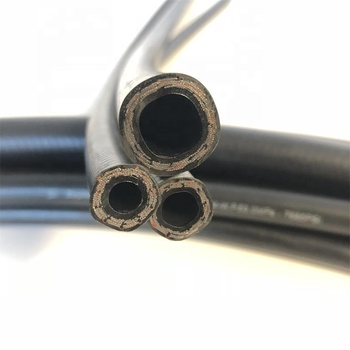
OEM EN856 4SP is a high-performance, spiral-wound hydraulic hose reinforcement typically used within hose assemblies for conveying hydraulic fluid under pressure. Its primary function is to provide the necessary structural integrity to withstand high pressures, temperature fluctuations, and dynamic bending without failure. Positioned within the hydraulic power transmission industry, it acts as a critical component linking hydraulic pumps, valves, and actuators. Core performance characteristics are defined by its high tensile strength, excellent fatigue resistance, and compatibility with a wide range of hydraulic fluids, conforming to stringent industry standards. A key pain point addressed by EN856 4SP is ensuring long-term reliability and safety in demanding hydraulic systems where hose failure can result in costly downtime and potential hazards. The "4SP" designation signifies a spiral construction using four layers of high-tensile wire, impacting pressure ratings and flexibility.
Material Science & Manufacturing
EN856 4SP reinforcement is predominantly manufactured from high-carbon steel wire, typically SAE 1006 or equivalent. This material selection is based on its superior tensile strength (typically exceeding 2000 MPa), yield strength, and fatigue resistance. The wire undergoes several critical processing steps. First, the steel billets are drawn into wire of the specified diameter. This drawing process work-hardens the material, increasing its strength but decreasing its ductility. Subsequent annealing steps are crucial to restore ductility and ensure consistent mechanical properties. The wire then undergoes a surface treatment, often a zinc coating, to provide corrosion resistance. The spiral winding process itself is highly automated, with precise control of wire tension and pitch. This pitch – the distance between adjacent wire wraps – is a critical parameter influencing the hose's pressure rating and flexibility. Quality control involves dimensional checks of the spiral, tensile testing of the wire, and adherence to strict tolerances. Chemical compatibility is addressed by ensuring the zinc coating is compatible with common hydraulic fluids, or by employing alternative coatings like epoxy. Failure to maintain tight control over these parameters can result in premature failure due to wire breakage or corrosion.
Performance & Engineering
The performance of EN856 4SP is governed by principles of stress analysis and material behavior. The spiral structure distributes hoop stress created by internal fluid pressure, preventing the hose from bursting. Force analysis involves calculating the maximum allowable pressure based on wire tensile strength, spiral pitch, and hose diameter. Fatigue life is a critical consideration, especially in applications involving pulsating pressure or dynamic bending. Finite Element Analysis (FEA) is often employed to model the stress distribution within the reinforcement under various loading conditions. Environmental resistance is paramount; hydraulic systems often operate in harsh conditions involving temperature extremes, exposure to oil, and potential contamination. The zinc coating provides a first line of defense against corrosion, but additional protective measures, such as the use of chemically resistant hose covers, may be necessary. Compliance requirements are dictated by standards such as SAE J517 (hydraulic hose), ISO 6897 (hose reinforcement), and specific OEM specifications. Functional implementation requires proper hose assembly techniques, including correct crimping of the end fittings to ensure a secure and leak-proof connection. Improper crimping can introduce stress concentrations leading to premature failure.
Technical Specifications
| Parameter | Unit | Typical Value (EN856 4SP) | Test Standard |
|---|---|---|---|
| Minimum Tensile Strength | MPa | 2000 | ISO 6897 |
| Wire Diameter | mm | 0.45 – 0.50 | Visual Inspection |
| Spiral Pitch | mm | 8 – 12 | Dimensional Measurement |
| Operating Temperature Range | °C | -40 to +100 | SAE J517 |
| Burst Pressure (Dependent on Hose Size) | MPa | Variable – See Hose Spec | SAE J517 |
| Corrosion Resistance (Salt Spray Test) | Hours | 96 | ASTM B117 |
Failure Mode & Maintenance
Common failure modes for EN856 4SP reinforced hoses include fatigue cracking, wire breakage, corrosion, and degradation of the rubber cover. Fatigue cracking typically initiates at stress concentrations, such as near crimp fittings or areas of sharp bending. Wire breakage can occur due to overload, corrosion, or manufacturing defects. Corrosion, particularly in harsh environments, can weaken the wires and lead to premature failure. Rubber cover degradation can result from exposure to ozone, UV radiation, and chemical attack, compromising the hose's ability to contain fluid. Failure analysis often involves microscopic examination of the fractured surface to identify the root cause. Maintenance recommendations include regular visual inspection for signs of damage, such as cracks, bulges, or abrasion. Hose assemblies should be replaced periodically, even if no visible damage is present, based on the operating conditions and the hose manufacturer's recommendations. Proper hose routing, avoiding sharp bends and direct contact with hot surfaces, is crucial for maximizing service life. Correct fluid compatibility should be ensured, and regular fluid analysis can help identify potential contaminants that could accelerate degradation.
Industry FAQ
Q: What is the impact of spiral pitch on hose performance?
A: Spiral pitch directly influences both the hose’s pressure rating and its flexibility. A tighter pitch (smaller distance between wires) generally results in a higher pressure rating but reduced flexibility. Conversely, a looser pitch provides greater flexibility but lowers the maximum allowable pressure. The optimal pitch is determined by the specific application requirements, balancing pressure needs with bend radius constraints.
Q: How does the zinc coating protect against corrosion?
A: The zinc coating provides a sacrificial barrier against corrosion. Zinc corrodes preferentially to the steel wire, protecting it from rust. However, the effectiveness of the zinc coating is limited in highly corrosive environments or if the coating is damaged. Additional corrosion protection methods, like specific rubber compounds, are then necessary.
Q: What are the key considerations for selecting the correct crimp fitting?
A: Selecting the correct crimp fitting is critical for a reliable hose assembly. The fitting must be compatible with the hose and reinforcement type, and the crimp dimensions must adhere to the hose manufacturer’s specifications. Improper crimping can lead to premature failure due to stress concentrations or leakage.
Q: How does temperature affect the performance of EN856 4SP?
A: Both high and low temperatures can impact performance. Elevated temperatures can reduce the tensile strength of the steel wire and accelerate the degradation of the rubber cover. Low temperatures can decrease the flexibility of the hose, increasing the risk of damage during bending. Operating within the specified temperature range is crucial.
Q: What is the difference between EN856 4SP and other hose reinforcements (e.g., spiral wire with textile braid)?
A: EN856 4SP offers superior pressure and impulse performance compared to hose reinforcements utilizing textile braid. Textile braid provides lower strength and is more susceptible to stretch and creep under pressure. While textile braid offers greater flexibility, EN856 4SP provides a higher safety factor and longer service life in demanding hydraulic applications.
Conclusion
OEM EN856 4SP remains a cornerstone of hydraulic hose reinforcement due to its robust construction, high tensile strength, and reliable performance under pressure. Its manufacturing process, relying on carefully controlled wire drawing, annealing, and spiral winding, directly impacts its ability to withstand harsh operating conditions. Understanding the critical parameters – wire material, spiral pitch, and corrosion protection – is essential for selecting the appropriate hose assembly for a given application and maximizing its lifespan.
Future development will likely focus on advanced wire materials offering increased strength-to-weight ratios and enhanced corrosion resistance, alongside improved hose cover compounds capable of withstanding more aggressive fluids and environmental factors. Proper implementation of preventative maintenance, including regular inspections and adherence to manufacturer recommendations, will continue to be paramount to ensure the safe and efficient operation of hydraulic systems employing EN856 4SP reinforcement.