
Apr . 01, 2024 17:55 Back to list
oem en856 4sh Performance Engineering
Introduction
OEM EN856 4SH designates a hydraulic hose assembly conforming to Society of Automotive Engineers (SAE) standard J517, specifically denoting a four-spiral high-pressure hose. Its position in the industrial chain is as a critical fluid conveyance component in mobile and stationary hydraulic systems. Primarily utilized in construction equipment, agricultural machinery, and industrial hydraulics, the EN856 4SH hose is engineered to transmit hydraulic fluid at extremely high pressures and withstand demanding operating conditions. Core performance characteristics include high burst pressure, resistance to hydraulic fluid degradation, and flexibility for complex routing. A key pain point for users lies in ensuring consistent quality and traceability of the hose construction, particularly the synthetic rubber compounds and steel reinforcement, to prevent premature failure and maintain system uptime. This guide provides an in-depth technical analysis of EN856 4SH hoses, covering material science, manufacturing processes, performance engineering, failure modes, and relevant industry standards.
Material Science & Manufacturing
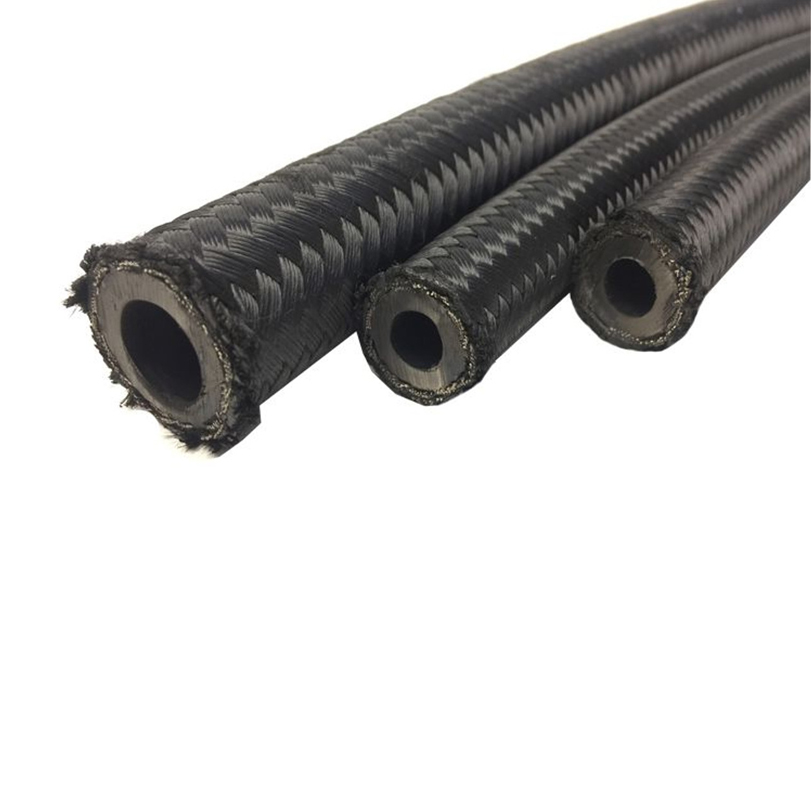
The EN856 4SH hose is a composite structure consisting of four primary material layers: inner tube, reinforcement, outer cover, and often, bonding agents to ensure layer adhesion. The inner tube is typically constructed of a synthetic rubber compound – commonly nitrile (NBR) – selected for its compatibility with petroleum-based hydraulic fluids. NBR offers excellent resistance to abrasion, oil swelling, and heat. However, phosphate ester fluids require specialized formulations, often utilizing fluoroelastomers (FKM/Viton). The reinforcement layer comprises four helically wound high-tensile steel wires. The steel wire specification (ASTM A228 for wire, often with a zinc coating for corrosion resistance) directly impacts burst pressure and fatigue life. Manufacturing involves precise winding of the steel wire under tension, followed by vulcanization. Vulcanization is the process of crosslinking the rubber polymers using sulfur or peroxides at elevated temperatures (typically 150-180°C), imparting elasticity and strength. Critical parameters during vulcanization include temperature uniformity, cure time, and pressure. Precise control prevents under-curing (resulting in poor mechanical properties) or over-curing (leading to brittleness). The outer cover is generally a synthetic rubber compound (e.g., chloroprene, or a blend of NBR and chloroprene) providing resistance to abrasion, weathering, ozone, and oil. Extrusion is the primary method used for forming both the inner tube and outer cover. Post-extrusion, quality control involves dimensional checks, pressure testing to 1.5x working pressure, and impulse testing to simulate hydraulic shock.
Performance & Engineering
The performance of an EN856 4SH hose is dictated by its ability to withstand internal pressure, external pressure, temperature variations, and dynamic bending. Force analysis focuses on hoop stress within the rubber layers and axial stress in the steel wire reinforcement. Burst pressure is the ultimate limit, determined by the tensile strength of the steel wires and the bonding strength between the layers. Working pressure is typically 50-60% of burst pressure, providing a safety factor. Fatigue life is a critical performance metric, especially in applications involving pulsating flow. Impulse testing, as per SAE J517, assesses the hose’s ability to withstand repeated pressure spikes. Environmental resistance is paramount, particularly resistance to ozone cracking, UV degradation, and fluid compatibility. Hydrolytic stability (resistance to degradation from water content in the fluid) is also important. Compliance requirements necessitate adherence to SAE J517 specifications, including dimensional tolerances, pressure ratings, and test procedures. Functional implementation involves careful consideration of hose routing to minimize bending stress, the use of appropriate fittings (SAE J518 standard) to ensure leak-free connections, and the selection of compatible hydraulic fluid. Proper installation and maintenance, including periodic inspection for abrasion and leaks, are crucial for maximizing service life. A common engineering challenge is managing the torsional stiffness of the hose, which can induce stresses in connected components.
Technical Specifications
| Parameter | Unit | Specification (Typical) | Test Standard |
|---|---|---|---|
| Working Pressure | psi | 4000 | SAE J517 |
| Burst Pressure | psi | 8000 | SAE J517 |
| Temperature Range | °F | -40 to +212 | SAE J517 |
| Inner Tube Material | - | Nitrile Rubber (NBR) | ASTM D2000 |
| Reinforcement | - | 4 Steel Wire Helix | ASTM A228 |
| Outer Cover Material | - | Chloroprene Rubber | ASTM D2000 |
Failure Mode & Maintenance
Failure modes in EN856 4SH hoses typically fall into several categories: fatigue cracking (initiated by repeated bending and pressure cycles), particularly at the fitting interface; hose twist (leading to localized stress concentration and eventual failure); abrasion damage from external contact; chemical degradation from incompatible fluids; and permeation (fluid loss through the hose wall over time). Fatigue cracking is often preceded by wire fraying, detectable through visual inspection. Delamination, the separation of layers, can occur due to poor bonding during vulcanization or fluid ingress. Oxidation of the rubber compounds can lead to hardening and cracking, especially at elevated temperatures. Maintenance involves regular visual inspection for cuts, abrasions, and swelling. Fittings should be checked for tightness and corrosion. Hose routing should be optimized to minimize bending and twist. Hydraulic fluid should be regularly analyzed to ensure compatibility and prevent contamination. If cracks or other damage are detected, the hose should be replaced immediately. Avoid exceeding the maximum working pressure or temperature rating. Proper storage (protected from UV light and extreme temperatures) is essential to prevent premature degradation. Flushing the system before hose installation helps remove abrasive particles and prevents internal damage. The use of hose guards provides an additional layer of protection against external abrasion.
Industry FAQ
Q: What is the impact of fluid type on the service life of an EN856 4SH hose?
A: Hydraulic fluid compatibility is critical. NBR inner tubes are generally compatible with petroleum-based fluids, but phosphate ester fluids require FKM/Viton liners. Using an incompatible fluid can cause swelling, softening, or cracking of the inner tube, leading to premature failure. Fluid contamination (water, particulates) also accelerates degradation.
Q: How does hose length affect its performance and fatigue life?
A: Longer hose lengths are more susceptible to pressure drop and vibration, potentially reducing efficiency and increasing stress. Increased length also amplifies bending stresses, shortening fatigue life. Proper hose support is crucial for longer runs.
Q: What fitting standards are compatible with EN856 4SH hoses?
A: SAE J518 is the primary fitting standard. It’s essential to use fittings specifically designed for four-spiral hose and that match the hose's bore diameter and pressure rating. Incorrect fittings can leak or fail, compromising system safety.
Q: What is the significance of impulse testing in evaluating hose performance?
A: Impulse testing simulates hydraulic shock, which is common in many applications. It assesses the hose’s ability to withstand repeated pressure surges without failure. A hose that performs well in impulse testing is more likely to withstand the rigors of real-world operation.
Q: What preventative measures can be taken to extend the service life of EN856 4SH hoses?
A: Implement a regular inspection program, use compatible hydraulic fluid, avoid exceeding pressure/temperature limits, optimize hose routing to minimize bending, protect the hose from abrasion, and ensure proper fitting installation and maintenance. Periodic fluid analysis is also recommended.
Conclusion
The OEM EN856 4SH hose represents a robust and reliable solution for high-pressure hydraulic fluid conveyance. Its performance is intrinsically linked to material selection, manufacturing precision, and adherence to stringent industry standards. Understanding the potential failure modes and implementing proactive maintenance strategies are paramount to maximizing service life and ensuring system reliability.
Continued advancements in rubber technology and steel wire manufacturing will likely lead to further improvements in hose performance, particularly in areas such as temperature resistance, chemical compatibility, and fatigue life. Focusing on enhanced quality control procedures throughout the manufacturing process and promoting best practices for installation and maintenance will remain crucial for the long-term success of EN856 4SH hose applications.

