
Apr . 01, 2024 17:55 Back to list
oem en854 3te Hydraulic Hose Performance Analysis
Introduction
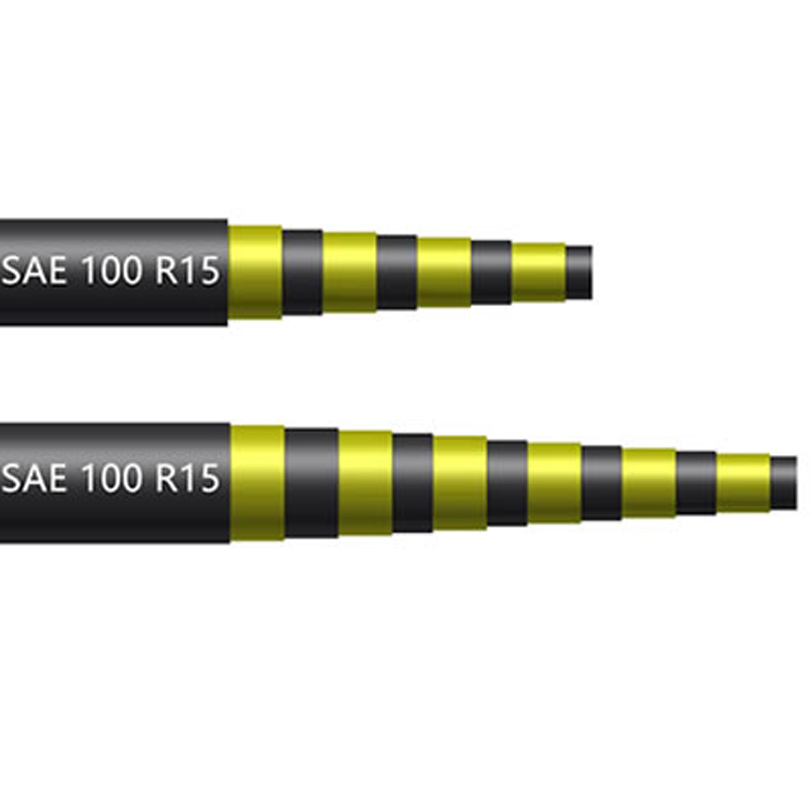
OEM EN854 3TE designates a hydraulic hose assembly conforming to the European standard EN 854, specifically rated for a working pressure of 3TE, meaning 3 layers of steel wire reinforcement. It is a critical component in hydraulic systems used across a wide spectrum of industrial applications including construction equipment, agricultural machinery, material handling systems, and industrial manufacturing. Positioned within the fluid power industry chain, it acts as the conduit for transmitting hydraulic fluid under pressure, enabling the operation of actuators and motors. Its core performance characteristics center around pressure capability, flexibility, impulse resistance, and abrasion resistance. The growing demand for higher operating pressures in modern hydraulic systems and the increasing need for robust, reliable hose assemblies are the primary drivers for its continued relevance. The hose’s performance is inherently linked to the quality of the constituent materials and the precision of the manufacturing process, making consistent quality control paramount. Failure to meet the EN 854 standard can result in catastrophic system failure and potential safety hazards.
Material Science & Manufacturing
The construction of an OEM EN854 3TE hose involves several key material considerations. The inner tube is typically composed of a synthetic rubber compound, commonly nitrile rubber (NBR) for oil-based hydraulic fluids, or ethylene-propylene diene monomer (EPDM) for phosphate ester-based fluids. NBR offers excellent resistance to petroleum-based products, abrasion, and moderate temperatures. EPDM provides superior resistance to heat, ozone, and weathering, making it suitable for more demanding environmental conditions. The reinforcement layers consist of high-tensile steel wire, spirally wound to provide the necessary pressure resistance. The wire steel grade is critical; typically, high-carbon steel is utilized for its strength and flexibility. The outer cover is generally constructed from a synthetic rubber blend, often chloroprene rubber (CR) due to its excellent resistance to abrasion, ozone, and weathering.
Manufacturing involves a multi-step process. First, the inner tube is extruded to the desired dimensions. The steel wire reinforcement layers are then spirally wound onto the inner tube, meticulously controlling the pitch and tension of the wire. This is a crucial step as variations impact the hose's pressure rating and flexibility. Following reinforcement, the outer cover is extruded over the assembly. Precise temperature control during extrusion is vital to ensure proper bonding between the layers and prevent defects. After extrusion, the hose undergoes a curing process, typically utilizing steam or hot air, to vulcanize the rubber compounds and achieve optimal material properties. Critical parameters during curing include temperature, pressure, and time. Finally, the hose is subjected to rigorous quality control testing, including pressure testing, impulse testing, and dimensional inspection, to verify compliance with EN 854 standards. The entire process requires skilled technicians and sophisticated equipment to consistently produce a high-quality, reliable product.
Performance & Engineering
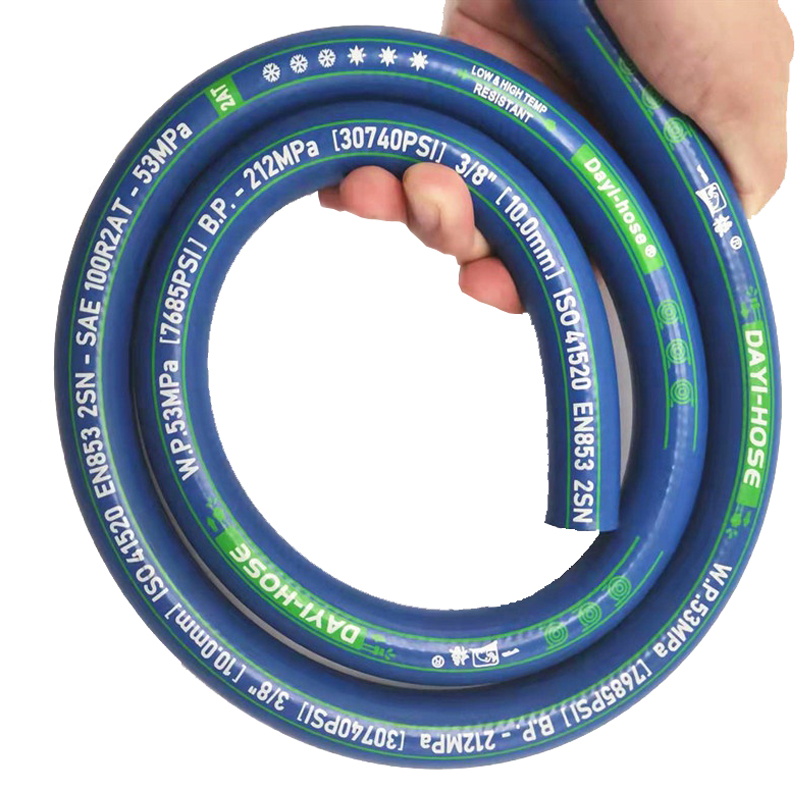
The performance of an OEM EN854 3TE hose is governed by several engineering principles. Force analysis centers on understanding the hoop stress induced by internal fluid pressure. The steel wire reinforcement layers are designed to counteract this hoop stress, preventing hose bursting. The number of reinforcement layers (in this case, three) directly correlates to the hose’s maximum allowable working pressure (MWP). The hose’s flexibility is determined by the wire pitch and the elasticity of the rubber compounds. A tighter wire pitch increases pressure resistance but reduces flexibility, requiring a careful balance during design. Impulse resistance, crucial in hydraulic systems with pulsating flow, is addressed through the careful selection of rubber compounds and the bonding between the layers. Poor bonding can lead to delamination under repeated pressure cycles. Environmental resistance is a key consideration, especially in outdoor applications. The outer cover must withstand exposure to UV radiation, ozone, temperature extremes, and abrasive materials. Compliance with EN 854 dictates specific testing procedures for these parameters. Furthermore, the hose assembly’s end fittings (e.g., crimped fittings) must be engineered to withstand the hose's MWP and provide a leak-free connection. Proper fitting selection and crimping are critical to overall system reliability. Finite element analysis (FEA) is frequently employed to optimize hose design and predict performance under various loading conditions.
Technical Specifications
| Parameter | Unit | Specification (Typical) | Test Standard |
|---|---|---|---|
| Working Pressure (MWP) | MPa | 21 | EN 854 |
| Burst Pressure | MPa | 63 | EN 854 |
| Inner Tube Material | - | NBR (Nitrile Rubber) | ASTM D2000 |
| Reinforcement | Layers | 3 Steel Wire Spiral | EN 854 |
| Outer Cover Material | - | CR (Chloroprene Rubber) | ASTM D2000 |
| Temperature Range | °C | -40 to +100 | EN 854 |
Failure Mode & Maintenance
OEM EN854 3TE hoses are susceptible to several failure modes in practical applications. Fatigue cracking, induced by repeated flexing and pressure cycling, is a common issue, particularly near the end fittings. This can be exacerbated by improper hose routing or excessive bending. Delamination, the separation of the reinforcement layers from the inner tube or outer cover, occurs when bonding is compromised due to manufacturing defects, chemical attack, or thermal stress. Degradation of the rubber compounds, caused by exposure to ozone, UV radiation, or incompatible fluids, can lead to loss of flexibility and eventual cracking. Oxidation of the steel wire reinforcement can reduce its tensile strength and contribute to failure. Abrasion damage to the outer cover can expose the reinforcement layers to corrosion and compromise the hose’s integrity.
Preventative maintenance is crucial. Regular visual inspections should be conducted to identify signs of cracking, abrasion, or swelling. Hoses should be protected from excessive bending, kinking, and direct exposure to harsh environmental conditions. The hydraulic fluid should be maintained in good condition, free from contaminants that can accelerate degradation. Hose assemblies should be replaced at recommended intervals or when any signs of damage are detected. When replacing a hose, it is essential to use fittings specifically designed for EN 854 hoses and ensure proper crimping. Proper storage in a cool, dry, and dark environment is also critical to extend the hose’s service life. Documentation of inspection and maintenance activities is recommended for traceability and to support informed decision-making regarding hose replacement.
Industry FAQ
Q: What is the significance of the '3TE' designation in EN854 3TE, and how does it relate to pressure capacity?
A: The '3TE' designation signifies that the hose contains three layers of steel wire reinforcement. Each layer contributes to increased pressure resistance. The 'TE' (Textile reinforcement equivalent) refers to a standardized method of measuring reinforcement strength. Increasing the number of steel wire layers directly elevates the hose’s Maximum Working Pressure (MWP) and Burst Pressure, as defined by EN 854 standards.
Q: What type of hydraulic fluid is compatible with an EN854 3TE hose with an NBR inner tube?
A: An NBR (Nitrile Rubber) inner tube is typically compatible with petroleum-based hydraulic fluids, including mineral oils and synthetic hydraulic fluids with a petroleum base. It's crucial to avoid phosphate ester fluids, as they can cause rapid degradation of NBR. Always consult a fluid compatibility chart to ensure optimal performance and longevity.
Q: How does temperature affect the performance and lifespan of an EN854 3TE hose?
A: Temperature extremes significantly impact hose performance. High temperatures accelerate rubber degradation and reduce pressure capacity. Low temperatures can decrease flexibility and increase the risk of cracking. The EN 854 standard specifies a typical operating temperature range of -40°C to +100°C. Exceeding these limits can compromise the hose’s integrity.
Q: What are the critical considerations when selecting end fittings for an EN854 3TE hose?
A: End fittings must be specifically designed for EN854 hoses and compatible with the hose’s material and pressure rating. The fitting’s material should be corrosion-resistant and suitable for the hydraulic fluid being used. Correct crimping is paramount; improper crimping can lead to leakage or hose failure. It’s crucial to adhere to the fitting manufacturer’s specifications for crimping procedures.
Q: What are the consequences of using a damaged or degraded EN854 3TE hose in a hydraulic system?
A: Using a damaged or degraded hose poses significant safety risks. Potential consequences include sudden hose rupture, resulting in high-pressure fluid spray and potential injury. Leaks can lead to system downtime and environmental contamination. Compromised hose integrity can cause a loss of control over hydraulic actuators, potentially leading to equipment damage or accidents. Regular inspection and timely replacement are crucial to mitigate these risks.
Conclusion
The OEM EN854 3TE hydraulic hose represents a critical safety component within numerous industrial applications. Its robust construction, utilizing carefully selected materials and a precise manufacturing process, ensures reliable performance under demanding conditions. Adherence to the EN 854 standard guarantees consistent quality and interchangeability. Understanding the material science, engineering principles, and potential failure modes is essential for ensuring optimal operation and maximizing service life.
Moving forward, the demand for even higher pressure ratings and improved durability will continue to drive innovation in hose design and materials. The integration of smart technologies, such as embedded sensors for real-time pressure and temperature monitoring, may become increasingly prevalent. Furthermore, the development of more environmentally friendly rubber compounds and sustainable manufacturing practices will be critical for meeting evolving industry standards and regulatory requirements. Careful consideration of these advancements will ensure the continued reliability and efficiency of hydraulic systems reliant on OEM EN854 3TE hoses.