
Apr . 01, 2024 17:55 Back to list
oem en854 2te Hydraulic Hose Performance Analysis

Introduction
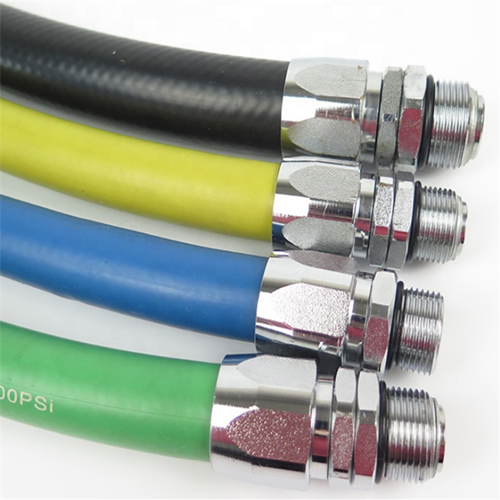
OEM EN854 2TE designates a hydraulic hose assembly conforming to the European standard EN 854, specifically rated for a working pressure of 2TE (275 bar / 4000 psi). These hoses are critical components in hydraulic power transmission systems, utilized across diverse industrial applications including construction machinery, agricultural equipment, material handling, and manufacturing. Their construction typically involves a synthetic rubber inner tube, multiple layers of high-tensile steel wire reinforcement, and a durable, weather-resistant outer cover. The core function is to safely and efficiently convey hydraulic fluid under high pressure, facilitating the operation of hydraulic actuators and motors. A key pain point within the industry revolves around ensuring consistent dimensional accuracy, reliable pressure containment, and long-term resistance to fluid degradation and external abrasion, demanding meticulous quality control throughout the manufacturing process. Understanding the interplay between material selection, reinforcement structure, and end-fitting compatibility is paramount for optimal performance and safety.
Material Science & Manufacturing
The core materials in OEM EN854 2TE hose construction significantly influence performance characteristics. The inner tube is commonly comprised of synthetic rubber compounds, predominantly nitrile rubber (NBR) due to its excellent resistance to petroleum-based hydraulic fluids. However, for specialized applications requiring compatibility with phosphate ester fluids, fluorocarbon rubber (FKM/Viton) may be employed. The steel wire reinforcement constitutes the structural backbone, utilizing high-tensile steel wire drawn to precise diameters. The number of spiral layers determines the hose's pressure rating; 2TE hoses typically feature two spiral layers. The outer cover is generally manufactured from synthetic rubber such as chloroprene (CR) or a blend of CR and SBR (styrene-butadiene rubber), providing abrasion, ozone, and weathering resistance.
Manufacturing commences with extrusion of the inner tube, followed by the winding of the steel wire reinforcement onto a mandrel. Precise tension control during winding is crucial to avoid wire distortion and ensure uniform pressure resistance. The outer cover is then extruded over the reinforced inner tube, followed by vulcanization – a process involving heat and pressure to crosslink the rubber compounds, enhancing their strength, elasticity, and chemical resistance. Key parameter control during vulcanization includes temperature, pressure, and cure time, as deviations can lead to under-cured or over-cured rubber, compromising hose integrity. Post-vulcanization, the hose undergoes dimensional inspection, pressure testing to 1.5 times the working pressure, and leak testing. End fittings are typically crimped onto the hose using specialized machinery ensuring a secure, leak-proof connection. The crimp process requires precise control of crimp force and die selection, dependent upon fitting material and hose specifications.
Performance & Engineering
The performance of an OEM EN854 2TE hose is governed by several engineering principles. Burst pressure is a critical parameter, typically four times the working pressure (2TE = 1100 bar / 16000 psi). Hose bend radius must adhere to minimum specifications (typically 4D where D is the hose inner diameter) to prevent kinking and stress concentration. Impulse pressure testing is crucial, simulating the pulsating pressure waves inherent in hydraulic systems, and ensuring the hose can withstand cyclic loading without failure. Environmental resistance is also paramount. Prolonged exposure to extreme temperatures (both high and low), UV radiation, and corrosive substances can degrade the rubber compounds, reducing hose lifespan.
Finite element analysis (FEA) is frequently employed during hose design to optimize reinforcement structure and predict stress distribution under various loading conditions. Compliance with EN 854 necessitates adherence to specific testing protocols for pressure, impulse, temperature, and fluid compatibility. The selection of appropriate end fittings is a vital engineering consideration. Fittings must be rated for at least the hose’s working pressure and constructed from compatible materials to prevent galvanic corrosion. Thread types, sealing methods (e.g., O-ring seals), and connection angles must be carefully matched to the hydraulic system requirements. Furthermore, hose assembly length influences performance; excessive length can increase pressure drop and introduce whip during impulse loading, while insufficient length can strain connections.
Technical Specifications
| Parameter | Specification (Typical) | Testing Standard | Units |
|---|---|---|---|
| Working Pressure | 275 | EN 854 | bar |
| Burst Pressure | 1100 | EN 854 | bar |
| Inner Tube Material | Nitrile Rubber (NBR) | ASTM D2000 | - |
| Reinforcement | Two Spiral Steel Wire Layers | EN 854 | - |
| Outer Cover Material | Chloroprene (CR) | ASTM D2000 | - |
| Temperature Range | -40 to +100 | EN 854 | °C |
Failure Mode & Maintenance
Common failure modes in OEM EN854 2TE hoses include fatigue cracking of the steel wire reinforcement due to repeated flexing and impulse loading. This often initiates at points of high stress concentration, such as near end fittings or at areas of significant bend radius violation. Rubber degradation (cracking, hardening, swelling) caused by exposure to incompatible fluids, extreme temperatures, or UV radiation is another prevalent issue. Leakage can occur due to damaged O-rings in the end fittings, improper crimping, or erosion of the inner tube. Blow-out failures can occur if the hose is subjected to pressures exceeding its rated limits. Delamination, where the layers separate, can compromise structural integrity.
Preventative maintenance is crucial. Regular visual inspections should be performed to identify signs of cracking, swelling, abrasion, or leakage. Hose assemblies should be replaced at predetermined intervals, dictated by application severity and manufacturer recommendations. Fluid compatibility should be verified to ensure the hydraulic fluid is suitable for the hose materials. Proper routing and support mechanisms should be employed to minimize bending stress and abrasion. End fittings should be inspected for corrosion and damage. When replacing hoses, ensure the new assembly is identical in specification and rated for the system’s operating pressure. Avoid kinking or sharply bending the hose during installation. Maintaining a clean hydraulic system and using appropriate filtration can extend hose lifespan by preventing contamination-induced wear.
Industry FAQ
Q: What is the difference between EN 854 1TE, 2TE, and 3TE hoses?
A: The ‘TE’ designation in EN 854 refers to the hose’s pressure rating. 1TE is rated for 175 bar, 2TE for 275 bar, and 3TE for 350 bar. The higher the ‘TE’ number, the greater the number of steel wire reinforcement layers and the higher the burst pressure. Selecting the appropriate TE rating is crucial for ensuring safe operation and preventing premature failure.
Q: What type of hydraulic fluid is compatible with a standard NBR inner tube?
A: Nitrile Rubber (NBR) offers excellent compatibility with most petroleum-based hydraulic fluids, including mineral oils, and some synthetic hydraulic fluids. However, it's generally not recommended for phosphate ester fluids, which require FKM (Viton) inner tubes for optimal performance and longevity. Always verify fluid compatibility with the hose manufacturer.
Q: What is the correct bend radius for an EN 854 2TE hose?
A: A general guideline is a minimum bend radius of 4 times the inner diameter of the hose. Exceeding this limit can cause kinking, internal damage to the reinforcement, and premature failure. Consult the manufacturer’s specifications for precise recommendations, as they can vary based on hose construction and application.
Q: How can I identify a properly crimped end fitting?
A: A properly crimped fitting should exhibit a uniform crimp around the hose, with no evidence of gaps, distortion, or wire protrusion. The crimp should be tight enough to provide a secure mechanical connection but not so tight as to damage the hose reinforcement. Specialized crimp testers can verify the crimp force and dimensional accuracy.
Q: What are the consequences of using a hose with an incorrect pressure rating?
A: Using a hose with an insufficient pressure rating can lead to catastrophic failure, resulting in fluid leaks, equipment damage, and potential personnel injury. Conversely, using a hose with a significantly higher pressure rating than required can result in unnecessary cost and potentially reduced flexibility.
Conclusion
OEM EN854 2TE hydraulic hoses represent a critical link in hydraulic power transmission systems, demanding a comprehensive understanding of material science, manufacturing processes, and engineering principles. Their reliable performance hinges on meticulous adherence to the EN 854 standard, precise parameter control during production, and careful consideration of application-specific requirements. Addressing the core industry pain points of consistent quality, robust pressure containment, and long-term durability necessitates a proactive approach to material selection, reinforcement design, and quality control.
Future advancements in hydraulic hose technology will likely focus on developing lighter-weight materials, enhancing chemical resistance, and incorporating sensor technologies for real-time condition monitoring. Implementing predictive maintenance strategies based on data analysis will further optimize hose lifespan and minimize downtime. By prioritizing a technically informed approach to hose selection, installation, and maintenance, industries can ensure the safe and efficient operation of their hydraulic systems.