
Apr . 01, 2024 17:55 Back to list
oem en853 2sn Hydraulic Hose Performance Analysis

Introduction
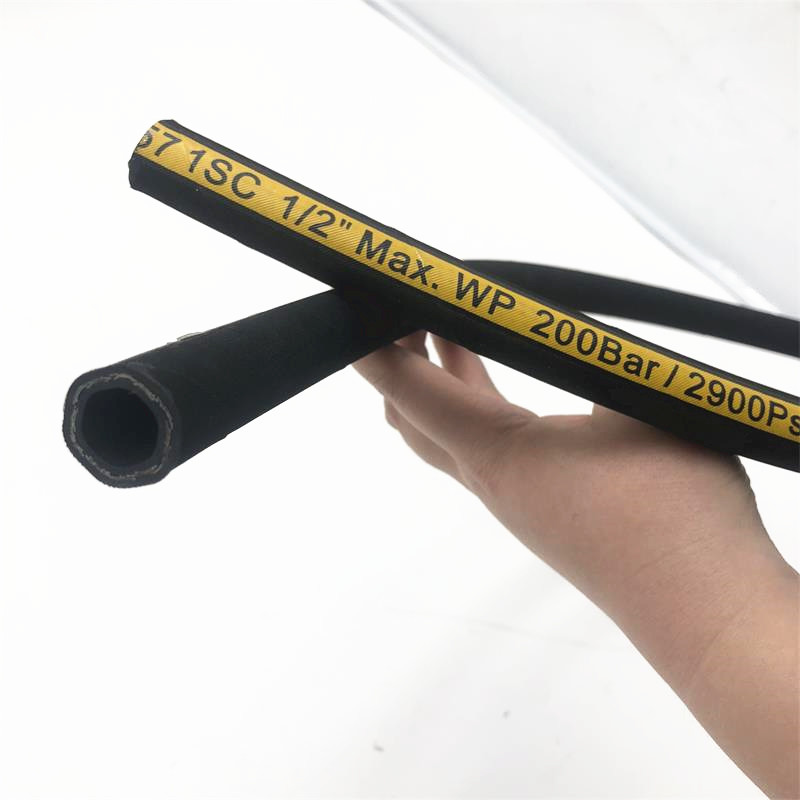
The OEM EN853 2SN hydraulic hose represents a critical component within fluid power systems, adhering to the European standard EN 853. Classified as 2SN, it denotes a two-layer steel wire reinforcement construction. This hose is engineered for the conveyance of hydraulic fluids in diverse applications, ranging from construction machinery and agricultural equipment to industrial hydraulics and mobile machinery. Its core performance characteristics revolve around its pressure capacity, flexibility, and resistance to hydraulic fluid degradation. The 2SN designation signifies a working pressure of up to 350 bar (5075 psi) and a burst pressure of up to 1050 bar (15225 psi), making it suitable for demanding hydraulic systems. A key industry pain point addressed by EN 853 2SN hoses is ensuring reliability and safety in high-pressure fluid transfer, minimizing potential leaks and failures that could lead to equipment downtime and safety hazards. Furthermore, the hose's construction needs to withstand cyclical pressure, temperature fluctuations, and potential abrasion in harsh operating environments.
Material Science & Manufacturing
The EN 853 2SN hose construction begins with an inner tube typically composed of synthetic rubber, specifically nitrile rubber (NBR) due to its excellent resistance to petroleum-based hydraulic fluids. NBR’s chemical structure, with its nitrile groups, imparts resistance to swelling and degradation when exposed to these fluids. The reinforcement layer consists of two braids of high-tensile steel wire. The steel wire used is typically a carbon steel with a tensile strength exceeding 1770 N/mm². The manufacturing of the steel wire reinforcement involves precise wire drawing and braiding processes to achieve consistent layer density and coverage. The outer cover is also commonly NBR, providing protection against abrasion, weathering, and ozone degradation. During manufacturing, a critical parameter is the helix angle of the steel wire braids. This angle directly influences the hose's flexibility and burst pressure. Precise control of this angle, typically within a narrow range of 30-45 degrees, is essential. Furthermore, the bonding between the inner tube, reinforcement, and outer cover is critical. This is achieved through vulcanization, a chemical process that cross-links the rubber compounds, creating a strong and durable bond. The vulcanization process parameters – temperature, pressure, and time – are meticulously controlled to ensure optimal adhesion and hose integrity. Material compatibility testing, especially of the inner tube with various hydraulic fluids, is a standard quality control procedure.
Performance & Engineering
The performance of an EN 853 2SN hose is governed by several engineering principles. The pressure rating is dictated by the tensile strength of the steel wire reinforcement and the geometry of the braid layers. A force analysis reveals that the hoop stress within the hose wall increases linearly with internal pressure. The steel wire reinforcement resists this hoop stress, preventing the hose from bursting. Flexibility is a crucial characteristic, particularly in applications requiring tight bends or dynamic movement. This flexibility is determined by the helix angle of the steel wire, the diameter of the hose, and the durometer (hardness) of the rubber compounds. Environmental resistance is another critical factor. Exposure to extreme temperatures (both high and low) can affect the hose’s flexibility and pressure capacity. Hydraulic fluid compatibility is vital; incompatible fluids can cause swelling, softening, or cracking of the inner tube, leading to leaks. EN 853 2SN hoses are subject to stringent compliance requirements. EN 853 itself specifies the performance characteristics and testing procedures for hydraulic hoses. Additional standards, such as ISO 14307, address the construction and testing of hose assemblies, including the crimping process. Fatigue life is a key design consideration, especially in applications with pulsating pressure. Finite element analysis (FEA) is often employed to predict the stress distribution within the hose wall under cyclic loading and optimize the design for maximum fatigue resistance.
Technical Specifications
| Parameter | Specification | Test Standard | Unit |
|---|---|---|---|
| Working Pressure | 350 | EN 853 | bar |
| Burst Pressure | 1050 | EN 853 | bar |
| Inner Tube Material | Nitrile Rubber (NBR) | ASTM D2000 | - |
| Reinforcement | Two Steel Wire Braids | EN 853 | - |
| Outer Cover Material | Nitrile Rubber (NBR) | ASTM D2000 | - |
| Temperature Range | -40 to +100 | EN 853 | °C |
Failure Mode & Maintenance
Common failure modes of EN 853 2SN hoses include burst failures due to exceeding the working pressure, fatigue cracking caused by cyclical pressure loading, and degradation of the rubber compounds due to exposure to heat, ozone, or incompatible hydraulic fluids. Pinholes can develop in the inner tube due to abrasion from fluid particles or internal corrosion. Delamination between the layers (inner tube, reinforcement, and outer cover) can occur due to poor bonding during manufacturing or prolonged exposure to harsh conditions. Oxidation of the steel wire reinforcement can also lead to reduced tensile strength and eventual failure. To mitigate these failures, regular inspection is crucial. This includes visual checks for cracks, abrasions, and bulges. Pressure testing can identify leaks or weaknesses in the hose. Preventative maintenance includes flushing the hydraulic system to remove contaminants and ensuring compatibility between the hose and the hydraulic fluid. Proper hose routing and support are also important to prevent excessive bending and abrasion. If a hose shows signs of damage, it should be replaced immediately. When crimping hose ends onto the hose, it is essential to use the correct crimping tools and procedures to ensure a secure and leak-proof connection. Over-crimping can damage the hose reinforcement, while under-crimping can lead to leaks. Following the manufacturer’s recommended torque specifications for hose end connections is also critical.
Industry FAQ
Q: What is the significance of the '2SN' designation in EN 853 2SN hoses?
A: The '2SN' designation indicates that the hose features two layers of steel wire reinforcement. This significantly increases the hose’s pressure capacity and burst strength compared to hoses with fewer reinforcement layers. It designates a working pressure up to 350 bar and burst pressure up to 1050 bar. This makes it suitable for high-pressure hydraulic systems.
Q: How does temperature affect the performance of an EN 853 2SN hose?
A: Extreme temperatures can significantly impact the hose’s performance. High temperatures can soften the rubber compounds, reducing the hose’s pressure capacity and increasing its susceptibility to leaks. Low temperatures can reduce the hose’s flexibility, making it more prone to cracking. The specified temperature range for EN 853 2SN hoses is typically -40°C to +100°C.
Q: What type of hydraulic fluid is compatible with EN 853 2SN hoses?
A: Most EN 853 2SN hoses utilize an inner tube made of nitrile rubber (NBR), which provides excellent resistance to petroleum-based hydraulic fluids. However, compatibility should always be verified with the hose manufacturer, as certain fluids (e.g., phosphate ester fluids) can degrade the NBR material. Using incompatible fluids can lead to swelling, softening, or cracking of the inner tube.
Q: What are the key considerations when crimping hose ends onto an EN 853 2SN hose?
A: Correct crimping is vital for ensuring a leak-proof and reliable connection. Using the correct crimping tools and dies specifically designed for EN 853 2SN hoses is essential. Following the manufacturer’s recommended crimp specifications (crimp diameter and crimp height) is crucial. Over-crimping can damage the reinforcement, while under-crimping can lead to leaks. Regular calibration of the crimping machine is also recommended.
Q: What is the recommended inspection frequency for EN 853 2SN hoses?
A: The inspection frequency depends on the operating conditions and the severity of the application. As a general guideline, visual inspections should be performed at least monthly, and more frequently in demanding applications. Inspections should include checking for cracks, abrasions, bulges, leaks, and signs of degradation. Regular pressure testing can also help identify potential problems before they lead to failure.
Conclusion
The OEM EN853 2SN hydraulic hose represents a robust and reliable solution for high-pressure fluid conveyance, owing to its two-layer steel wire reinforcement and NBR construction. Proper material selection, precise manufacturing control, and adherence to relevant industry standards like EN 853 are paramount for ensuring optimal performance and longevity. Understanding the hose's limitations, including temperature range and fluid compatibility, is critical for preventing premature failure.
Continued advancements in materials science and manufacturing techniques will likely lead to further improvements in the performance and durability of EN 853 2SN hoses. These advancements may include the development of new rubber compounds with enhanced resistance to degradation and the implementation of more sophisticated reinforcement structures to increase pressure capacity and fatigue life. Proactive maintenance and regular inspections, coupled with careful consideration of operating conditions, will remain essential for maximizing the service life and ensuring the safe and efficient operation of hydraulic systems utilizing these hoses.