
Apr . 01, 2024 17:55 Back to list
oem en853 1sn Hydraulic Hose Performance Analysis
Introduction
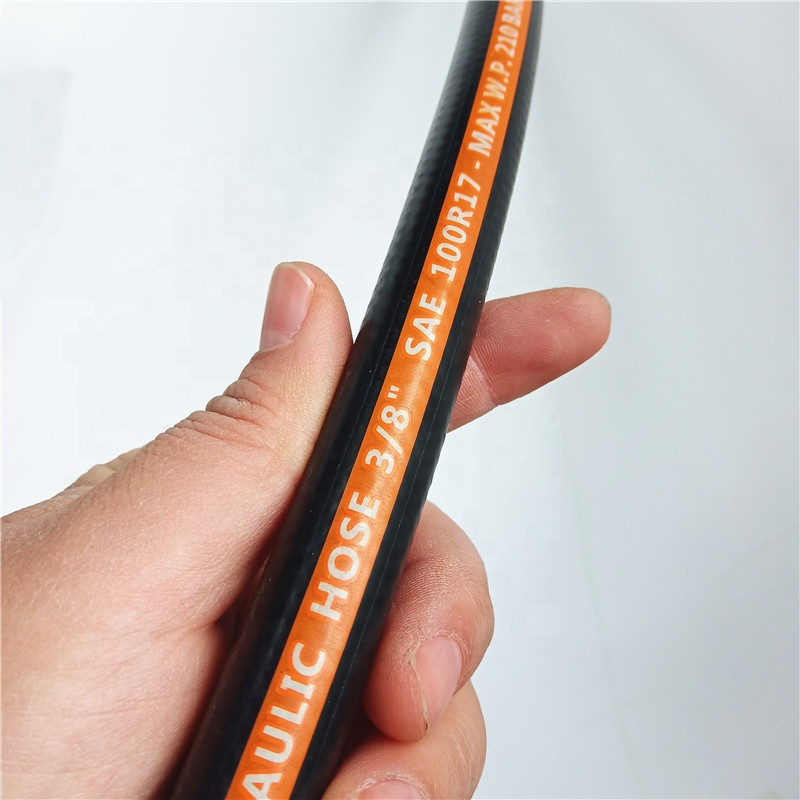
The OEM EN853 1SN hydraulic hose is a critical component in fluid power systems, specifically designed for high-pressure applications. Classified under EN 853 standard, the 1SN designation indicates a synthetic rubber inner tube, single wire braid reinforcement, and a synthetic rubber outer cover. Its primary function is to safely and reliably transmit hydraulic fluid, powering machinery across diverse industries including construction, agriculture, mining, and manufacturing. Within the industry chain, it resides as a vital link between the hydraulic pump, valves, and actuators. Core performance characteristics revolve around its pressure rating (typically up to 350 bar), burst pressure, flexibility, and resistance to abrasion and weathering. A key pain point addressed by the EN853 1SN hose is the need for robust, reliable fluid conveyance under demanding operational conditions, minimizing downtime and ensuring system safety. The hose's consistent performance and adherence to stringent European standards are essential for maintaining the integrity of hydraulic systems and preventing costly failures.
Material Science & Manufacturing
The OEM EN853 1SN hose construction relies on carefully selected materials and a precise manufacturing process. The inner tube is typically composed of nitrile rubber (NBR), noted for its excellent resistance to petroleum-based hydraulic fluids, abrasion, and temperature fluctuations (-40°C to +100°C). Nitrile rubber possesses a robust chemical structure with nitrile groups (-CN) providing oil resistance. The single wire braid reinforcement is almost universally high-tensile steel wire, providing the hose's burst strength and pressure containment capability. The steel wire undergoes a galvanization or other corrosion-resistant coating process to mitigate rusting. The outer cover is generally a synthetic rubber blend, often incorporating chloroprene (CR) for superior resistance to ozone, weathering, and abrasion.
Manufacturing begins with the extrusion of the inner tube. Precise temperature control and die design are paramount to ensure consistent wall thickness and smooth internal surface finish. The steel wire braid is then helically wound over the extruded tube, with precise tension control crucial for achieving the specified reinforcement density and burst pressure. This assembly undergoes vulcanization – a chemical process using heat and pressure – which crosslinks the rubber polymers, enhancing their strength, elasticity, and resistance to degradation. The outer cover is subsequently extruded over the braided structure, followed by a final curing stage. Key parameter controls throughout the process include rubber compound viscosity, extrusion temperature, braid pitch, vulcanization time and temperature, and dimensional inspection. Improper control of these parameters can lead to defects like porosity, uneven wall thickness, and insufficient reinforcement, compromising hose performance and safety.
Performance & Engineering
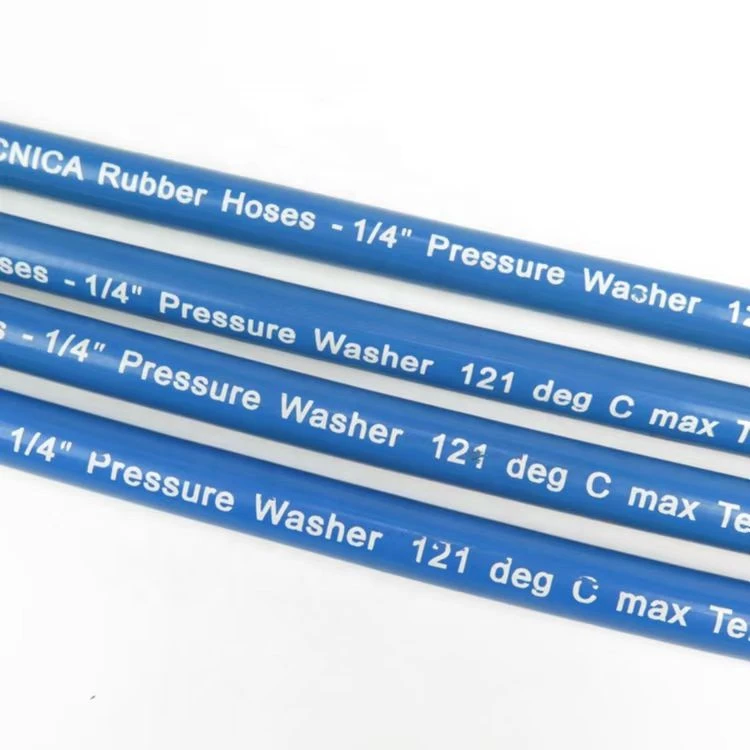
The EN853 1SN hose performance is fundamentally governed by principles of fluid mechanics and material stress-strain relationships. The wire braid reinforcement bears the majority of the tensile load when the hose is pressurized, resisting radial expansion and preventing burst failure. Force analysis dictates that the hoop stress in the hose wall is proportional to the internal pressure and hose radius, highlighting the importance of precise dimensional control during manufacturing. The hose’s flexibility, measured by its bend radius, is crucial for installation in confined spaces. Excessive bending can induce localized stress concentrations and premature fatigue failure. Environmental resistance is another critical performance factor. Prolonged exposure to UV radiation, ozone, and extreme temperatures can degrade the rubber compounds, reducing their elasticity and leading to cracking. Compliance with the EN 853 standard ensures that the hose meets minimum performance requirements for pressure rating, burst pressure, impulse testing, and temperature range. Furthermore, electrostatic dissipative (ESD) properties are increasingly important in certain applications to prevent static charge buildup and potential ignition hazards. Functional implementation considerations include proper hose fitting selection and installation techniques. Incorrectly sized or installed fittings can significantly reduce the hose’s service life and create leak paths.
Technical Specifications
| Parameter | Unit | Specification (Typical) | Test Standard |
|---|---|---|---|
| Working Pressure | bar | 315 | EN 853 |
| Burst Pressure | bar | 1050 | EN 853 |
| Inner Tube Material | - | Nitrile Rubber (NBR) | EN 853 |
| Reinforcement | - | Single Steel Wire Braid | EN 853 |
| Outer Cover Material | - | Chloroprene Rubber (CR) | EN 853 |
| Temperature Range | °C | -40 to +100 | EN 853 |
Failure Mode & Maintenance
The OEM EN853 1SN hose is susceptible to several failure modes in practical applications. Fatigue cracking, initiated by repeated flexing and pressure cycling, is a common failure mechanism, particularly near fittings. This occurs due to localized stress concentrations and material fatigue. Delamination, the separation of layers (inner tube, reinforcement, outer cover), can result from improper vulcanization or contamination during manufacturing. Degradation of the rubber compounds due to exposure to UV radiation, ozone, or harsh chemicals leads to loss of elasticity and cracking. Oxidation, especially at elevated temperatures, can cause the rubber to become brittle and lose its sealing properties. Abrasion from external sources, such as rubbing against machinery, can wear through the outer cover, exposing the reinforcement to corrosion. Internal corrosion can occur due to the introduction of water or incompatible fluids into the hydraulic system.
Preventive maintenance is critical for maximizing hose service life. Regular visual inspections should be conducted to identify signs of cracking, abrasion, or swelling. Hose assemblies should be inspected for proper fitting installation and torque. Fluid compatibility should be verified to ensure that the hydraulic fluid does not degrade the rubber compounds. Protecting the hose from direct sunlight, extreme temperatures, and physical damage is essential. If a hose shows any signs of damage, it should be replaced immediately. Furthermore, proper hose routing and support can minimize stress and prevent premature failure. Implementing a scheduled replacement program based on operating hours or calendar time can proactively mitigate the risk of catastrophic hose failure and associated downtime.
Industry FAQ
Q: What is the impact of exceeding the specified bend radius on the hose’s lifespan?
A: Exceeding the specified bend radius introduces significant localized stress concentrations within the hose structure, particularly at the inner radius. This accelerates fatigue cracking and reduces the hose’s overall lifespan. Repeated bending beyond the recommended limit can cause permanent deformation and eventual failure, even if the working pressure is within acceptable limits.
Q: How does fluid compatibility affect the performance of the NBR inner tube?
A: The NBR inner tube is designed for compatibility with petroleum-based hydraulic fluids. However, exposure to incompatible fluids, such as certain glycol-based fluids or aggressive chemicals, can cause swelling, softening, or degradation of the rubber. This compromises its sealing ability and can lead to leaks or hose failure.
Q: What is the significance of the ‘SN’ designation in EN 853 1SN?
A: The ‘SN’ designation signifies a single steel wire braid reinforcement. This provides a specific level of burst pressure and flexibility, making it suitable for a wide range of hydraulic applications. Other reinforcement options exist within the EN 853 standard, such as 2SN (two steel wire braids) for higher pressure applications.
Q: What preventative measures can be taken to mitigate ozone cracking of the outer cover?
A: Ozone cracking is a common issue with rubber compounds exposed to ozone-rich environments. Using a hose with a Chloroprene (CR) outer cover offers superior ozone resistance. Additionally, minimizing exposure to electrical arcs and ensuring adequate ventilation can help reduce ozone concentration. Applying a protective coating specifically designed for rubber protection can also provide a barrier against ozone degradation.
Q: What is the correct procedure for inspecting a hose for fatigue damage?
A: Visual inspection should focus on areas prone to flexing, such as near fittings and along the hose’s length. Look for small cracks, bulges, or areas of discoloration. A magnifying glass can be helpful for detecting hairline cracks. Gently flexing the hose while inspecting can reveal hidden cracks that may not be visible when static. Any sign of fatigue damage warrants immediate hose replacement.
Conclusion
The OEM EN853 1SN hydraulic hose represents a critical component in numerous industrial applications, demanding a thorough understanding of its material science, manufacturing processes, and performance characteristics. Its design, incorporating a nitrile rubber inner tube, single steel wire braid reinforcement, and chloroprene outer cover, provides a robust and reliable solution for high-pressure fluid conveyance. Adherence to the EN 853 standard ensures consistent quality and safety, addressing a crucial pain point within the industry—the need for dependable hydraulic systems.
Proper selection, installation, and preventative maintenance are paramount to maximizing the hose’s service life and preventing costly failures. Recognizing potential failure modes, such as fatigue cracking, delamination, and environmental degradation, and implementing proactive inspection protocols are essential for ensuring operational safety and minimizing downtime. Future advancements may focus on developing more durable rubber compounds with enhanced resistance to abrasion, ozone, and chemical attack, further extending the lifespan and reliability of these critical hydraulic components.