
Apr . 01, 2024 17:55 Back to list
oem competitive price hydraulic hose Performance Analysis

Introduction
Hydraulic hoses, specifically OEM competitive price hydraulic hoses, represent a critical component in fluid power systems across diverse industries including construction, agriculture, manufacturing, and automotive. These hoses are engineered to transmit hydraulic fluid under significant pressure, facilitating the operation of hydraulic machinery. Their positioning within the industrial chain is foundational; failures directly impact system uptime, operational efficiency, and safety. The core performance characteristics—pressure rating, burst pressure, temperature resistance, and fluid compatibility—define the hose’s suitability for a specific application. The "competitive price" designation indicates a focus on value engineering, material optimization, and efficient manufacturing processes while maintaining acceptable performance standards. Understanding the nuances of these hoses, beyond just price, is crucial for informed procurement and reliable operation.
Material Science & Manufacturing
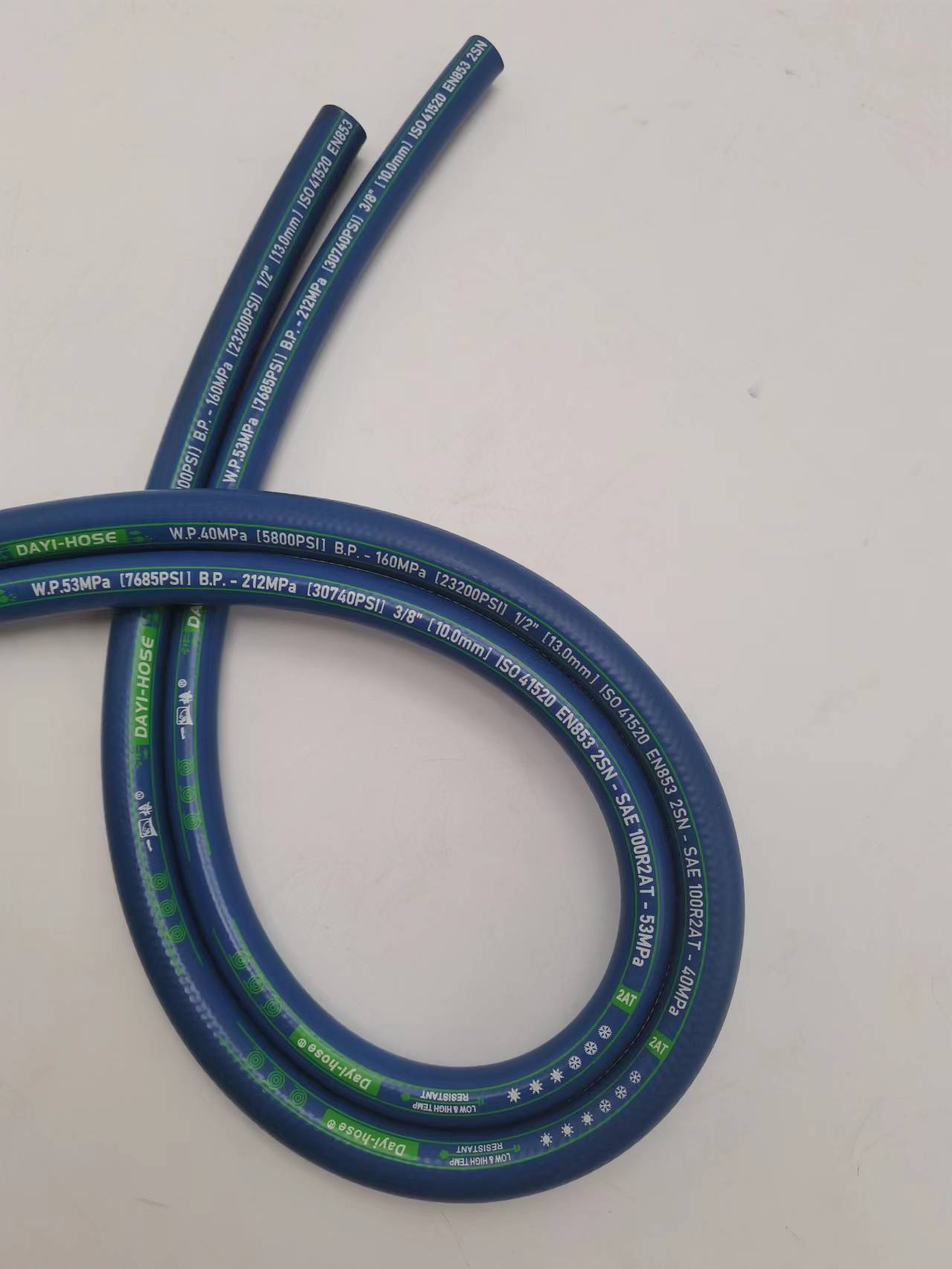
The construction of an OEM competitive price hydraulic hose typically involves four primary layers. The innermost layer, the tube, is generally constructed from a synthetic rubber compound, commonly Nitrile Rubber (NBR) due to its excellent resistance to petroleum-based hydraulic fluids. Ethylene Propylene Diene Monomer (EPDM) is used when compatibility with phosphate ester fluids is required. The physical properties of the rubber are crucial; tensile strength, elongation at break, and hardness (measured using Shore A durometer) dictate its ability to withstand pressure and deformation. Manufacturing of the tube involves extrusion, a process where the rubber compound is forced through a die to create a seamless, consistent bore.
Surrounding the tube is the reinforcement layer. This is where cost optimization is often seen. While premium hoses utilize multiple spiral-wound layers of high-tensile steel wire, competitive price options may employ fewer layers, or utilize a single braided steel wire construction. Steel wire gauge and braiding angle directly influence the hose’s burst pressure and flexibility. The third layer is the cover, typically made of Chloroprene rubber (CR) offering excellent abrasion, ozone, and weathering resistance. The cover’s thickness and surface finish influence its durability in harsh environments. Finally, some hoses include a skive layer to improve the fitting crimp.
Manufacturing tolerances are critical. Precise control of extrusion temperatures, curing times, and wire winding tension is essential to ensure consistent performance. Quality control involves hydrostatic testing (proof pressure testing) to verify the hose’s ability to withstand pressures significantly exceeding its working pressure, and impulse testing to assess its fatigue resistance. The curing process, using sulfur-based or peroxide-based systems, affects the rubber's crosslinking density and ultimately its mechanical properties.
Performance & Engineering
The performance of a hydraulic hose is dictated by several key engineering principles. The primary is pressure containment. The reinforcement layer bears the load created by the internal hydraulic pressure. The hoop stress within the hose wall is calculated using Barlow's formula (σ = PD/2t, where σ is hoop stress, P is internal pressure, D is the hose diameter, and t is the wall thickness). This calculation dictates the required reinforcement strength to achieve a specific working pressure and safety factor.
Fatigue resistance is another critical factor. Hydraulic systems often experience pressure pulsations, causing cyclic stress on the hose. Repeated flexing and pressure changes can lead to fatigue cracking in the reinforcement layer. Impulse testing, as per SAE J343 standards, simulates these conditions to assess hose life. Flexibility is also important, as hoses must bend and route around obstacles. A smaller bend radius indicates greater flexibility. This is influenced by the reinforcement layer construction.
Environmental resistance is crucial. Exposure to ozone, UV radiation, extreme temperatures, and corrosive fluids can degrade the rubber compounds, reducing hose lifespan. Selecting appropriate rubber formulations (e.g., EPDM for ozone resistance) and protective covers is vital. Compliance requirements, such as REACH and RoHS, restrict the use of certain hazardous substances in hose construction, impacting material selection. The fitting connection is also critical. Proper crimping ensures a secure, leak-proof seal. Incorrect crimping can lead to premature failure at the fitting interface.
Technical Specifications
| Parameter | Unit | Typical Value (Competitive Price Hose) | Standard Test Method |
|---|---|---|---|
| Working Pressure | MPa | 16 | SAE J517 |
| Burst Pressure | MPa | 48 | SAE J517 |
| Temperature Range | °C | -40 to +100 | SAE J517 |
| Inner Tube Material | - | NBR | ASTM D2000 |
| Reinforcement | - | Single Steel Wire Braid | SAE J517 |
| Cover Material | - | CR | ASTM D2000 |
| Bend Radius | mm | 4D (where D is the hose ID) | Manufacturer Specification |
Failure Mode & Maintenance
Hydraulic hose failures are often categorized into several modes. The most common is burst failure, resulting from exceeding the working pressure or fatigue cracking in the reinforcement layer. This is often preceded by localized bulging or deformation. Another common failure is fitting failure, where the hose detaches from the fitting due to improper crimping, corrosion, or wear. Rubber degradation, caused by ozone cracking, UV exposure, or chemical attack, can lead to leaks and reduced hose life. Internal abrasion occurs when fluid contamination (e.g., metal particles) damages the inner tube.
Pinholes, caused by fatigue or corrosion, represent a less dramatic but equally problematic failure mode. Kinking, resulting from excessive bending, can restrict fluid flow and damage the reinforcement. Maintenance strategies include regular visual inspections for signs of damage (cracking, abrasion, leaks). Pressure testing, using a dedicated hose test kit, can identify weakened hoses before catastrophic failure. Proper routing and support prevent kinking and abrasion. Fluid filtration is crucial to minimize internal abrasion. Replacement should occur based on a pre-determined schedule or when signs of damage are detected. Never attempt to repair a damaged hydraulic hose; complete replacement is the only safe option.
Industry FAQ
Q: What is the significance of the hose's "dash size"?
A: The dash size (e.g., -6, -8, -10) refers to the hose's internal diameter in sixteenths of an inch. A -6 hose has a 6/16 inch, or 3/8 inch, internal diameter. It dictates the flow capacity of the hose and must be matched to the system's requirements. Using an undersized hose restricts flow and increases pressure drop, while an oversized hose can lead to excessive slack and potential kinking.
Q: How does fluid compatibility affect hose selection?
A: Fluid compatibility is paramount. NBR is suitable for petroleum-based fluids, but degrades in phosphate ester fluids. EPDM is resistant to phosphate esters but may not be ideal for petroleum-based fluids. Selecting the wrong rubber compound leads to swelling, softening, and premature failure.
Q: What is the role of the safety factor in hose selection?
A: The safety factor is a multiplier applied to the working pressure to determine the minimum burst pressure. A typical safety factor is 4:1, meaning the burst pressure should be at least four times the working pressure. Higher safety factors are used in critical applications or when dealing with shock loads.
Q: What are the implications of using a hose with an insufficient reinforcement layer?
A: Insufficient reinforcement leads to a lower burst pressure and reduced fatigue life. The hose is more susceptible to failure under high pressure or cyclical loading. This poses a significant safety risk and can result in costly downtime.
Q: What is the correct procedure for crimping hose fittings?
A: Proper crimping requires a calibrated crimping machine and the correct die set for the hose and fitting combination. Under-crimping creates a loose connection prone to leakage, while over-crimping can damage the hose reinforcement. The crimp must create a permanent, mechanically locked connection.
Conclusion
OEM competitive price hydraulic hoses represent a balance between performance and cost-effectiveness. Careful consideration of material selection, manufacturing processes, and performance characteristics is essential for ensuring reliable operation. Understanding the potential failure modes and implementing preventative maintenance strategies are critical to maximizing hose lifespan and minimizing downtime. Prioritizing appropriate specifications based on application requirements, rather than solely focusing on price, will result in a more robust and dependable hydraulic system.
Future advancements in hydraulic hose technology will likely focus on developing lighter-weight materials, improving abrasion resistance, and incorporating sensor technology for real-time monitoring of hose condition. Adherence to industry standards and rigorous quality control remain paramount. Selecting a reputable supplier with a proven track record of delivering consistent quality and technical support is vital for long-term success.