
Apr . 01, 2024 17:55 Back to list
oem brand hydraulic hose suppliers Performance Analysis
Introduction
OEM brand hydraulic hose suppliers represent a critical node in the global fluid power infrastructure. These suppliers are not merely manufacturers; they are engineering partners providing customized hose assemblies to Original Equipment Manufacturers (OEMs) across diverse industries – construction, agriculture, mining, manufacturing, and beyond. Hydraulic hoses transmit fluid power, enabling critical functions in heavy machinery and industrial applications. Their performance is paramount to system efficiency, reliability, and safety. This guide provides an in-depth technical overview of OEM hydraulic hose supply, encompassing material science, manufacturing processes, performance characteristics, failure modes, and relevant industry standards. A key pain point for OEMs is ensuring consistent quality, adherence to stringent specifications, and reliable delivery from their hose suppliers, particularly given the critical nature of these components in overall system performance. Variability in hose performance can lead to costly downtime, safety hazards, and warranty claims. This guide aims to provide the technical insights needed to mitigate these risks.
Material Science & Manufacturing
Hydraulic hoses are complex composites, typically consisting of an inner tube, reinforcement layers, and an outer cover. The inner tube is commonly constructed from synthetic rubbers such as Nitrile (NBR), Ethylene Propylene Diene Monomer (EPDM), or Fluorocarbon (FKM/Viton), chosen for their compatibility with the hydraulic fluid in use. NBR offers excellent resistance to petroleum-based fluids, while EPDM excels in phosphate ester fluid compatibility and high-temperature applications. FKM provides superior resistance to a broader range of aggressive chemicals and extreme temperatures, but at a higher cost. The reinforcement layer provides the hose's strength and pressure resistance. Common materials include multiple layers of high-tensile steel wire (spiral or braided construction), synthetic fiber (aramid, polyester), or a combination thereof. Steel wire reinforcement is used in high-pressure applications, while fiber reinforcement offers greater flexibility. The outer cover, typically made from synthetic rubber like Chloroprene (CR) or Polyurethane (PU), provides abrasion resistance, weather protection, and resistance to oil and chemicals.
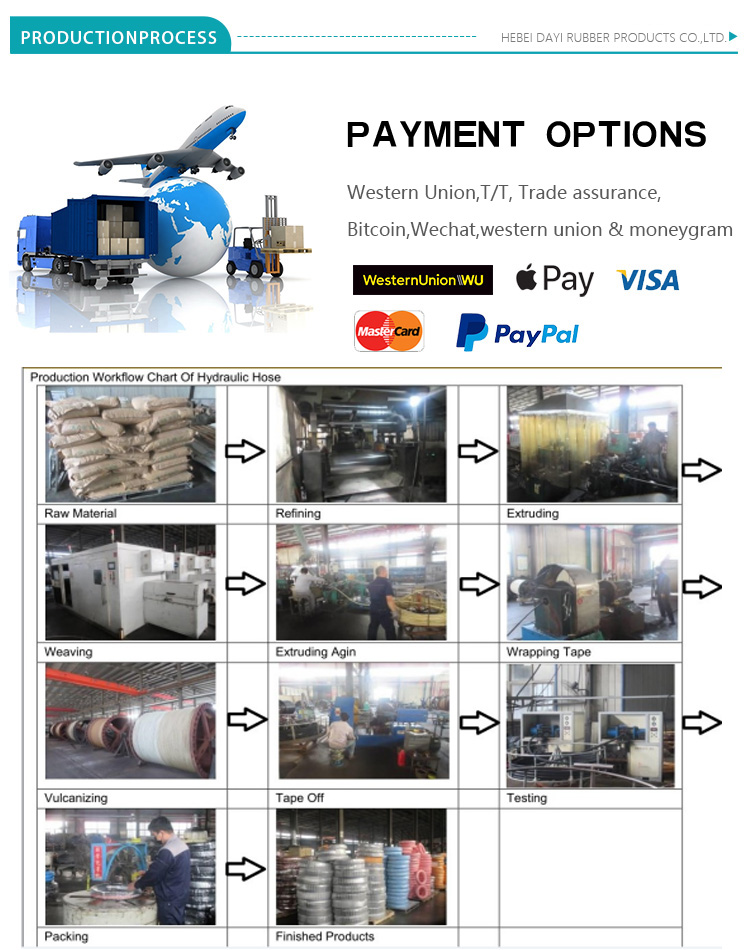
Manufacturing processes vary based on hose type and construction. Braided hose production involves helically winding yarn or wire around a mandrel, followed by vulcanization. Spiral hose construction uses a continuous winding of high-tensile wire around a central mandrel. Critical parameters during manufacturing include precise control of rubber compound mixing ratios, wire tension during winding, vulcanization temperature and time, and dimensional accuracy. Maintaining consistent batch-to-batch material properties is crucial for reliable performance. Post-manufacturing, hoses undergo rigorous testing, including pressure testing to several times the working pressure, impulse testing to simulate pulsating loads, and dimensional inspection to ensure compliance with specifications. Skiving operations, where the outer cover is partially removed at the ends, are critical for proper fitting installation. The quality of the skive directly impacts seal integrity.
Performance & Engineering
Hydraulic hose performance is dictated by several key engineering parameters: working pressure, burst pressure, temperature range, and fluid compatibility. Working pressure defines the maximum sustained pressure the hose can safely handle during operation. Burst pressure is typically four times the working pressure and represents the pressure at which the hose will fail catastrophically. Temperature range dictates the hose’s operational limits; exceeding these limits can cause material degradation and premature failure. Fluid compatibility ensures the hose material doesn't swell, degrade, or leach contaminants into the hydraulic fluid.
Force analysis is critical in hose design. Hoses are subjected to internal pressure loads, bending stresses, and axial tension. Finite element analysis (FEA) is often used to optimize hose construction and predict stress distribution under various loading conditions. Impulse pressure, representing pulsating loads, is a significant factor in hose fatigue life. Proper hose routing and support are essential to minimize bending stresses and prevent abrasion. Compliance requirements vary by industry and region. For example, SAE J517 specifies performance requirements for hydraulic hoses used in mobile hydraulics, while DIN EN 853 and EN 857 cover standards for hydraulic hoses in industrial applications. Hose assemblies must also meet relevant safety regulations, such as those pertaining to flammability and toxicity.
Technical Specifications
| Hose Type | Working Pressure (PSI) | Burst Pressure (PSI) | Temperature Range (°F) |
|---|---|---|---|
| R1AT | 1500 | 6000 | -40 to +212 |
| R2AT | 2000 | 8000 | -40 to +212 |
| R1S | 1000 | 4000 | -40 to +185 |
| R6S | 600 | 2400 | -40 to +212 |
| TEFLON (PTFE) | 3000 | 12000 | -65 to +450 |
| Ultra High Pressure (UHSP) | 5000+ | 20000+ | -40 to +250 |
Failure Mode & Maintenance
Hydraulic hose failures can arise from several mechanisms. Fatigue cracking, caused by repeated bending and pulsation, is a common failure mode, particularly in applications with high impulse pressures. Abrasion, resulting from contact with abrasive surfaces, weakens the outer cover and can expose the reinforcement layers. Oil diffusion, where hydraulic fluid permeates the rubber material, causes swelling and degradation, reducing the hose's strength and flexibility. Heat aging, caused by prolonged exposure to high temperatures, leads to hardening and cracking of the rubber components. Incorrect installation, such as excessive bending or improper fitting connection, can significantly reduce hose life.
Preventative maintenance is crucial for maximizing hose lifespan. Regular visual inspections should be conducted to identify signs of wear, abrasion, cracking, or swelling. Hose routing should be optimized to minimize bending stresses and prevent contact with hot surfaces or sharp edges. Proper fitting selection and installation are essential for ensuring a leak-free connection. Hydraulic fluid should be regularly analyzed to identify contaminants that can accelerate hose degradation. When replacing hoses, it is crucial to use hoses that meet or exceed the OEM’s specifications. Disposal of old hoses should be conducted in accordance with local environmental regulations.
Industry FAQ
Q: What is the significance of hose "layline" markings and how should they be interpreted?
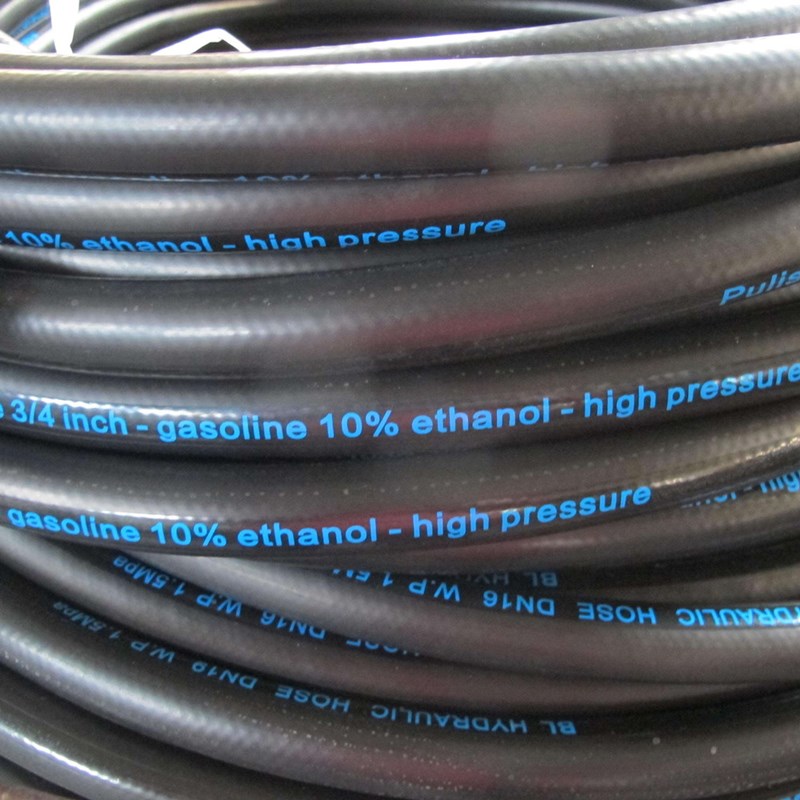
A: Layline markings are alphanumeric codes molded into the hose cover providing critical information about the hose’s manufacturer, production date, and performance specifications (e.g., working pressure, construction type). They are essential for traceability and verifying the hose meets the required standards. Incorrectly interpreting or ignoring these markings can lead to the use of substandard or improperly specified hoses.
Q: How does fluid velocity impact hose life and what measures can be taken to mitigate its effects?
A: High fluid velocity increases erosion and can exacerbate fatigue failure. Higher velocity also leads to increased heat generation. Mitigation strategies include reducing flow rates where possible, using hoses with thicker inner liners, and employing smooth-bore hose designs to minimize friction. Proper system design that avoids sharp bends and restrictions is also critical.
Q: What are the key considerations when selecting a hose for use with biodegradable hydraulic fluids?
A: Biodegradable fluids often have different chemical properties than conventional petroleum-based fluids. Compatibility testing is paramount. Many standard hose materials are not compatible with biodegradable fluids and can swell, degrade, or leach contaminants. Specifically, look for hoses specifically rated for use with the intended biodegradable fluid type, typically based on vegetable oil or synthetic ester.
Q: What is the role of hose guards in protecting hydraulic hoses and extending their service life?
A: Hose guards provide physical protection against abrasion, impact, and environmental exposure. They are particularly important in applications where hoses are routed near moving parts, sharp edges, or harsh weather conditions. Selecting the appropriate type of hose guard (e.g., spiral wrap, sleeve, or clam-shell design) depends on the specific application and the nature of the potential hazards.
Q: How does crimping affect the performance and reliability of a hydraulic hose assembly?
A: Proper crimping is critical for creating a secure and leak-free connection between the hose and the fitting. Incorrect crimp dimensions can lead to premature failure. Crimp specifications vary depending on the hose type, fitting type, and hose size. Using a calibrated crimping machine and following the manufacturer's recommended crimp chart is essential.
Conclusion
OEM brand hydraulic hose suppliers play a pivotal role in the performance and reliability of countless industrial and mobile applications. Understanding the complexities of material science, manufacturing processes, and performance parameters is crucial for selecting the right hose for a given application. Failure to do so can result in costly downtime, safety hazards, and reduced system efficiency. The specifications outlined in this guide provide a framework for evaluating hose suppliers and ensuring the delivery of high-quality, dependable hose assemblies.
Looking ahead, advancements in materials science and manufacturing techniques will continue to drive improvements in hydraulic hose performance and durability. The development of more chemically resistant and temperature-stable materials, coupled with optimized hose designs, will extend hose life and reduce the frequency of replacements. Furthermore, the increasing focus on sustainability will drive demand for hoses compatible with biodegradable fluids and manufactured using environmentally responsible processes. Proactive engagement with reputable OEM hose suppliers and adherence to industry best practices remain paramount for ensuring optimal hydraulic system performance.