
Apr . 01, 2024 17:55 Back to list
oem brand hydraulic hose factory Performance Analysis
Introduction
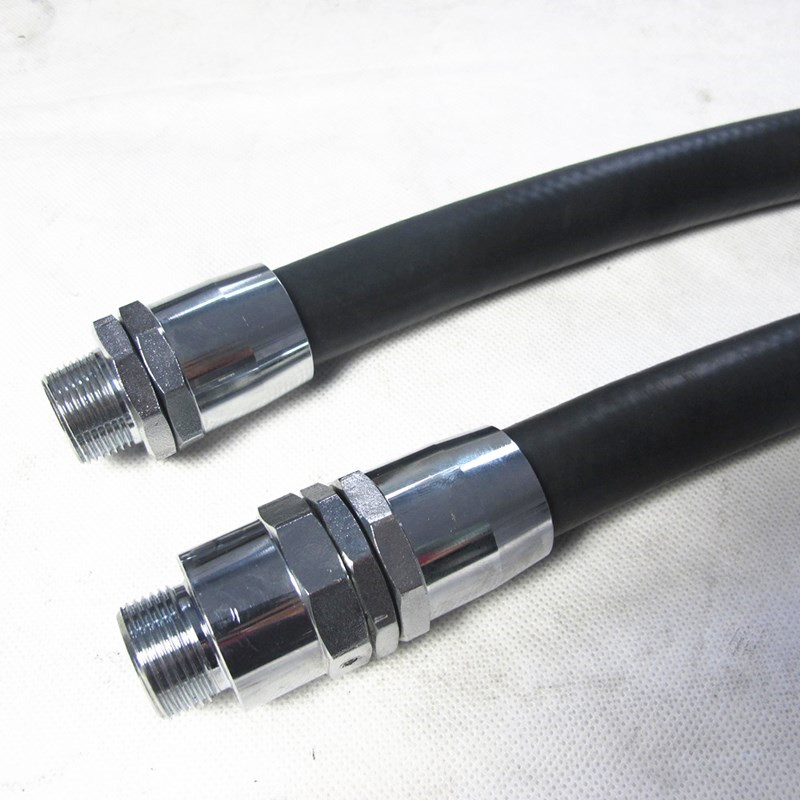
OEM brand hydraulic hose factories specialize in the manufacture of hydraulic hoses to precise customer specifications, acting as a critical link in the broader fluid power systems industry. These hoses transmit power using pressurized hydraulic fluid, enabling functionality across diverse sectors including construction, agriculture, manufacturing, and automotive. The industry faces consistent demand for hoses capable of handling increasingly high pressures, varying fluid types, and demanding environmental conditions. Core performance characteristics center around burst pressure, working pressure, temperature resistance, and fluid compatibility. A key challenge lies in balancing performance requirements with cost-effectiveness, particularly in a competitive global market. OEM manufacturers differentiate themselves through material expertise, manufacturing process control, rigorous quality assurance, and customization capabilities, offering solutions tailored to specific machine and application needs. This guide provides a comprehensive overview of the materials, manufacturing, performance, failure modes, and industry standards relating to OEM-branded hydraulic hoses.
Material Science & Manufacturing
Hydraulic hoses are rarely comprised of a single material. Typically, they consist of an inner tube, reinforcement layers, and an outer cover. The inner tube, responsible for fluid containment, is frequently manufactured from synthetic rubbers such as nitrile (NBR) for oil-based fluids, ethylene propylene diene monomer (EPDM) for water-based fluids and high-temperature applications, and fluorocarbon (FKM/Viton) for aggressive chemical environments. NBR provides good abrasion resistance and cost-effectiveness, while EPDM excels in weather resistance. FKM offers superior chemical resistance but at a higher cost. Reinforcement layers contribute to pressure handling capacity and typically employ high-tensile steel wire (single or multiple spiral layers) or synthetic fiber braiding (e.g., polyester, aramid). Steel wire reinforcement provides significantly higher pressure ratings, while fiber braiding offers flexibility. The outer cover protects against abrasion, weathering, and chemical exposure, usually utilizing synthetic rubbers like polyurethane or a specialized rubber compound for enhanced durability.
The manufacturing process varies based on hose type and reinforcement. For spiral-wound hoses, steel wire is continuously wrapped around a mandrel, simultaneously extruding the inner and outer rubber layers. Precise tension control during wire winding is critical to achieving consistent burst pressure. Braided hoses utilize a braiding machine to interweave synthetic fibers around an inner tube, followed by outer cover extrusion. Extrusion parameters, including temperature, screw speed, and die design, directly impact rubber compound uniformity and dimensional accuracy. Post-extrusion curing (vulcanization) is crucial for achieving desired rubber properties, involving controlled heat and time to crosslink the polymer chains. Quality control at each stage, including dimensional checks, pressure testing, and material analysis, is paramount. Skiving, a process of removing a portion of the outer cover at the hose ends, facilitates proper fitting assembly and prevents extrusion during crimping.
Performance & Engineering
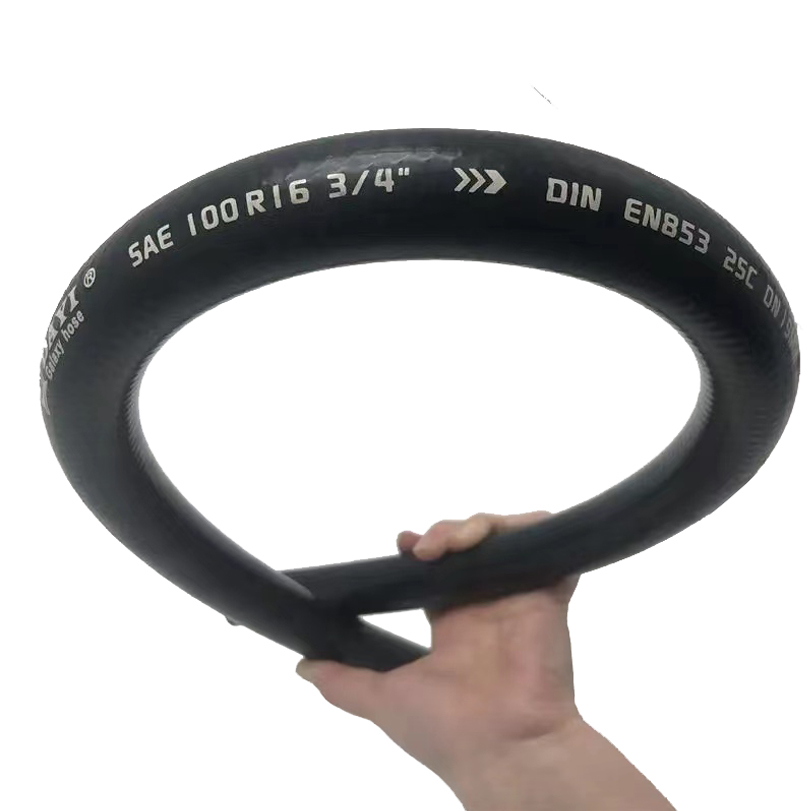
The performance of a hydraulic hose is dictated by several key engineering considerations. Burst pressure, defined as the pressure at which the hose fails, is a primary specification, typically 4:1 safety factor above the working pressure. Working pressure is the maximum continuous operating pressure. Hose selection must account for pressure surges and dynamic loads inherent in hydraulic systems. Fatigue resistance is crucial in applications involving constant flexing or pulsation; repeated bending induces stress concentration at the hose bends, leading to eventual failure. Tensile strength, reflecting the hose's ability to withstand axial loads, is essential to prevent elongation and detachment under tension. Environmental factors, including temperature extremes and exposure to chemicals, significantly impact hose performance. High temperatures degrade rubber compounds, reducing flexibility and burst pressure. Chemical exposure can cause swelling, cracking, or leaching of plasticizers, compromising integrity.
Finite element analysis (FEA) is employed to model stress distributions within the hose structure under various loading conditions, optimizing reinforcement layer design and material selection. Hose bend radius is a critical parameter; exceeding the minimum bend radius induces excessive stress and accelerates fatigue. Proper fitting selection and crimping are essential for maintaining hose integrity. Incorrect crimping can lead to leakage, premature failure, or hose blow-off. Fluid compatibility must be carefully considered; incompatible fluids can degrade the inner tube, causing contamination and system failure. Static dissipation is also an important factor in certain applications to prevent electrostatic discharge.
Technical Specifications
| Parameter | Unit | Typical Value (Steel Wire Spiral) | Typical Value (Synthetic Fiber Braid) |
|---|---|---|---|
| Working Pressure | PSI | Up to 6000 | Up to 3000 |
| Burst Pressure | PSI | 24,000 | 12,000 |
| Temperature Range | °F | -40 to +250 | -40 to +212 |
| Inner Tube Material | - | NBR, EPDM, FKM | NBR, EPDM |
| Reinforcement | - | High-Tensile Steel Wire (Spiral) | Polyester/Aramid Fiber (Braid) |
| Outer Cover Material | - | Polyurethane, Synthetic Rubber | Synthetic Rubber |
Failure Mode & Maintenance
Hydraulic hose failure manifests in several modes. Bursting, a sudden catastrophic failure, typically results from exceeding the working pressure or degradation of reinforcement layers. Extrusion, where the inner tube protrudes through the reinforcement, occurs due to excessive internal pressure or inadequate crimping. Kinking, caused by exceeding the minimum bend radius, damages the reinforcement and leads to localized weakness. Abrasion, resulting from external contact with abrasive surfaces, wears away the outer cover, exposing the reinforcement to corrosion. Permeation, the diffusion of hydraulic fluid through the hose wall, is exacerbated by high temperatures and incompatible fluids. Fatigue cracking originates from repeated flexing and stress concentration, gradually weakening the hose.
Preventative maintenance is crucial for extending hose life. Regular visual inspections should identify signs of abrasion, kinking, cracking, or leakage. Hose routing should minimize bending and contact with abrasive surfaces. Proper fitting selection and crimping are vital. Hydraulic fluid should be regularly analyzed for contamination, which can accelerate wear. Hoses should be replaced according to manufacturer recommendations or when signs of degradation are observed. When replacing hoses, it's imperative to use compatible fittings and ensure proper installation procedures. Documenting hose replacement dates and associated maintenance activities facilitates proactive management and minimizes unscheduled downtime. Implementing a hose management program, including routine inspections and replacement schedules, significantly reduces the risk of catastrophic failures and associated safety hazards.
Industry FAQ
Q: What are the key differences between spiral-wound and braided hydraulic hoses, and when would I choose one over the other?
A: Spiral-wound hoses offer higher pressure capabilities due to the continuous steel wire reinforcement, making them suitable for heavy-duty applications like construction equipment. They generally handle higher temperature variations as well. Braided hoses, utilizing fiber reinforcement, are more flexible and cost-effective, ideal for applications with tighter bend radii and lower pressure requirements, like hydraulic jacks or agricultural machinery. The choice depends heavily on the system’s operating pressure, temperature, and required flexibility.
Q: How does fluid compatibility affect hose lifespan?
A: Incompatible fluids can cause the inner tube material to swell, soften, or degrade, leading to permeation, leakage, and ultimately, hose failure. For example, using petroleum-based fluids in a hose designed for water-based fluids will rapidly degrade the rubber. Always verify the hose’s chemical compatibility chart with the intended fluid.
Q: What are the common causes of hose kinking and how can it be prevented?
A: Kinking occurs when the hose is bent beyond its minimum bend radius, damaging the reinforcement layer. Prevention involves ensuring adequate clearance for hose routing, using hoses with appropriate flexibility for the application, and avoiding sharp bends during installation. Utilizing swivel fittings can also mitigate twisting and kinking.
Q: What is the significance of the crimp strength during fitting assembly?
A: Crimp strength is critical for creating a leak-proof seal between the hose and fitting. Insufficient crimping can lead to leakage, while excessive crimping can damage the hose reinforcement. Crimping machines must be calibrated regularly, and the correct die set must be used for the specific hose and fitting combination. Proper crimping ensures the fitting is securely attached without compromising hose integrity.
Q: How often should hydraulic hoses be inspected and replaced as part of a preventative maintenance program?
A: The inspection frequency depends on the severity of the application. For critical systems or those operating under harsh conditions, monthly inspections are recommended. Less demanding applications may allow for quarterly inspections. Hoses should be replaced immediately if any signs of damage – cracking, abrasion, kinking, swelling, or leakage – are observed, or as per the manufacturer’s recommended service life, even if no visible damage is present.
Conclusion
OEM brand hydraulic hose manufacturing is a complex undertaking reliant on precise material selection, controlled manufacturing processes, and a thorough understanding of fluid power system demands. Achieving optimal hose performance necessitates careful consideration of pressure ratings, temperature extremes, fluid compatibility, and environmental factors. Implementing rigorous quality control procedures throughout the manufacturing process is paramount to ensuring consistent reliability and preventing premature failures.
Looking ahead, advancements in material science will drive the development of lighter, more durable, and chemically resistant hydraulic hoses. The integration of sensor technologies for real-time pressure and temperature monitoring will enable predictive maintenance and enhance system safety. Adherence to international standards, coupled with continuous improvement in manufacturing techniques, will remain crucial for meeting the evolving needs of the hydraulic power industry and ensuring long-term performance and operational efficiency.