
Apr . 01, 2024 17:55 Back to list
oem black wire spiral hydraulic hose Performance Analysis
Introduction
OEM black wire spiral hydraulic hose represents a critical component within fluid power systems, designed for the transmission of hydraulic fluid under high pressure. Positioned within the industrial supply chain as a finished good, typically sourced by OEMs and industrial distributors, its performance dictates the reliability and efficiency of diverse applications ranging from construction equipment and agricultural machinery to manufacturing and material handling. Core performance characteristics include burst pressure, working pressure, temperature range, and fluid compatibility, all dictated by the hose's construction and materials. The industry faces challenges relating to hose longevity, particularly in harsh operating environments, and the need for consistently reliable performance to minimize downtime and ensure safety. This guide provides an in-depth examination of the materials, manufacturing processes, performance characteristics, failure modes, and industry standards surrounding this critical industrial product.
Material Science & Manufacturing
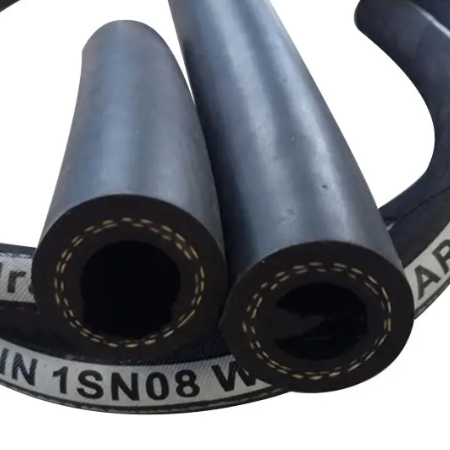
The construction of a black wire spiral hydraulic hose relies on a carefully engineered combination of materials. The inner tube is typically composed of a synthetic rubber compound, commonly nitrile rubber (NBR), due to its excellent resistance to petroleum-based hydraulic fluids. NBR's chemical structure provides a balance of flexibility and fluid impermeability. Alternative inner tube materials include EPDM for phosphate ester fluids and PTFE for aggressive chemical environments. Reinforcement is provided by multiple layers of high-tensile steel wire spiraled around the inner tube. The wire is critical for withstanding high pressures. Wire gauge and spiral angle are precisely controlled to achieve the desired pressure rating and flexibility. The outer cover is generally a synthetic rubber blend, often a combination of SBR (styrene-butadiene rubber) and NBR, formulated to provide abrasion resistance, weathering protection, and resistance to ozone degradation. Manufacturing involves several key steps. The inner tube is extruded, followed by the precise winding of the steel wire reinforcement. This is often an automated process using specialized winding machines. The outer cover is then extruded over the reinforced tube. Curing, or vulcanization, is a critical step where the rubber compounds are crosslinked using heat and pressure, imparting the final physical and chemical properties. Parameter control during extrusion and curing is paramount, with temperature, pressure, and time meticulously monitored to ensure consistent product quality. Quality control checks include dimensional verification, pressure testing, and material analysis.
Performance & Engineering
The performance of a black wire spiral hydraulic hose is governed by a complex interplay of mechanical stresses and environmental factors. Force analysis focuses on hoop stress within the hose wall resulting from internal pressure. This stress is directly proportional to the pressure and hose diameter and inversely proportional to the wall thickness. Steel wire reinforcement significantly mitigates this stress, allowing for high-pressure operation. Fatigue life is a critical engineering consideration. Repeated pressure cycling can lead to fatigue failure of the steel wire or rubber compounds. Hose flexibility is also paramount, especially in applications requiring tight bends. Flexibility is influenced by the spiral angle of the steel wire and the durometer (hardness) of the rubber compounds. Environmental resistance is crucial. Exposure to extreme temperatures, UV radiation, and corrosive fluids can degrade the rubber compounds, reducing their elasticity and causing cracking. Compliance requirements vary by region and application. For example, SAE J517 specifies performance requirements for hydraulic hoses, including burst pressure, working pressure, and temperature range. The hose must also meet relevant safety standards to prevent catastrophic failure and protect personnel. Furthermore, understanding fluid compatibility is critical. Incompatible fluids can cause swelling, softening, or cracking of the inner tube, leading to leaks and system failure.
Technical Specifications
| Parameter | Unit | Typical Value | Test Standard |
|---|---|---|---|
| Working Pressure | PSI | 2000-6000 | SAE J517 |
| Burst Pressure | PSI | 8000-24000 | SAE J517 |
| Temperature Range | °F | -40 to +212 | SAE J517 |
| Inner Tube Material | - | Nitrile Rubber (NBR) | ASTM D2000 |
| Reinforcement | Layers | 4-6 | - |
| Outer Cover Material | - | SBR/NBR Blend | ASTM D2000 |
Failure Mode & Maintenance
Failure modes in black wire spiral hydraulic hoses are diverse and often interconnected. Fatigue cracking, particularly in the steel wire reinforcement, is a common failure mechanism resulting from repeated pressure cycling and bending. This manifests as circumferential cracks that progressively weaken the hose. Delamination, or separation of the layers (inner tube, reinforcement, and outer cover), can occur due to inadequate bonding or exposure to aggressive fluids. Degradation of the rubber compounds, caused by ozone, UV radiation, and exposure to incompatible fluids, leads to cracking, hardening, and loss of elasticity. Oxidation contributes to rubber compound breakdown over time. Abrasion from external sources can wear through the outer cover, exposing the reinforcement to corrosion. Pinholes in the inner tube can develop due to defects or chemical attack, causing leaks. Maintenance is crucial for maximizing hose life. Regular visual inspections should be conducted to identify signs of damage, such as cracks, abrasions, and swelling. Hose routing should be carefully planned to avoid sharp bends and contact with abrasive surfaces. Proper fluid compatibility must be verified before use. Avoid over-pressurization and exceeding temperature limits. When replacing a hose, ensure it meets or exceeds the original specifications. Proper torque specifications should be followed during fitting installation to prevent leaks and damage. Periodic pressure testing can help identify potential weaknesses before catastrophic failure.
Industry FAQ
Q: What is the primary difference between a two-wire and four-wire spiral hydraulic hose, and how does this affect its application?
A: The primary difference lies in the number of steel wire spirals used for reinforcement. A four-wire hose offers significantly higher burst pressure and improved resistance to fatigue compared to a two-wire hose. Two-wire hoses are typically used in lower-pressure applications, such as hydraulic lifts and low-flow systems, while four-wire hoses are preferred for high-pressure applications like heavy equipment hydraulics, where reliability and safety are paramount.
Q: How does temperature affect the performance and lifespan of a black wire spiral hydraulic hose?
A: Extreme temperatures, both high and low, can significantly impact performance. High temperatures accelerate the degradation of rubber compounds, leading to hardening, cracking, and reduced flexibility. Low temperatures can cause the rubber to become brittle and susceptible to cracking under stress. Exceeding the specified temperature range can drastically reduce the hose’s lifespan and increase the risk of failure.
Q: What are the key considerations when selecting a hydraulic hose for use with phosphate ester fluids?
A: Phosphate ester fluids are incompatible with standard nitrile rubber (NBR). Using an NBR hose with phosphate ester fluids will result in rapid swelling and degradation of the inner tube, leading to leaks and failure. Hoses designed for phosphate ester fluids utilize materials like EPDM rubber for the inner tube, which offers excellent resistance to these fluids.
Q: What are the implications of improper hose fitting installation, and how can these issues be avoided?
A: Improper fitting installation, such as over-tightening or under-tightening, can lead to leaks and premature hose failure. Over-tightening can damage the hose cover and reduce its flexibility, while under-tightening can allow fluid to bypass the fitting. Always use a calibrated torque wrench and follow the manufacturer’s recommended torque specifications. Ensure the fittings are clean and free of debris before installation.
Q: How important is the bend radius when installing a hydraulic hose, and what are the potential consequences of exceeding the recommended bend radius?
A: Maintaining the recommended bend radius is critical to prevent hose kinking and premature failure. Exceeding the bend radius creates stress concentrations within the hose wall, leading to fatigue cracking and reduced lifespan. The recommended bend radius is typically specified by the hose manufacturer and should be strictly adhered to during installation.
Conclusion
OEM black wire spiral hydraulic hose is a highly engineered product critical to the safe and efficient operation of numerous industrial applications. Its performance is dictated by a complex interplay of material science, manufacturing precision, and adherence to rigorous industry standards. Understanding the materials used, the manufacturing processes employed, and potential failure modes is essential for ensuring longevity and reliability.
Future developments will likely focus on advanced materials for increased chemical resistance and temperature stability, as well as smart hose technologies incorporating sensors for real-time monitoring of pressure, temperature, and structural integrity. Prioritizing proper installation, regular inspection, and proactive maintenance remains the most effective strategy for maximizing hose lifespan and minimizing costly downtime.