
Apr . 01, 2024 17:55 Back to list
oem black wire braid hydraulic hose Performance Analysis
Introduction
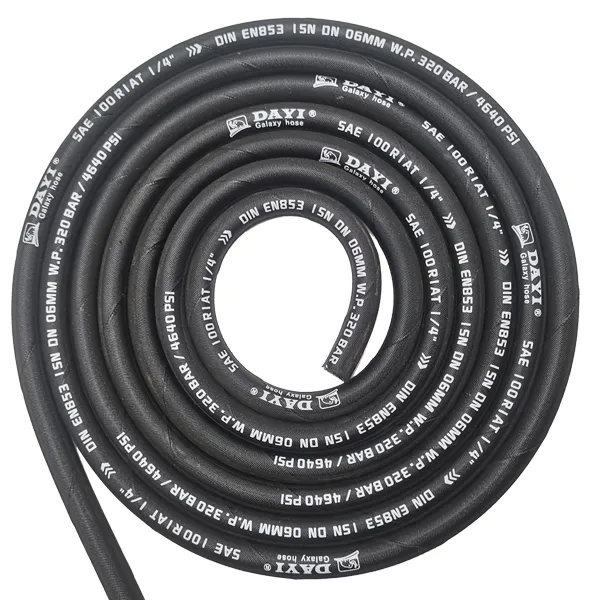
OEM black wire braid hydraulic hose represents a critical component in fluid power systems across diverse industries, including construction, agriculture, manufacturing, and automotive. Functioning as a flexible conduit for the transmission of hydraulic fluid, these hoses are engineered to withstand high pressures, varying temperatures, and exposure to harsh environments. The core functionality hinges on the synergistic interaction of the inner tube, reinforcement layer(s), and outer cover. Compared to rubber hoses without braiding, wire braid reinforcement drastically increases pressure capacity and burst strength, minimizing the risk of catastrophic failure. This guide provides an in-depth exploration of the material science, manufacturing processes, performance characteristics, failure modes, and maintenance procedures related to OEM black wire braid hydraulic hose. The focus is on practical understanding for engineers, procurement professionals, and maintenance personnel involved in the selection, implementation, and lifespan management of these essential components.
Material Science & Manufacturing
The construction of a black wire braid hydraulic hose involves the careful selection and processing of multiple materials. The inner tube is typically composed of synthetic rubber compounds, with nitrile rubber (NBR) being prevalent due to its excellent resistance to petroleum-based hydraulic fluids. Alternative materials like ethylene propylene diene monomer (EPDM) are employed for compatibility with phosphate ester fluids. The reinforcement layer is the defining characteristic, utilizing high-tensile steel wire spirally wound to provide pressure resistance. The number of braid layers directly impacts the hose’s working pressure rating. The outer cover is usually a blend of synthetic rubbers, such as chloroprene (CR) or styrene-butadiene rubber (SBR), selected for abrasion resistance, weatherability, and oil resistance.
Manufacturing involves several key steps. First, the inner tube is extruded through a die to achieve the desired inner diameter and wall thickness. The steel wire is then helically wound around the inner tube under tension, forming the braid. Precise control of the winding angle and tension is critical to ensure uniform pressure distribution and prevent localized stress concentrations. Subsequently, the outer cover is extruded over the braided structure, bonding to the inner layers. The hose is then cured – a vulcanization process using heat and pressure – to crosslink the rubber polymers, enhancing their mechanical properties and chemical resistance. Quality control involves hydrostatic testing, where the hose is pressurized to several times its working pressure to detect leaks or structural defects. Dimensional accuracy and material composition are also rigorously checked throughout the process.

Performance & Engineering
The performance of black wire braid hydraulic hose is dictated by several engineering parameters. Burst pressure, a critical safety factor, is determined by the tensile strength of the steel wire and the integrity of the bonding between layers. Working pressure is typically rated as 50% of the burst pressure, providing a safety margin. Fatigue resistance is paramount, as hydraulic hoses are subjected to cyclical pressure fluctuations during operation. Factors influencing fatigue life include pressure amplitude, frequency, and temperature. Hose flexibility is essential for ease of installation and routing in confined spaces. This is governed by the hose's bend radius – the minimum radius to which the hose can be bent without kinking or damaging the reinforcement layer.
Environmental resistance is also vital. Exposure to ozone, UV radiation, and extreme temperatures can degrade the rubber compounds, reducing their elasticity and increasing the risk of cracking. Hydraulic fluid compatibility must be considered to prevent swelling, softening, or chemical attack of the inner tube. Force analysis focuses on hoop stress within the hose wall when pressurized. Higher pressures generate greater hoop stress, requiring adequate reinforcement to prevent failure. Compliance requirements vary by region and industry. SAE J517, DIN EN 853, and ISO 6897 are common standards dictating hose dimensions, performance characteristics, and testing procedures.
Technical Specifications
| Parameter | Unit | Typical Value (1/2" ID Hose) | Testing Standard |
|---|---|---|---|
| Inner Diameter | inch | 0.500 | SAE J517 |
| Working Pressure | psi | 2000 | SAE J517 |
| Burst Pressure | psi | 8000 | SAE J517 |
| Temperature Range | °F | -40 to +212 | SAE J517 |
| Reinforcement | - | Single Wire Braid | Visual Inspection |
| Cover Material | - | Synthetic Rubber (CR) | ASTM D2000 |
Failure Mode & Maintenance
Common failure modes in black wire braid hydraulic hoses include burst failure due to exceeding pressure limits, fatigue cracking from cyclical loading, abrasion damage to the outer cover, and permeation of hydraulic fluid through the inner tube. Corrosion of the steel wire braid, particularly in harsh environments, can also lead to premature failure. Pinholes and cracks in the inner tube typically result from fluid incompatibility or degradation of the rubber compound. Failure analysis often reveals that a combination of factors contributes to hose failure. For example, high pressure combined with a kink in the hose significantly increases stress concentrations and accelerates fatigue cracking.
Preventive maintenance is crucial for maximizing hose lifespan and preventing catastrophic failures. Regular visual inspections should be conducted to identify any signs of abrasion, cracking, or leakage. The hose should be checked for proper routing and support, avoiding sharp bends and contact with hot surfaces. Hydraulic fluid should be maintained within the manufacturer's recommended viscosity range and contamination levels. Periodic pressure testing can help identify weakened hoses before they fail. When replacing a hose, it is essential to use a compatible replacement with the same or higher pressure rating. Proper hose assembly and crimping techniques are also critical to ensure a reliable connection.
Industry FAQ
Q: What is the impact of hydraulic fluid type on hose lifespan?
A: The compatibility of the hydraulic fluid with the hose's inner tube material is paramount. Using an incompatible fluid can cause swelling, softening, or degradation of the rubber, leading to premature failure. Nitrile rubber (NBR) is generally suitable for petroleum-based fluids, while EPDM is preferred for phosphate ester fluids. Always consult the hose manufacturer's compatibility chart before selecting a fluid.
Q: How does temperature affect hose performance?
A: Extreme temperatures can significantly impact hose performance. High temperatures accelerate the degradation of rubber compounds, reducing their elasticity and increasing the risk of cracking. Low temperatures can make the hose more brittle and susceptible to damage. The hose's temperature range specification should always be observed.
Q: What is the significance of the wire braid angle?
A: The wire braid angle directly influences the hose’s pressure-bearing capacity. A steeper angle provides greater reinforcement but reduces flexibility. Maintaining a consistent and precise braid angle during manufacturing is critical for uniform pressure distribution and preventing localized stress concentrations.
Q: What are the best practices for storing hydraulic hoses?
A: Hydraulic hoses should be stored in a cool, dry, and dark environment, away from direct sunlight, ozone sources, and excessive heat. Hoses should be coiled loosely to avoid kinking and stored on reels or racks to prevent damage. Avoid storing hoses in contact with incompatible materials.
Q: How can I identify early signs of hose failure?
A: Regular visual inspections are crucial. Look for signs of abrasion, cracking, blistering, swelling, or leakage. Check for stiffness or a loss of flexibility. Also, listen for unusual noises during operation, which may indicate internal damage.
Conclusion
OEM black wire braid hydraulic hose remains a cornerstone of numerous industrial applications, providing a reliable means of fluid power transmission. Its performance is intrinsically linked to material selection, meticulous manufacturing processes, and adherence to stringent industry standards. Understanding the core principles of material science, coupled with proactive maintenance strategies, is crucial for maximizing hose lifespan, minimizing downtime, and ensuring operational safety.
Future advancements in hydraulic hose technology will likely focus on developing more durable and chemically resistant materials, as well as incorporating smart sensing capabilities for real-time condition monitoring and predictive maintenance. Improvements in braiding techniques and bonding processes will continue to enhance pressure ratings and fatigue resistance. A commitment to robust quality control and adherence to evolving industry regulations will remain paramount in maintaining the integrity and reliability of these critical components.