
Apr . 01, 2024 17:55 Back to list
oem best price hydraulic hose Performance Engineering

Introduction
Hydraulic hose, specifically OEM best price hydraulic hose, constitutes a critical component in fluid power systems across a diverse range of industries, including construction, agriculture, manufacturing, and automotive. These hoses are engineered to safely and efficiently transmit hydraulic fluid to actuators and other hydraulic components, enabling power transmission. Positioned within the industrial chain, hydraulic hose manufacturing follows the raw material supply (rubber compounds, steel wire, polymer reinforcements) through to finished product distribution. Core performance characteristics center around pressure capacity, temperature resistance, flexibility, and resistance to chemical degradation. The selection of appropriate hose construction—based on these factors—is paramount for system reliability and operator safety. A key industry pain point is balancing cost optimization (“best price”) with maintaining requisite performance and longevity, especially considering the often harsh operational environments in which these hoses are deployed. The inherent risk of hose failure necessitates rigorous testing and adherence to international standards.
Material Science & Manufacturing
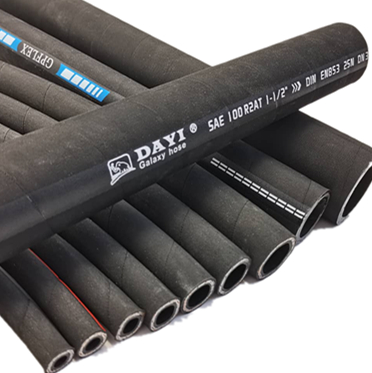
OEM best price hydraulic hose construction fundamentally relies on a combination of materials. The inner tube, responsible for fluid containment, typically utilizes synthetic rubbers such as nitrile (NBR), ethylene propylene diene monomer (EPDM), or fluorocarbon (FKM/Viton), selected based on fluid compatibility (petroleum-based fluids favor NBR, while phosphate ester fluids require FKM). Reinforcement layers, providing burst strength, commonly employ high-tensile steel wire, spirally wound or braided, with varying ply numbers to achieve different pressure ratings. The cover, offering environmental protection, often consists of chloroprene rubber (CR) or polyurethane (PU), providing resistance to abrasion, ozone, UV radiation, and oil.
Manufacturing processes vary depending on hose type and complexity. A typical braided hose production line involves inner tube extrusion, followed by steel wire braiding utilizing automated braiding machines. Spiral-wound hoses use a continuous winding process of steel wire around a mandrel, followed by rubber jacketing. Post-braiding/winding, the hose undergoes vulcanization, a chemical process employing heat and pressure to cross-link the rubber compounds, imparting desired mechanical properties. Critical parameters during vulcanization include temperature uniformity, pressure control, and cure time. Injection molding is utilized for coupling attachment. Quality control checks throughout the process include dimensional verification, pressure testing (hydrostatic testing), impulse testing (simulating pressure surges), and visual inspection for defects. Parameter control related to rubber mixing (compound ratios, mixing time/temperature) is fundamental to achieving consistent material properties and avoiding premature failure.
Performance & Engineering
Hydraulic hose performance is dictated by several key engineering considerations. Burst pressure, defined as the pressure at which the hose fails catastrophically, is a primary specification. Working pressure, typically 50-75% of burst pressure, represents the safe operating limit. Impulse pressure, reflecting pressure spikes generated by pump pulsation or rapid valve closure, demands robust hose construction to prevent fatigue failure. Temperature range, encompassing both operating and ambient temperatures, must be within the limits of the rubber compounds. Flexibility is crucial for routing hoses in confined spaces, demanding an appropriate bend radius.
Force analysis during hose operation involves calculating tensile forces induced by pressure and bend radius. Fatigue life analysis, employing S-N curves (stress vs. number of cycles to failure), is essential for predicting hose longevity under cyclic loading. Environmental resistance necessitates considering the effects of chemicals (oils, solvents, hydraulic fluids), ozone, and UV exposure on rubber degradation. Compliance requirements, particularly regarding safety standards (SAE J517, EN 856, DIN EN 857), dictate testing procedures and performance criteria. Proper hose coupling selection and installation are paramount; incorrect coupling can lead to premature failure at the connection point. Hose guarding and support systems are used to prevent abrasion, kinking, and excessive movement, further enhancing operational reliability.
Technical Specifications
| Parameter | Unit | Typical Value (NBR Inner/Steel Wire Reinforcement/CR Cover) | Typical Value (FKM Inner/Steel Wire Reinforcement/PU Cover) |
|---|---|---|---|
| Working Pressure | MPa | 20 | 30 |
| Burst Pressure | MPa | 80 | 120 |
| Temperature Range | °C | -40 to +100 | -20 to +150 |
| Minimum Bend Radius | mm | 4D (D = Hose Inner Diameter) | 3.5D |
| Reinforcement Ply | - | 4 | 6 |
| Fluid Compatibility | - | Petroleum-Based Fluids | Phosphate Ester, Petroleum-Based |
Failure Mode & Maintenance
Hydraulic hose failure modes are diverse. Fatigue cracking, resulting from repeated pressure cycles and flexing, is common, particularly near coupling connections. Abrasion, caused by rubbing against other components or environmental debris, degrades the cover and exposes the reinforcement layers. Chemical degradation, stemming from incompatibility with the hydraulic fluid or external contaminants, leads to rubber swelling, softening, and cracking. Pinholes, small leaks caused by localized material defects or corrosion, can develop over time. Kinking, caused by excessive bending, restricts fluid flow and can induce stress concentrations leading to failure.
Maintenance strategies include regular visual inspection for signs of wear, abrasion, or chemical attack. Pressure testing (leak testing and impulse testing) can identify hoses nearing the end of their service life. Proper hose routing, utilizing support clamps and guarding, minimizes stress and abrasion. Fluid filtration is crucial to remove contaminants that accelerate wear. Coupling integrity should be verified regularly, ensuring proper tightening and absence of corrosion. When replacing hoses, always use compatible couplings and follow manufacturer's recommended torque specifications. Record keeping of hose replacement dates and operating conditions aids in predictive maintenance programs. A robust preventative maintenance schedule is critical to avoiding costly downtime and ensuring operational safety.
Industry FAQ
Q: What is the impact of impulse pressure on hydraulic hose life?
A: Impulse pressure significantly reduces hose life. Repeated pressure surges create cyclic stresses that lead to fatigue failure, particularly in the reinforcement layers. Hoses specifically designed for high-impulse applications utilize tighter reinforcement construction and more durable rubber compounds to withstand these stresses. Mitigation involves using accumulators to dampen pressure spikes and selecting hoses rated for the expected impulse levels.
Q: How does temperature affect hydraulic hose performance?
A: Temperature extremes degrade rubber compounds. High temperatures accelerate oxidation and reduce flexibility, while low temperatures can cause brittleness and cracking. Selecting hoses with appropriate temperature ratings for the operating environment is essential. Consider both the hydraulic fluid temperature and the ambient temperature.
Q: What are the key differences between NBR and FKM inner tube materials?
A: NBR (Nitrile) is cost-effective and provides excellent resistance to petroleum-based hydraulic fluids. FKM (Viton/Fluorocarbon) offers superior resistance to a wider range of fluids, including phosphate esters, and performs better at higher temperatures. FKM is more expensive but is crucial for applications requiring broad fluid compatibility and high-temperature stability.
Q: How important is proper hose coupling installation?
A: Proper coupling installation is paramount. Incorrectly tightened couplings can leak or fail under pressure. Over-tightening can damage the hose or coupling. Always use calibrated torque wrenches and follow the coupling manufacturer’s specified torque values. Ensure couplings are compatible with the hose and fluid type.
Q: What are the common causes of hydraulic hose abrasion?
A: Common causes include rubbing against machine components, contact with abrasive surfaces, and exposure to flying debris. Prevention involves proper hose routing, utilizing hose guards and clamps to secure the hose and prevent contact, and regular inspection for signs of wear. Replacing worn hose covers promptly is crucial.
Conclusion
The selection and maintenance of OEM best price hydraulic hose demand a comprehensive understanding of material science, manufacturing processes, and operational factors. Achieving optimal performance and longevity requires a careful balance between cost considerations and the demands of the application. Selecting the appropriate hose construction—inner tube material, reinforcement type, and cover compound—based on fluid compatibility, pressure requirements, temperature range, and environmental conditions is fundamental.
Investing in regular inspection, preventative maintenance, and proper installation practices is critical to mitigating failure risks and ensuring the safety and reliability of hydraulic systems. Adherence to relevant industry standards (SAE, EN, DIN) provides a framework for quality control and performance validation. Future developments in hydraulic hose technology are focused on materials with improved abrasion resistance, higher temperature capabilities, and enhanced chemical compatibility, further extending hose service life and reducing operational costs.