
Apr . 01, 2024 17:55 Back to list
oem best price high pressure hydraulic hose Technical Analysis
Introduction
High pressure hydraulic hose serves as a critical fluid conveyance component in a diverse range of industrial applications, including construction machinery, agricultural equipment, oil and gas exploration, and manufacturing processes. OEM pricing for these hoses often hinges on volume, material selection, and reinforcement construction. This guide provides an in-depth technical overview of OEM best price high pressure hydraulic hose, encompassing material science, manufacturing processes, performance characteristics, failure modes, and relevant industry standards. Unlike standard hydraulic hose, OEM versions are frequently designed with specific performance characteristics and dimensional constraints dictated by the equipment manufacturer. The core performance indicators for these hoses are working pressure, burst pressure, temperature range, and fluid compatibility, often necessitating tailored material compositions and reinforcement strategies. Understanding these technical nuances is crucial for procurement managers and engineers to ensure appropriate selection and mitigate risks associated with premature failure and system downtime.
Material Science & Manufacturing
The core materials utilized in high pressure hydraulic hose construction consist of a synthetic rubber inner tube, multiple layers of high-tensile reinforcement, and an abrasion-resistant outer cover. Inner tube materials commonly include nitrile rubber (NBR) for petroleum-based fluids, ethylene propylene diene monomer (EPDM) for phosphate ester fluids, and fluorocarbon polymers (FKM) like Viton for aggressive chemicals and high-temperature applications. Each elastomer possesses distinct physical and chemical properties, including tensile strength, elongation at break, hardness (measured via Shore A durometer), and resistance to swelling in various fluids. Reinforcement layers typically employ high-strength steel wire, spiraled or braided in multiple layers to withstand internal pressure. The wire gauge, braiding angle, and layer count directly correlate to the hose’s pressure rating. Outer cover materials are usually based on chloroprene rubber (CR) or polyurethane (PU), selected for their abrasion resistance, ozone resistance, and weatherability.
Manufacturing involves several key processes. The inner tube is extruded through a die to achieve the desired diameter and wall thickness. Reinforcement wires are then wound or braided around the inner tube using automated machinery. Precise tension control during braiding is paramount to ensure uniform pressure distribution. Following reinforcement, a bonding agent is applied to promote adhesion between the rubber and the steel. The assembled hose is then vulcanized, a process involving heating under pressure to cross-link the rubber molecules, enhancing its strength, elasticity, and chemical resistance. Quality control measures include hydrostatic testing to verify burst pressure, impulse testing to assess fatigue life, and dimensional checks to ensure adherence to specifications. The curing process parameters – temperature, time, and pressure – must be carefully controlled to optimize the rubber's properties and prevent degradation. Variations in these parameters can lead to inconsistencies in hose performance and premature failure.
Performance & Engineering
The performance of high pressure hydraulic hose is governed by fundamental principles of fluid mechanics and material science. Working pressure is determined by the hose's ability to contain fluid without permanent deformation or rupture. Burst pressure, typically four times the working pressure, represents the ultimate failure point. Impulse pressure, or pressure spikes, is a critical consideration in dynamic systems, as repeated pressure fluctuations can lead to fatigue failure. The hose’s ability to withstand these impulses is directly related to the reinforcement construction and the elasticity of the inner tube. Environmental resistance, including temperature range and exposure to chemicals, is another key performance parameter. High temperatures can degrade the rubber, reducing its flexibility and strength. Exposure to incompatible fluids can cause swelling, softening, or cracking.
Engineering considerations include hose bend radius, which should be maintained within specified limits to avoid kinking and stress concentration. Twisting and axial misalignment can also reduce hose life. Proper hose fitting selection is crucial to ensure a leak-free and secure connection. Fittings must be compatible with the hose material and rated for the same working pressure. Force analysis of the hose assembly, including pressure loading and bending moments, is often performed using finite element analysis (FEA) to optimize the design and predict its performance under various operating conditions. Compliance requirements, such as those outlined by SAE J517 and EN 853, dictate minimum performance standards for hydraulic hose.
Technical Specifications
| Parameter | Unit | Specification Range (Typical) | Test Standard |
|---|---|---|---|
| Working Pressure | MPa | 10 - 420 | SAE J517 |
| Burst Pressure | MPa | 40 - 1680 | SAE J517 |
| Temperature Range | °C | -40 to +100 | SAE J517 |
| Inner Tube Material | - | NBR, EPDM, FKM | ASTM D2000 |
| Reinforcement Material | - | High-Tensile Steel Wire | ASTM A228 |
| Outer Cover Material | - | CR, PU | ASTM D2000 |
Failure Mode & Maintenance
Common failure modes in high pressure hydraulic hose include burst failure due to exceeding the working pressure, fatigue cracking from repeated pressure cycles, abrasion damage to the outer cover, and chemical degradation of the inner tube. Burst failures are typically catastrophic and often result from manufacturing defects or improper installation. Fatigue cracking initiates at stress concentration points, such as near fittings or bends, and propagates over time. Abrasion can weaken the outer cover, exposing the reinforcement layers to corrosion. Chemical degradation causes the rubber to swell, soften, or crack, reducing its strength and elasticity.
Preventative maintenance is crucial to extend hose life and prevent failures. Regular visual inspections should be conducted to identify signs of abrasion, cracking, or swelling. Hose assemblies should be replaced if any damage is detected. Fluid contamination can accelerate hose degradation, so regular fluid analysis and filtration are recommended. Proper hose routing and support are essential to minimize bending stress and prevent kinking. Hose assemblies should be stored in a cool, dry, and dark environment to protect them from UV degradation. When replacing hoses, it is critical to use fittings that are compatible with the hose material and rated for the same working pressure. Proper torqueing of fittings is also essential to ensure a leak-free connection. Implementing a routine hose replacement schedule, based on operating hours or calendar time, can further mitigate the risk of failure.
Industry FAQ
Q: What is the impact of hose layline markings on traceability and warranty claims?
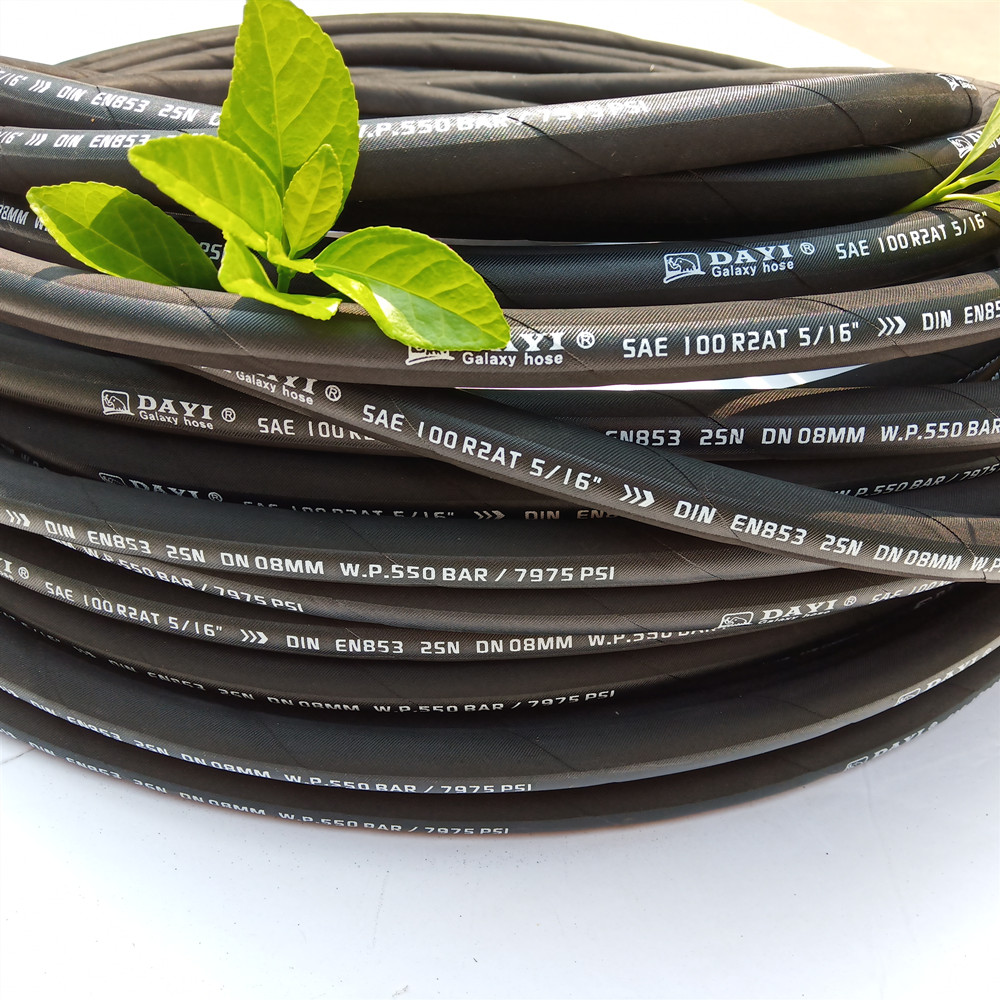
A: Layline markings, permanently embossed onto the hose cover, provide critical traceability information, including manufacturer identification, hose type, manufacturing date, and working pressure. These markings are essential for verifying compliance with specifications and facilitating warranty claims. Accurate layline markings allow manufacturers to track the history of a hose assembly, identify potential quality issues, and determine the validity of a warranty request.
Q: How does the reinforcement braid angle affect the hose's resistance to bending and flexing?
A: The reinforcement braid angle significantly influences the hose’s flexibility and resistance to bending. A steeper braid angle provides higher pressure resistance but reduces flexibility, making it more susceptible to kinking in tight bends. Conversely, a shallower braid angle offers greater flexibility but compromises pressure capacity. The optimal braid angle is a trade-off between these two factors, determined by the specific application requirements.
Q: What are the key considerations when selecting a hose for use with synthetic lubricants?
A: Compatibility with synthetic lubricants is paramount. Many synthetic fluids can cause conventional NBR inner tubes to swell or degrade. EPDM or FKM inner tubes are generally recommended for use with synthetic lubricants, such as phosphate esters and polyglycols. Always consult the hose manufacturer’s chemical compatibility chart to ensure the selected hose is suitable for the specific fluid being used.
Q: What is the role of the bonding agent in the hose manufacturing process and how does it affect performance?
A: The bonding agent, applied between the rubber inner tube and the reinforcement layers, is critical for ensuring adequate adhesion. A strong bond prevents separation of the layers under pressure and flexing, maintaining the hose’s structural integrity. Poor bonding can lead to delamination and premature failure. The selection of the bonding agent must be compatible with both the rubber and the steel reinforcement.
Q: What are the implications of using non-OEM hoses in critical hydraulic systems?
A: Using non-OEM hoses can introduce significant risks. Non-OEM hoses may not meet the original equipment manufacturer’s specifications for pressure rating, temperature range, or fluid compatibility. This can lead to premature failure, system downtime, and potential safety hazards. OEM hoses are specifically designed and tested for the intended application, ensuring optimal performance and reliability. Cost savings from using non-OEM alternatives can be offset by the increased risk of failure and the associated repair costs.
Conclusion
High pressure hydraulic hose represents a complex interplay of material science, manufacturing precision, and engineering design. Selecting the appropriate hose for a given application requires a thorough understanding of operating conditions, fluid compatibility, and relevant industry standards. Optimized OEM pricing is achieved through economies of scale and standardized specifications. Maintaining rigorous quality control throughout the manufacturing process and implementing proactive preventative maintenance programs are crucial for maximizing hose life and minimizing the risk of catastrophic failure.
Looking forward, advancements in materials science are leading to the development of more durable and chemically resistant hose constructions. The integration of smart sensing technologies into hydraulic hoses will enable real-time monitoring of pressure, temperature, and hose condition, providing valuable data for predictive maintenance and enhanced safety. The continued emphasis on standardization and compliance will ensure the reliability and performance of high pressure hydraulic hose in increasingly demanding industrial applications.