
Apr . 01, 2024 17:55 Back to list
oem 5/16 hydraulic hose Performance Analysis

Introduction
The OEM 5/16 hydraulic hose is a critical component in fluid power systems, designed for the transmission of hydraulic fluid to operate machinery. Classified as a medium-pressure hose, it occupies a key position within the broader industrial hose category, serving applications ranging from agricultural equipment and construction machinery to material handling and various manufacturing processes. Its nominal inner diameter of 5/16 inches, coupled with a robust construction, facilitates efficient and reliable fluid conveyance. Core performance characteristics revolve around burst pressure, working pressure, temperature range, and fluid compatibility. A critical pain point within the industry is ensuring consistent quality and performance across different OEM suppliers, coupled with maintaining chemical compatibility across a wide range of hydraulic fluids to prevent premature hose failure and system downtime.
Material Science & Manufacturing
The OEM 5/16 hydraulic hose typically comprises several key material layers. The inner tube is often constructed from a synthetic rubber compound, commonly nitrile rubber (NBR) or styrene-butadiene rubber (SBR), chosen for their excellent oil resistance and flexibility. NBR exhibits superior resistance to petroleum-based fluids, while SBR offers cost-effectiveness. Reinforcement layers, essential for withstanding internal pressure, are typically comprised of multiple braids of high-strength steel wire. The number of braids dictates the working and burst pressure capabilities of the hose. The outer cover usually utilizes a synthetic rubber blend, such as chloroprene rubber (CR), providing resistance to abrasion, weathering, ozone, and oil. Manufacturing processes involve extrusion for the inner tube and outer cover, followed by spiral winding or braiding of the reinforcement layers. Precise control of extrusion parameters – temperature, pressure, and screw speed – is vital to ensure consistent wall thickness and material homogeneity. Braiding tension and helix angle are crucial for achieving the desired pressure rating and flexibility. Post-processing steps include curing (vulcanization) to crosslink the rubber compounds, enhancing their mechanical properties and chemical resistance. Quality control at each stage, including dimensional checks, pressure testing, and material analysis, is paramount.
Performance & Engineering
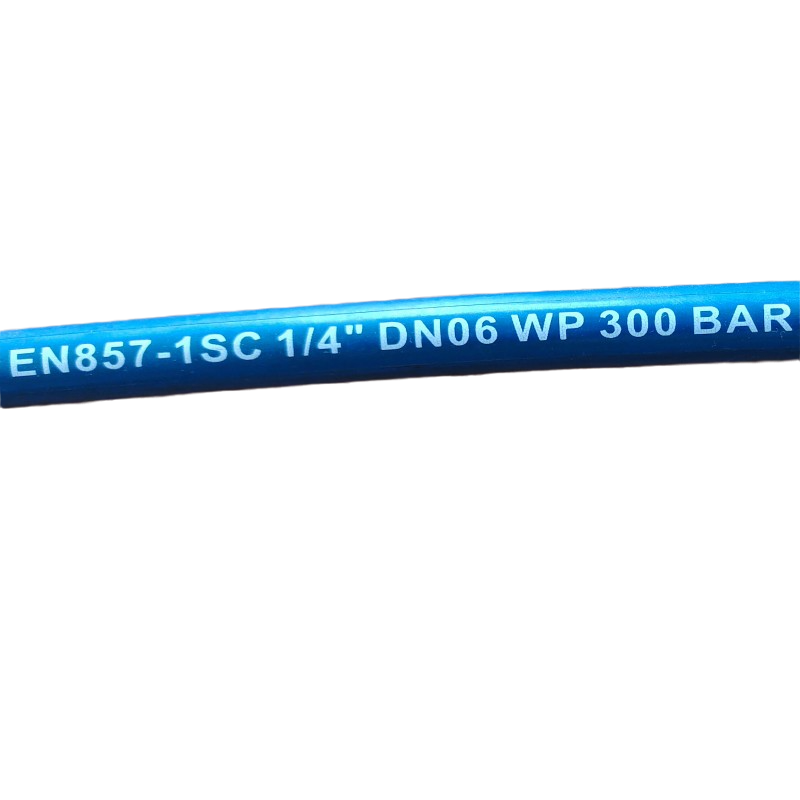
Performance analysis of the 5/16 hydraulic hose centers on its ability to withstand internal pressure without failure, maintain flexibility under varying temperatures, and resist degradation from exposure to hydraulic fluids and environmental factors. Force analysis dictates the required reinforcement layer configuration to handle peak pressures and pressure surges, accounting for a significant safety factor (typically 4:1 for burst pressure). Finite Element Analysis (FEA) is increasingly used to model hose behavior under load, optimizing reinforcement structure and predicting potential failure points. Environmental resistance is critical; the hose must maintain its mechanical properties over a broad temperature range (-40°C to +100°C is common) and resist degradation from ozone, UV exposure, and abrasion. Compliance requirements are governed by industry standards such as SAE J517, which defines pressure ratings, construction requirements, and performance testing procedures. Functional implementation requires careful consideration of hose bend radius to prevent kinking and stress concentration, as well as proper fitting selection to ensure leak-free connections and avoid exceeding the hose’s pressure limits. Hose assemblies should be subjected to impulse testing to verify resistance to repetitive pressure fluctuations.
Technical Specifications
| Parameter | Unit | Specification | Test Standard |
|---|---|---|---|
| Inner Diameter | inches | 5/16 (8 mm) | SAE J1926 |
| Working Pressure | PSI | 1500 | SAE J517 |
| Burst Pressure | PSI | 6000 | SAE J517 |
| Temperature Range | °F | -40 to +212 | SAE J517 |
| Reinforcement | - | Two Steel Wire Braids | SAE J517 |
| Cover Material | - | Chloroprene Rubber (CR) | ASTM D2000 |
Failure Mode & Maintenance
Common failure modes for the OEM 5/16 hydraulic hose include fatigue cracking, particularly at connection points, resulting from repeated flexing and pressure cycles. Internal abrasion can occur due to particulate contamination in the hydraulic fluid, leading to gradual thinning of the inner tube and eventual rupture. External abrasion from rubbing against other components can compromise the outer cover, exposing the reinforcement layers to corrosion. Chemical degradation can occur if the hose is exposed to incompatible fluids, causing swelling, cracking, or loss of flexibility. Pinholes and leaks can develop due to damage from impacts or punctures. Oxidation of the rubber compounds over time can lead to embrittlement and cracking. Maintenance strategies include regular visual inspections for signs of wear, abrasion, or leaks; periodic pressure testing to verify hose integrity; and fluid filtration to minimize particulate contamination. Replacement is necessary when any signs of damage or degradation are observed. Proper hose routing and support are crucial to prevent excessive bending and abrasion. Avoid over-bending the hose, exceeding the maximum working pressure, or exposing it to incompatible fluids. Correctly torqued fittings are essential for leak prevention and hose longevity.
Industry FAQ
Q: What is the impact of hydraulic fluid type on hose lifespan?
A: Different hydraulic fluids have varying chemical compositions and compatibility with hose materials. Using an incompatible fluid can cause swelling, softening, or cracking of the inner tube, significantly reducing hose lifespan. Phosphate ester fluids, for example, require specialized hose constructions. Always verify fluid compatibility with the hose manufacturer’s specifications.
Q: How does temperature affect the performance of this hose?
A: Extreme temperatures can degrade the rubber compounds. High temperatures accelerate oxidation and reduce the hose’s flexibility, while low temperatures can cause embrittlement and increased susceptibility to cracking. Operating outside the specified temperature range can compromise the hose's pressure rating and lead to premature failure.
Q: What is the significance of the number of reinforcement braids?
A: The number of reinforcement braids directly correlates with the hose's pressure rating. More braids provide greater strength and resistance to burst and impulse pressures. However, increasing the number of braids also reduces flexibility. The optimal number of braids depends on the application’s pressure requirements and bend radius constraints.
Q: How can I prevent abrasion damage to the hose?
A: Proper hose routing is crucial to avoid contact with abrasive surfaces. Use hose guards, sleeves, or clamps to protect the hose in areas prone to abrasion. Ensure adequate clearance between the hose and moving parts. Regularly inspect the hose for signs of wear and replace it if damaged.
Q: What is the recommended torque for hose fittings?
A: Using the correct torque for hose fittings is critical to prevent leaks and ensure a secure connection. Under-torquing can lead to leaks, while over-torquing can damage the fittings or hose ends. Refer to the fitting manufacturer’s specifications for the recommended torque values, which vary depending on the fitting size and material.
Conclusion
The OEM 5/16 hydraulic hose, while seemingly a simple component, is a highly engineered product critical for the reliable operation of fluid power systems. Its performance is directly linked to material selection, manufacturing precision, and adherence to industry standards. Understanding the potential failure modes and implementing proactive maintenance strategies are paramount to maximizing its lifespan and minimizing downtime.
Continued advancements in hose technology focus on developing more durable and chemically resistant materials, optimizing reinforcement structures for higher pressure ratings, and incorporating smart sensing capabilities for real-time condition monitoring. Proper specification, installation, and maintenance, guided by a thorough understanding of these technical considerations, will ensure optimal performance and longevity of the 5/16 hydraulic hose in demanding industrial applications.