
Apr . 01, 2024 17:55 Back to list
oem 38mm hydraulic hose Performance Analysis

Introduction
The OEM 38mm hydraulic hose is a critical component in fluid power systems across diverse industrial applications, including construction machinery, agricultural equipment, material handling, and manufacturing. Its primary function is the reliable and efficient transmission of hydraulic fluid, enabling the operation of actuators and motors. Positioned within the hydraulic system between the pump and the control valves/actuators, the hose must withstand high pressures, fluctuating temperatures, and exposure to various fluids. Core performance characteristics include burst pressure, working pressure, temperature range, and fluid compatibility. The 38mm inner diameter is a commonly utilized size offering a balance between flow capacity and flexibility, making it a staple in medium-pressure hydraulic systems. This guide provides an in-depth analysis of its material science, manufacturing processes, performance parameters, failure modes, and relevant industry standards, intended for engineers, procurement managers, and maintenance personnel involved in hydraulic system design and operation.
Material Science & Manufacturing
The construction of a 38mm hydraulic hose typically involves four key layers: the inner tube, reinforcement layers, outer cover, and fittings. The inner tube is commonly composed of nitrile rubber (NBR), also known as Buna-N, due to its excellent resistance to petroleum-based hydraulic fluids, abrasion, and aging. Alternatives include ethylene propylene diene monomer (EPDM) rubber for phosphate ester fluids and fluorocarbon rubber (FKM, Viton) for high-temperature or aggressive chemical environments. NBR possesses a Shore A hardness typically between 40-60, balancing flexibility and durability. The reinforcement layer provides the hose’s pressure-withstanding capability. This is generally achieved using multiple plies of high-tensile steel wire braid, often arranged in a helical pattern. The number of braids directly correlates with the hose’s working and burst pressure ratings. High-strength textile reinforcement (e.g., polyester or aramid fibers) is utilized in lower-pressure applications. The outer cover, typically made from chloroprene rubber (CR), offers protection against abrasion, weathering, ozone, and oil. Its Shore A hardness is usually between 60-70 for optimal abrasion resistance. Manufacturing involves extrusion of the inner tube and outer cover, followed by precise winding of the reinforcement layers. Fitting attachment is crucial and employs mechanical crimping or swaging processes to ensure a leak-proof seal. Critical parameters during manufacturing include precise control of rubber compound formulations (polymer ratios, filler content, curing agents), braid density and angle, and crimp force. Process control charts are used to monitor these parameters and ensure consistent product quality.
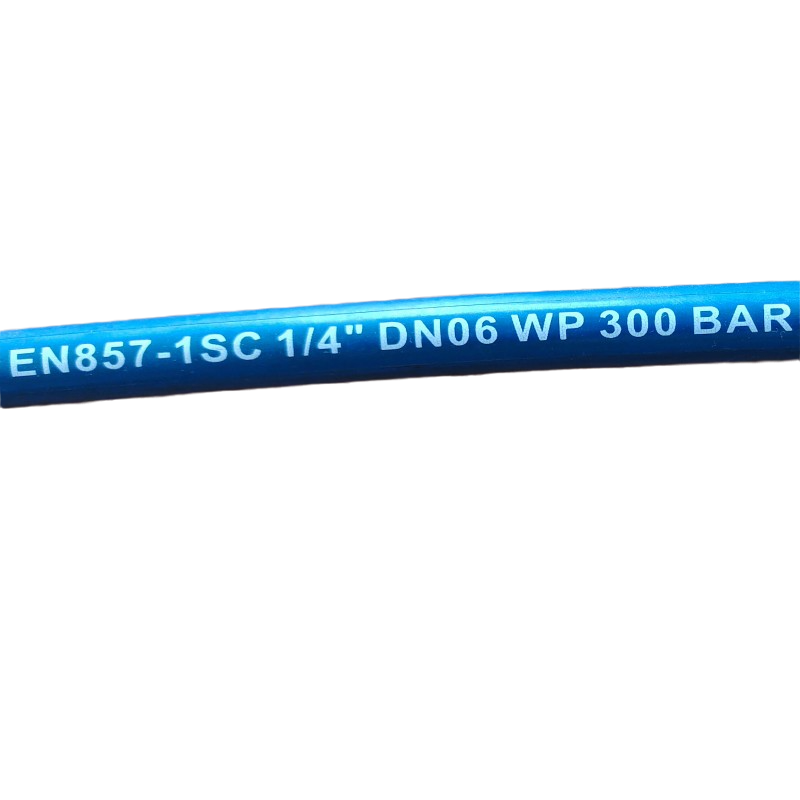
Performance & Engineering
The performance of a 38mm hydraulic hose is dictated by several key engineering considerations. Burst pressure, the maximum pressure the hose can withstand before rupture, is a critical safety parameter and is determined by the reinforcement layer's strength and construction. Working pressure, typically specified as a fraction of the burst pressure (e.g., 1/4), represents the recommended operating pressure for sustained use. Temperature range is another critical factor. Hydraulic fluids expand and contract with temperature changes, impacting hose pressure and dimensional stability. NBR generally performs well between -40°C and +100°C, but this range varies with fluid type and hose construction. Hose bend radius is essential to prevent kinking and subsequent fluid restriction or hose failure. A minimum bend radius, typically specified by the manufacturer, should be strictly adhered to during installation. Dynamic applications involving vibration and pulsation require consideration of fatigue life. Reinforcement materials with high fatigue strength and proper hose routing are crucial to mitigate these effects. Fluid compatibility dictates the long-term integrity of the inner tube. Incompatible fluids can cause swelling, softening, or degradation of the rubber, leading to leaks or failure. Compliance requirements, such as SAE J517 (hydraulic hose performance standards) and ISO 6898 (hydraulic systems – dimensional, performance and testing requirements) must be met to ensure safety and reliability. Force analysis, involving calculations of internal pressure forces and bending moments, are utilized during design to ensure structural integrity.
Technical Specifications
| Parameter | Unit | Typical Value (NBR/Steel Wire Braid) | Testing Standard |
|---|---|---|---|
| Inner Diameter | mm | 38 ± 0.5 | ISO 1307 |
| Working Pressure | MPa | 20 | SAE J517 |
| Burst Pressure | MPa | 80 | SAE J517 |
| Temperature Range | °C | -40 to +100 | SAE J517 |
| Reinforcement Type | - | Single Steel Wire Braid | ISO 6898 |
| Outer Cover Material | - | Chloroprene Rubber (CR) | ASTM D2000 |
Failure Mode & Maintenance
Common failure modes in 38mm hydraulic hoses include burst failure due to exceeding working pressure, pinhole leaks resulting from abrasion or chemical attack, and end connection failures caused by improper crimping or corrosion. Fatigue cracking can occur in dynamic applications due to repeated bending and flexing, particularly at the hose ends. Delamination of reinforcement layers can compromise pressure-withstanding capability. Oxidation of the rubber materials, accelerated by exposure to high temperatures and oxygen, leads to hardening and cracking. Hose kinking, caused by exceeding the minimum bend radius, restricts fluid flow and can result in localized stress concentrations leading to failure. Maintenance is crucial to prolong hose life and prevent catastrophic failures. Regular visual inspections should be performed to identify signs of abrasion, cracking, swelling, or leakage. Hose connections should be checked for tightness and corrosion. Fluid contamination can significantly reduce hose lifespan, necessitating the use of appropriate filtration systems. Proper hose routing and support are essential to minimize stress and prevent abrasion. When replacing hoses, it’s critical to use fittings that are compatible with the hose and the hydraulic system. Hose assemblies should be pressure tested after installation and periodically thereafter to verify integrity. Proper storage of hoses, shielded from sunlight, ozone, and extreme temperatures, is essential to prevent premature degradation.
Industry FAQ
Q: What is the impact of fluid velocity on hose lifespan?
A: High fluid velocity increases erosion of the inner tube, particularly in areas of turbulence near fittings. This leads to premature wear and potential leakage. Maintaining fluid velocity within recommended limits (typically specified by the fluid power system design) is crucial for extending hose life. Use of smoother bore hoses can mitigate velocity-related erosion.
Q: How does hose layline affect performance and safety?
A: The layline (spiral marking on the hose) indicates the correct hose orientation during installation to prevent twisting. Twisting reduces the hose's effective bend radius and can lead to kinking and fatigue failure. Following the layline ensures proper alignment and maximizes hose performance and safety.
Q: Can a hydraulic hose be repaired if it develops a small leak?
A: Generally, hydraulic hose repair is not recommended for permanent solutions. Field repairs using tape or clamps are temporary and can create further safety hazards. The best practice is to replace the entire hose assembly. Attempting to repair a hose compromises its structural integrity and can lead to catastrophic failure under pressure.
Q: What considerations should be made when selecting a hose for exposure to aggressive chemicals?
A: For applications involving exposure to aggressive chemicals, the inner tube material must be chemically compatible with the fluid. FKM (Viton) or PTFE (Teflon) inner tubes offer superior resistance to a wide range of chemicals compared to NBR or EPDM. Consult a chemical compatibility chart to ensure the chosen material is suitable for the specific fluid.
Q: How important is proper crimping of hose fittings?
A: Proper crimping is paramount for a leak-free and reliable connection. An improperly crimped fitting can loosen under pressure, causing leakage and potential hose separation. Crimping should be performed by a qualified technician using calibrated crimping equipment and fittings specifically designed for the hose type. Regular inspection of crimp quality is also recommended.
Conclusion
The OEM 38mm hydraulic hose represents a fundamental element within countless hydraulic systems, demanding careful consideration of material science, manufacturing precision, and operational parameters. Its performance is intrinsically linked to the selection of appropriate materials for the inner tube, reinforcement, and outer cover, ensuring compatibility with the hydraulic fluid and operating conditions. Proper installation, maintenance, and adherence to industry standards are critical for maximizing service life and ensuring safe and reliable operation.
Ongoing advancements in hose technology focus on developing materials with enhanced temperature resistance, chemical compatibility, and fatigue life. The increasing adoption of spiral-wrapped construction and high-strength reinforcement materials will continue to improve hose performance and durability. Furthermore, the implementation of predictive maintenance strategies, incorporating sensor-based monitoring of hose condition, holds the potential to minimize downtime and enhance the overall efficiency of hydraulic systems.