
Apr . 01, 2024 17:55 Back to list
oem 3/4 hydraulic hose Performance Analysis

Introduction
OEM 3/4 hydraulic hose represents a critical component in fluid power systems across diverse industrial applications. These hoses, characterized by a 3/4 inch bore size, are engineered for the reliable transmission of hydraulic fluid under high pressure. Positioned within the industrial chain as a final assembly component, the hose’s performance dictates system efficiency, safety, and longevity. Core performance characteristics center around burst pressure, working pressure, temperature resistance, and fluid compatibility. Unlike standardized hydraulic hose, OEM variants often feature specific end fittings, lengths, and materials tailored to precise equipment requirements, necessitating a detailed understanding of their construction and application parameters. The increasing demand for higher operating pressures and more durable hoses within sectors like construction, agriculture, and manufacturing drives continuous advancement in materials science and manufacturing techniques for these critical components. Maintaining hydraulic hose integrity is paramount to preventing catastrophic equipment failures and ensuring operator safety.
Material Science & Manufacturing
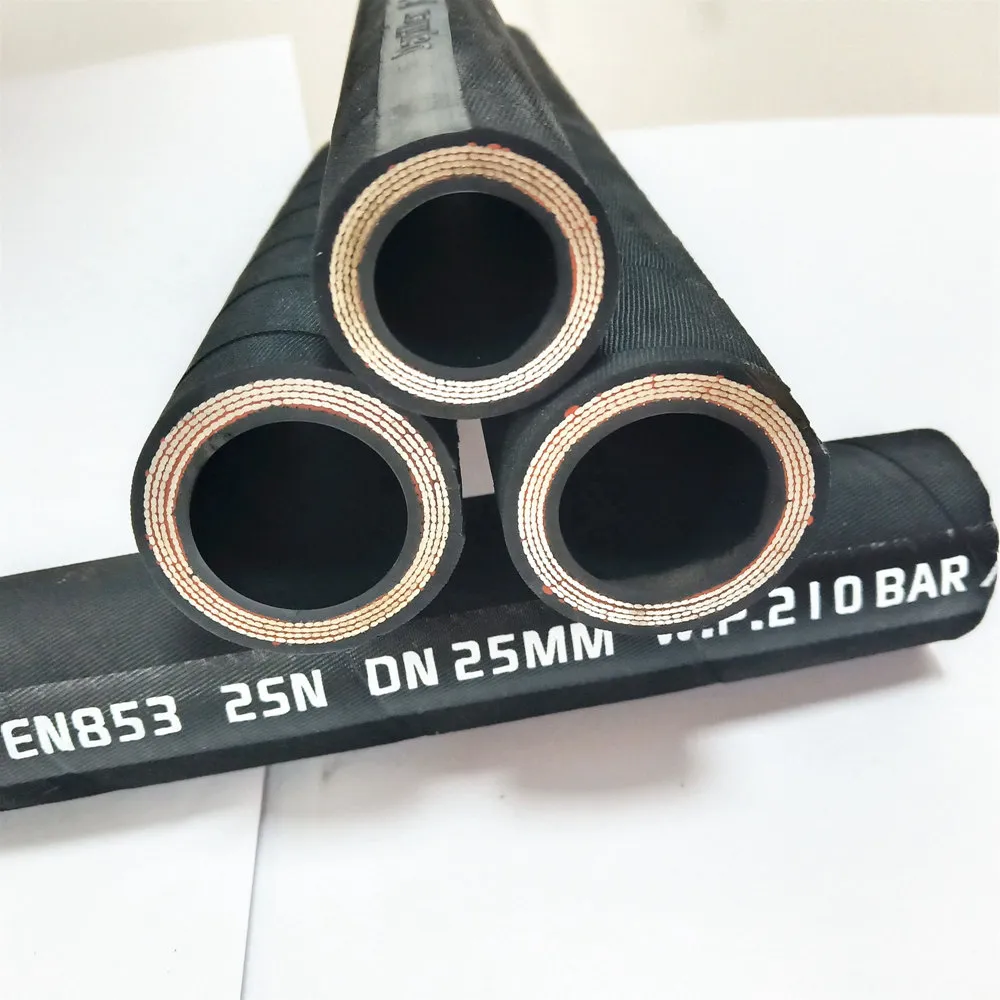
The construction of a 3/4 hydraulic hose typically involves four key layers: the inner tube, reinforcement layers, outer cover, and end fittings. The inner tube, which comes into direct contact with the hydraulic fluid, is commonly composed of synthetic rubber compounds such as nitrile rubber (NBR), chlorinated polyethylene (CPE), or fluorocarbon (FKM, Viton). NBR provides excellent resistance to petroleum-based fluids, CPE offers enhanced weather resistance, and FKM provides superior resistance to high temperatures and aggressive chemicals. Reinforcement layers are crucial for withstanding internal pressure and preventing hose expansion. These layers typically consist of one or more braids or spirals of high-tensile steel wire. The number of layers and the wire gauge directly impact the hose’s burst pressure rating. The outer cover, providing environmental protection and abrasion resistance, is usually made of synthetic rubber like polyurethane or a blend of polymers. End fittings, crucial for secure connections, are commonly manufactured from carbon steel, alloy steel, or stainless steel and are attached via crimping or swaging processes.
Manufacturing processes begin with extrusion of the inner tube and outer cover. Precise temperature control and die design are essential to maintain consistent wall thickness and dimensional accuracy. The reinforcement layers are then applied, often through a winding or braiding process. Crimping, a critical step, secures the fittings to the hose, creating a leak-proof seal. Crimping parameters – pressure, die geometry, and crimp tool type – must be carefully controlled based on the hose and fitting materials. Non-destructive testing, including pressure testing and visual inspection, is performed to verify integrity. Parameter control is paramount; variations in rubber compound formulation, wire tension, or crimp force can significantly compromise hose performance and lifespan. Modern manufacturing incorporates automated process control and statistical process control (SPC) to minimize defects and ensure consistent quality.
Performance & Engineering
The performance of a 3/4 hydraulic hose is governed by several critical engineering considerations. Burst pressure, the maximum pressure the hose can withstand before failure, is a key specification. Working pressure, typically 50-70% of burst pressure, represents the safe operating limit. Temperature resistance is equally vital; hydraulic fluid temperature fluctuations can affect rubber elasticity and lead to premature failure. Hose flexibility, dictated by the reinforcement structure, impacts routing ease and resistance to kinking. Force analysis involves calculating hoop stress within the hose wall under internal pressure. This stress is directly proportional to pressure and hose diameter, and inversely proportional to wall thickness. Environmental resistance encompasses protection against ozone, UV radiation, oil, and chemicals.
Compliance requirements, such as those stipulated by the Society of Automotive Engineers (SAE) and Deutsches Institut für Normung (DIN), mandate specific performance standards. These standards define test methods for burst pressure, pressure drop, and temperature cycling. Functional implementation requires careful consideration of hose routing to avoid sharp bends and abrasion. Proper hose guard installation and support are essential to prevent damage from vibration, impact, and rubbing. Furthermore, the selection of compatible fittings and fluids is crucial to prevent chemical degradation and corrosion. Fatigue life, the number of pressure cycles the hose can endure before failure, is a critical performance metric, particularly in applications with frequent pressure fluctuations. Finite element analysis (FEA) is increasingly used to model hose behavior under various loading conditions, optimizing design and predicting service life.
Technical Specifications
| Parameter | Unit | Typical Value (NBR Inner Tube, 2 Wire Braid) | Typical Value (FKM Inner Tube, 4 Wire Braid) |
|---|---|---|---|
| Inner Diameter | inches | 0.75 | 0.75 |
| Working Pressure | psi | 2000 | 3000 |
| Burst Pressure | psi | 8000 | 12000 |
| Temperature Range | °F | -40 to +212 | -15 to +450 |
| Outer Diameter | inches | 1.125 | 1.25 |
| Minimum Bend Radius | inches | 6 | 8 |
Failure Mode & Maintenance
Common failure modes in 3/4 hydraulic hoses include burst failures due to exceeding working pressure, pinhole leaks caused by internal abrasion or corrosion, and end fitting failures resulting from improper crimping or material fatigue. Fatigue cracking, often initiated at stress concentration points, is a common occurrence in applications with cyclical loading. Delamination, the separation of hose layers, can occur due to insufficient bonding or exposure to aggressive fluids. Degradation of the rubber compound due to heat, ozone, or UV radiation can reduce hose elasticity and increase the risk of failure. Oxidation of steel reinforcement wires can also lead to weakening and eventual rupture.
Preventative maintenance is critical for extending hose life and preventing catastrophic failures. Regular visual inspections should identify signs of abrasion, cracking, or swelling. Pressure testing can detect pinhole leaks and assess hose integrity. Proper hose routing and support are essential to minimize stress and abrasion. Fluid contamination, including particulate matter and water, should be minimized through filtration. End fittings should be inspected for corrosion and proper crimp integrity. Replacement should occur at scheduled intervals or upon detection of any signs of damage or degradation. When replacing hoses, it is imperative to use compatible fittings and fluids. Proper storage of hoses, away from direct sunlight and extreme temperatures, also helps maintain their longevity.
Industry FAQ
Q: What is the impact of exceeding the working pressure of a hydraulic hose?
A: Exceeding the working pressure significantly reduces the hose’s lifespan and drastically increases the risk of catastrophic failure, potentially causing injury to personnel and damage to equipment. Even short-term overpressure events can initiate fatigue cracking and weaken the hose structure.
Q: How does fluid compatibility affect hose selection?
A: Incompatibility between the hydraulic fluid and the hose’s inner tube material can lead to swelling, softening, or chemical degradation of the rubber, resulting in leaks and premature failure. Selecting a hose with an inner tube material specifically rated for the fluid being used is crucial.
Q: What is the correct procedure for installing hydraulic hose end fittings?
A: Correct installation requires a properly sized crimping die and crimping tool, along with adherence to the fitting manufacturer's specifications. Improper crimping can lead to leaks, hose slippage, or premature failure of the fitting and hose. Ensure the hose is properly cut square before crimping.
Q: What preventative measures can be taken to minimize hose abrasion?
A: Proper hose routing to avoid contact with moving parts or sharp edges is essential. Utilizing hose guards or sleeves provides additional protection against abrasion. Regular inspection for wear and tear, and prompt replacement of damaged hoses, are also crucial.
Q: What role does temperature play in hydraulic hose performance and longevity?
A: Extreme temperatures, both high and low, can negatively impact hose performance. High temperatures can accelerate rubber degradation, while low temperatures can reduce flexibility and increase the risk of cracking. Selecting a hose with a temperature rating suitable for the operating environment is critical.
Conclusion
The OEM 3/4 hydraulic hose, while seemingly a simple component, is a complex engineered product demanding meticulous attention to material selection, manufacturing processes, and application parameters. Its reliable operation is fundamental to the safety and efficiency of hydraulic systems across a wide range of industries. Understanding the interplay between material properties, pressure ratings, temperature limitations, and potential failure modes is crucial for procurement professionals, engineers, and maintenance personnel alike.
Future advancements in hydraulic hose technology will likely focus on developing higher-strength materials, improved abrasion resistance, and smarter hose designs incorporating sensor technology for real-time condition monitoring. Adopting a proactive approach to hose management, including regular inspection, preventative maintenance, and adherence to industry standards, will remain paramount for maximizing system uptime and minimizing operational costs.