
Apr . 01, 2024 17:55 Back to list
oem 10mm hydraulic hose Performance Analysis
Introduction
OEM 10mm hydraulic hose represents a critical component in fluid power systems, designed for the transmission of hydraulic fluid to actuate machinery. Positioned within the broader industrial hose manufacturing supply chain, it serves as a primary conduit between pumps, valves, and actuators. Core performance characteristics encompass pressure capacity, temperature resistance, fluid compatibility, and physical durability. The selection of appropriate hose construction directly impacts system efficiency, safety, and longevity. This guide provides a detailed technical analysis of OEM 10mm hydraulic hose, covering material science, manufacturing processes, performance parameters, failure modes, and relevant industry standards. Its small inner diameter of 10mm makes it suitable for applications requiring precise fluid delivery and compact system designs. The rise of sophisticated hydraulic systems in industries like construction, agriculture, and manufacturing necessitates a thorough understanding of the capabilities and limitations of these critical components.
Material Science & Manufacturing
The construction of a 10mm hydraulic hose typically involves multiple layers, each contributing specific performance characteristics. The inner tube is commonly composed of synthetic rubbers like nitrile (NBR), chloroprene (CR – Neoprene), or ethylene propylene diene monomer (EPDM). NBR offers excellent resistance to petroleum-based hydraulic fluids, while CR provides good resistance to weathering, ozone, and abrasion. EPDM is preferred for phosphate ester-based fluids. Reinforcement layers are critical for withstanding internal pressure. These typically consist of multiple plies of high-tensile steel wire, spirally wound or braided, providing burst strength and preventing hose expansion under pressure. The number and configuration of these steel wire layers directly correlate with the hose’s maximum working pressure. An outer cover, often made of synthetic rubber like CR or polyurethane (PU), provides abrasion resistance, weather protection, and resistance to oil and chemicals. The manufacturing process usually begins with extrusion of the inner tube, followed by the application of reinforcement layers via winding or braiding machines. Precise tension control during reinforcement application is crucial to ensure uniform strength and prevent localized stress concentrations. Finally, the outer cover is extruded, and the hose is cured using vulcanization processes – heating the rubber compounds to induce cross-linking, enhancing their strength, elasticity, and chemical resistance. Key parameter control includes rubber compound formulation, wire gauge and ply count, curing temperature and time, and dimensional accuracy of the inner tube and outer diameter. Maintaining consistent batch-to-batch material properties and adherence to strict manufacturing tolerances are essential for ensuring product reliability.
Performance & Engineering
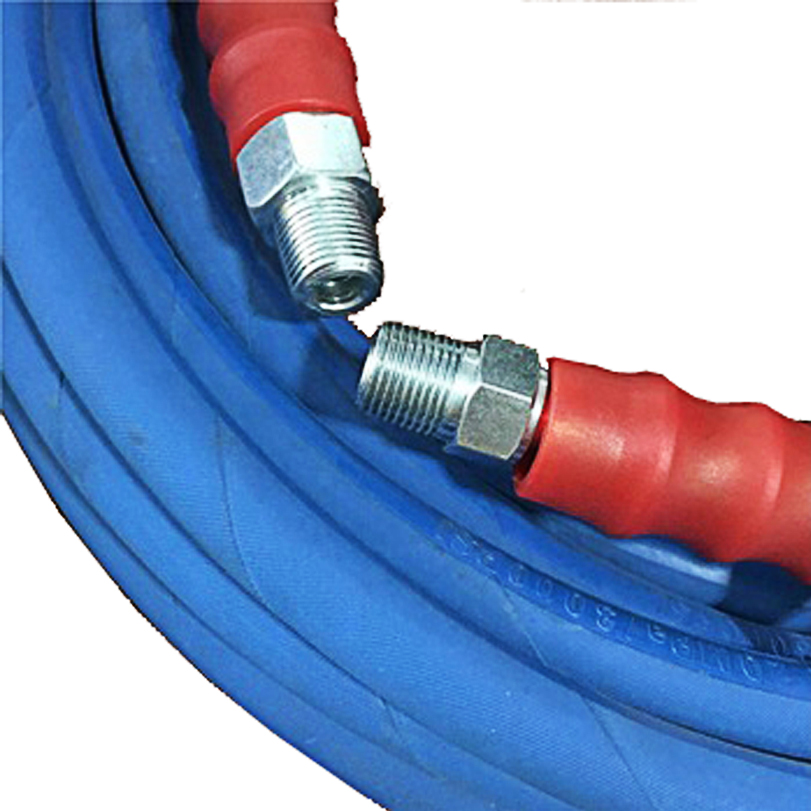
Performance of 10mm hydraulic hose is governed by a combination of material properties and engineering design. Burst pressure, working pressure, and impulse pressure are crucial parameters. Burst pressure refers to the pressure at which the hose fails catastrophically, typically four times the working pressure. Working pressure is the maximum continuous operating pressure specified by the manufacturer. Impulse pressure represents the hose’s ability to withstand pressure surges or spikes. Finite Element Analysis (FEA) is often employed during the design phase to model stress distribution within the hose layers under various loading conditions, optimizing reinforcement configurations for maximum strength and minimizing weight. Temperature resistance is another critical factor, influenced by the choice of rubber compounds. Hydraulic fluids can operate over a wide temperature range, and hose materials must maintain their flexibility and integrity across these extremes. Chemical compatibility is paramount, ensuring the hose material does not degrade or swell when exposed to the specific hydraulic fluid in use. Environmental resistance, including resistance to ozone, UV radiation, and abrasion, is crucial for outdoor applications. Hose assemblies, incorporating fittings, introduce additional engineering considerations. Proper crimping techniques are essential to create a secure and leak-proof connection between the hose and fittings. The crimp angle, crimp diameter, and fitting material all influence assembly integrity. Compliance requirements often dictate specific performance standards, such as those related to flame resistance (e.g., FMVSS 106) or environmental regulations (e.g., REACH, RoHS).
Technical Specifications
| Parameter | Unit | NBR Hose | EPDM Hose |
|---|---|---|---|
| Inner Diameter | mm | 10 ± 0.2 | 10 ± 0.2 |
| Outer Diameter | mm | 16 ± 0.3 | 17 ± 0.3 |
| Working Pressure | MPa | 20 | 16 |
| Burst Pressure | MPa | 80 | 64 |
| Temperature Range | °C | -40 to +100 | -40 to +120 |
| Reinforcement | Ply | 2 Spiral Steel Wire | 2 Spiral Steel Wire |
Failure Mode & Maintenance
Failure modes in 10mm hydraulic hose are diverse and often interconnected. Fatigue cracking, arising from repeated flexing and pressure cycling, is a common occurrence, particularly in areas of high stress concentration near fittings. Delamination, the separation of hose layers, can result from improper bonding during manufacturing or exposure to harsh chemicals. Degradation of the rubber compounds due to exposure to heat, ozone, UV radiation, or incompatible fluids can lead to loss of flexibility and eventual failure. Oxidation can cause hardening and cracking of the rubber, reducing its elasticity. Abrasion damage, resulting from contact with abrasive surfaces, can compromise the outer cover, exposing the reinforcement layers to corrosion. Pinholes or leaks can develop due to localized defects or damage. Proper maintenance is crucial for extending hose lifespan and preventing catastrophic failures. Regular visual inspections should be conducted to identify signs of cracking, abrasion, swelling, or leaks. Hose assemblies should be checked for proper crimping and fitting integrity. Fluid contamination should be minimized through the use of filtration systems. Hoses should be replaced at recommended intervals or when signs of degradation are observed. Avoid sharp bends or kinking, which can induce stress concentrations. When disconnecting hose assemblies, ensure the system is depressurized to prevent sudden hose rupture.
Industry FAQ
Q: What is the significance of the hose’s “dash size” (e.g., -10)?
A: The dash size is a standardized nomenclature used to indicate the hose's inner diameter. While nominally 10mm in this case, it’s a rounded value; the actual ID will be within a specified tolerance. It's essential for ensuring compatibility with fittings and other system components. Incorrect dash size matching can lead to leaks or component failure.
Q: How does the steel wire reinforcement affect the hose’s performance?
A: Steel wire reinforcement is the primary determinant of a hose’s pressure capacity and resistance to expansion. The number of layers, the wire gauge, and the winding or braiding configuration all contribute to its burst strength and working pressure. A higher ply count and thicker wire generally result in a stronger hose.
Q: What are the implications of using an incompatible hydraulic fluid?
A: Using an incompatible hydraulic fluid can cause significant damage to the hose. Certain fluids can cause the rubber compounds to swell, soften, or degrade, leading to leaks or failure. Always verify that the hose material is compatible with the fluid being used.
Q: What is the proper procedure for crimping hose fittings?
A: Proper crimping requires a calibrated crimping machine, the correct die size for the hose and fitting combination, and adherence to the fitting manufacturer’s specifications. An improper crimp can lead to leaks, fitting slippage, or hose failure.
Q: What are the common causes of hose leaks at the fitting interface?
A: Common causes include improper crimping, damaged fittings, corrosion, or the use of incorrect sealant. Regular inspection of the crimp and fitting condition is crucial. Replacement of corroded or damaged fittings is necessary.
Conclusion
The OEM 10mm hydraulic hose is a critical element in numerous industrial applications. Its performance is dictated by a complex interplay of material science, manufacturing precision, and engineering considerations. Selecting the correct hose construction—specifically, the rubber compound and reinforcement configuration—is paramount for ensuring compatibility with the hydraulic fluid, operating pressure, and environmental conditions. Understanding the potential failure modes and implementing a proactive maintenance program are crucial for maximizing hose lifespan and preventing costly downtime.
Future advancements in hydraulic hose technology will likely focus on the development of lighter-weight materials, increased pressure ratings, and improved resistance to harsh chemicals and extreme temperatures. The integration of sensor technology for real-time monitoring of hose condition is also a developing area, enabling predictive maintenance and reducing the risk of unexpected failures. Continuous improvement in manufacturing processes and quality control procedures will be essential for maintaining the reliability and performance of these vital components.