
Apr . 01, 2024 17:55 Back to list
nylon hose Performance Analysis
Introduction
Nylon hose, specifically referring to reinforced flexible conduits constructed primarily from nylon polymers, occupies a critical position within fluid transfer systems across diverse industrial applications. These hoses are not merely conduits; they represent engineered solutions addressing pressure, temperature, chemical compatibility, and operational longevity requirements. Their technical position within the supply chain spans from raw polymer production through extrusion, reinforcement layering, and final assembly, catering to sectors like automotive, hydraulics, pneumatics, and chemical processing. Core performance characteristics revolve around burst pressure, tensile strength, flexibility (bend radius), and resistance to permeation of conveyed fluids. A key industry pain point centers around achieving a balance between these properties, particularly maintaining flexibility under high-pressure and extreme temperature conditions, alongside ensuring long-term chemical compatibility to prevent degradation and failure.
Material Science & Manufacturing
The foundational material for nylon hose is typically Nylon 6 or Nylon 6,6, both polyamides renowned for their high tensile strength, abrasion resistance, and relative cost-effectiveness. Nylon 6 is characterized by a lower melting point and higher water absorption compared to Nylon 6,6. The manufacturing process begins with the polymerization of caprolactam (for Nylon 6) or hexamethylenediamine and adipic acid (for Nylon 6,6). These polymers exhibit inherent crystallinity, influencing mechanical properties. The degree of crystallinity is controlled during extrusion through precise temperature management and cooling rates.
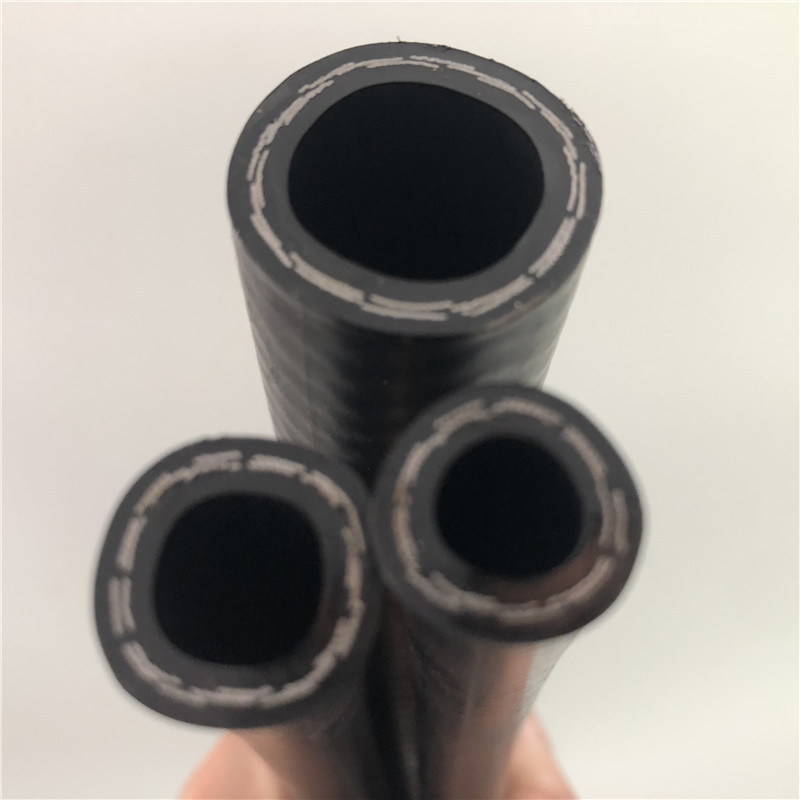
Hose construction commonly involves extrusion of the nylon polymer into a tubing form. Critical parameters during extrusion include melt temperature (typically 250-300°C), extrusion speed, and die geometry. Following extrusion, reinforcement layers are added. These layers are vital for pressure resistance and can include: high-tensile strength textile braiding (typically polyester or aramid fibers) or spiraled wire reinforcement (steel or stainless steel). The braiding angle and tension control the hose’s flexibility and burst pressure. Adhesion between the nylon matrix and reinforcement layers is crucial; this is achieved via chemical bonding promoters applied during the layering process. Post-layering, a protective outer jacket, often made of polyurethane or PVC, is extruded to provide abrasion and UV resistance. Quality control encompasses dimensional checks, burst pressure testing (per ISO 3092), and visual inspection for defects like voids or inconsistencies in reinforcement.
Performance & Engineering
The performance of nylon hose is fundamentally governed by force analysis related to internal pressure and external mechanical stresses. Hoop stress within the hose wall, resulting from internal fluid pressure, is directly proportional to the pressure and radius, and inversely proportional to the wall thickness. Therefore, wall thickness is a primary design parameter for achieving desired burst pressure. Tensile strength, measured per ASTM D2370, dictates the hose’s ability to withstand stretching forces. Flexibility is characterized by the minimum bend radius, which should be specified based on the application to avoid kinking or structural damage.
Environmental resistance is a critical engineering consideration. Nylon is hygroscopic, meaning it absorbs moisture, which can reduce its dielectric strength and dimensional stability. Chemical compatibility with the conveyed fluid is paramount; prolonged exposure to certain chemicals (acids, bases, solvents) can cause swelling, cracking, or degradation of the nylon polymer. Permeation resistance, the rate at which fluids migrate through the hose wall, is essential in applications where fluid loss is unacceptable. Compliance requirements vary by industry; automotive hoses must meet FMVSS 106 standards for fuel lines, while hydraulic hoses must comply with SAE J517 standards. Fatigue life, the number of pressure cycles the hose can withstand before failure, is a critical parameter, especially in pulsating flow applications.
Technical Specifications
| Parameter | Nylon 6 Hose (Standard Grade) | Nylon 6,6 Hose (High Performance) | Reinforcement Type |
|---|---|---|---|
| Operating Pressure (PSI) | 250 | 500 | Polyester Braided |
| Burst Pressure (PSI) | 750 | 1500 | Aramid Braided |
| Tensile Strength (MPa) | 80 | 100 | Spiraled Steel Wire |
| Minimum Bend Radius (inches) | 6 | 8 | N/A |
| Operating Temperature Range (°C) | -40 to 85 | -40 to 120 | N/A |
| Chemical Resistance | Good to Aliphatic Hydrocarbons | Excellent to Most Common Fluids | N/A |
Failure Mode & Maintenance
Failure modes in nylon hose are diverse and often application-specific. Fatigue cracking, originating from stress concentrations at fittings or bends, is a common failure mechanism under cyclic pressure loading. Delamination of reinforcement layers can occur due to poor adhesion or exposure to aggressive chemicals. Hydrolytic degradation, caused by moisture absorption, weakens the nylon polymer and reduces its mechanical properties. Oxidation, particularly at elevated temperatures, leads to embrittlement and cracking. Abrasion, from external contact with surfaces, erodes the outer jacket and potentially exposes reinforcement layers. Permeation of incompatible fluids can cause swelling and weakening of the nylon matrix.
Preventative maintenance is crucial for extending hose lifespan. Regular visual inspections should be conducted to identify signs of cracking, abrasion, or swelling. Pressure testing, periodically, verifies the hose’s structural integrity. Proper hose routing minimizes bending stress and abrasion. Fluid compatibility must be carefully verified before use. Avoid exposing the hose to extreme temperatures or corrosive environments. When replacing a hose, ensure the new hose meets or exceeds the original specifications. Proper fitting installation, employing correct torque values, prevents leaks and stress concentrations. For heavily loaded systems, consider implementing a hose replacement schedule based on operating hours or pressure cycles.
Industry FAQ
Q: What is the impact of prolonged exposure to hydraulic fluid on the lifespan of a nylon hose?
A: Prolonged exposure to incompatible hydraulic fluids can significantly reduce the lifespan of a nylon hose. Hydraulic fluids often contain additives that can cause swelling, softening, or cracking of the nylon polymer. Specifically, ester-based hydraulic fluids are known to be problematic with nylon. Regularly verifying fluid compatibility with the hose material and implementing a fluid analysis program are vital.
Q: How does the reinforcement material affect the hose's resistance to kinking?
A: The reinforcement material and its construction significantly influence kink resistance. Spiraled wire reinforcement generally provides superior kink resistance compared to braided reinforcement. Braided reinforcement, while offering good flexibility, is more prone to kinking under sharp bends. The braid angle also plays a role; a tighter braid angle increases kink resistance but reduces flexibility.
Q: What are the key considerations when selecting a nylon hose for a high-temperature application?
A: For high-temperature applications, selecting a nylon 6,6 hose is generally preferable to nylon 6 due to its higher melting point and improved thermal stability. The hose’s outer jacket material must also be heat-resistant. Furthermore, the operating pressure should be derated at elevated temperatures, as the nylon’s strength decreases with increasing temperature. Careful consideration of the conveyed fluid’s temperature and potential for thermal degradation is essential.
Q: How do you determine the appropriate safety factor for a nylon hose application?
A: The appropriate safety factor depends on the criticality of the application and the potential consequences of failure. A minimum safety factor of 4:1 is generally recommended for hydraulic and pneumatic systems. However, for applications involving hazardous fluids or high pressures, a higher safety factor (e.g., 6:1 or 8:1) should be used. This safety factor is applied to the working pressure to determine the minimum required burst pressure of the hose.
Q: What methods can be used to non-destructively assess the integrity of a nylon hose in service?
A: While completely non-destructive assessment is challenging, several methods can provide insights into hose integrity. Visual inspection for cracks, abrasions, and swelling is the first line of defense. Leak testing under pressure can identify breaches in the hose wall or fittings. Ultrasonic testing can detect delamination in reinforcement layers, although requires specialized equipment and expertise. Thermal imaging can identify areas of localized heating, potentially indicating internal damage.
Conclusion
Nylon hose represents a versatile and cost-effective solution for a wide array of fluid transfer applications. Its performance characteristics – dictated by material selection, manufacturing precision, and reinforcement design – are critical to ensuring reliability and longevity. Understanding the nuances of nylon polymer properties, potential failure modes, and relevant industry standards is paramount for engineers and procurement professionals alike. A holistic approach encompassing proper material selection, diligent maintenance practices, and adherence to safety factors is essential for maximizing the lifespan and minimizing the risk of catastrophic failure.
Future developments in nylon hose technology are likely to focus on enhancing chemical resistance through novel polymer blends and coatings, improving permeation resistance with advanced barrier layers, and incorporating smart sensing capabilities for real-time monitoring of hose health. The integration of data analytics, derived from sensor data, will enable predictive maintenance strategies, further optimizing operational efficiency and minimizing downtime. Continued research into sustainable nylon alternatives will also contribute to environmentally responsible manufacturing practices.