
Apr . 01, 2024 17:55 Back to list
lpg regulator hose Performance Analysis
Introduction
LPG regulator hoses are critical components in the safe and efficient distribution of Liquefied Petroleum Gas (LPG) for heating, cooking, and industrial applications. Positioned between the LPG cylinder's regulator and the gas appliance, these hoses are engineered to withstand high pressures, maintain gas tightness, and resist degradation from LPG exposure and environmental factors. Unlike simple rubber tubing, LPG regulator hoses represent a specialized class of flexible connectors demanding adherence to stringent safety standards. Their core performance characteristics revolve around pressure regulation, leak prevention, and long-term durability, directly impacting user safety and operational reliability. The industry faces challenges related to material compatibility with varying LPG compositions, ensuring consistent flow rates under diverse temperature conditions, and mitigating the risk of catastrophic failure due to hose rupture or connection leakage. This guide provides a comprehensive technical overview of LPG regulator hose construction, performance, and maintenance, serving as a resource for engineers, procurement managers, and safety professionals.
Material Science & Manufacturing
The core material of an LPG regulator hose is typically a synthetic rubber compound, commonly Ethylene Propylene Diene Monomer (EPDM). EPDM is selected for its excellent resistance to LPG’s constituent gases (propane and butane), ozone, weathering, and heat aging. However, variations exist; some hoses utilize Chloroprene Rubber (CR), also known as Neoprene, offering superior oil resistance but potentially lower temperature flexibility. Reinforcement is crucial; most hoses incorporate a high-tensile strength braided reinforcement layer, traditionally made from polyester or nylon fibers. This braid provides burst pressure resistance and prevents kinking. Inner tubes require meticulous formulation to prevent gas permeation. Additives like carbon black enhance strength and UV resistance, while plasticizers contribute to flexibility.
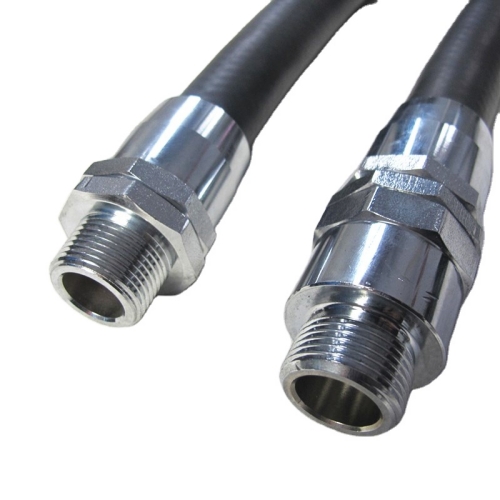
Manufacturing commences with compounding the rubber formulation, followed by extrusion of the inner tube. The reinforcement braid is then applied, often through a helical winding process. An outer cover, typically EPDM or a blend designed for abrasion resistance and weatherability, is extruded over the braided layer. Critical parameters during extrusion include die temperature, screw speed, and cooling rates, impacting the final compound’s density, hardness, and tensile strength. Following extrusion, the hose undergoes vulcanization – a chemical process employing heat and pressure to crosslink the rubber molecules, resulting in elasticity and improved physical properties. Quality control checks at each stage, including dimensional accuracy, burst pressure testing (hydrostatic testing), and leak testing (using nitrogen), are essential. The hose ends are typically fitted with flared or threaded fittings, often manufactured from brass or stainless steel, secured using crimping or bonding techniques. Stringent control of the crimp force and bonding agent application is vital to ensure leak-proof connections.

Performance & Engineering
The performance of an LPG regulator hose is governed by several engineering principles. Force analysis focuses on burst pressure – the maximum internal pressure the hose can withstand before rupture. This is determined by the reinforcement braid’s tensile strength and the rubber compound’s ultimate tensile strength. Hose flexibility is critical, influencing ease of installation and resistance to kinking. This is dictated by the rubber compound’s elongation at break and the hose wall thickness. Environmental resistance is paramount. LPG hoses are often exposed to ultraviolet (UV) radiation, temperature fluctuations, and chemical contaminants. UV exposure can cause degradation of the outer cover, leading to cracking and embrittlement. Temperature variations affect the rubber compound’s elasticity and gas permeability. Chemical resistance considers exposure to oils, solvents, and cleaning agents. Compliance with safety standards (discussed later) dictates minimum performance requirements. Flow rate is determined by the hose’s internal diameter and the pressure drop across its length, impacting appliance efficiency. Pressure drop calculations utilize the Darcy-Weisbach equation, accounting for friction losses within the hose bore.
Engineering considerations also include connection integrity. Fittings must provide a gas-tight seal under varying pressure and temperature conditions. Threaded connections rely on thread sealant to prevent leaks, while flared connections depend on proper flare angle and sufficient contact area. Fatigue resistance is crucial for hoses subjected to repeated bending and flexing. Cyclic fatigue testing assesses the hose’s ability to withstand repeated pressure cycles without failure. Furthermore, electrostatic discharge (ESD) considerations become important in certain applications to prevent ignition of LPG vapors. Antistatic rubber compounds and grounding provisions may be incorporated into the hose design.
Technical Specifications
| Parameter | Unit | Typical Value | Test Standard |
|---|---|---|---|
| Working Pressure | Bar | 20 | EN 1763 |
| Burst Pressure | Bar | 60 | EN 1763 |
| Tensile Strength (Reinforcement) | MPa | 1500 | ISO 6967 |
| Elongation at Break (Rubber Compound) | % | 300 | ASTM D412 |
| Temperature Range | °C | -20 to +60 | EN 1763 |
| Gas Permeation Rate (Propane) | cm³/m²/day | < 5 | ISO 14554 |
Failure Mode & Maintenance
LPG regulator hoses are susceptible to several failure modes. Fatigue cracking, often occurring near fittings due to repeated bending, is a common issue. This initiates from stress concentrations and propagates over time. Delamination – the separation of the rubber compound from the reinforcement braid – can occur due to inadequate bonding during manufacturing or exposure to harsh chemicals. Degradation of the rubber compound, caused by UV exposure, ozone attack, or chemical incompatibility, leads to hardening, cracking, and reduced elasticity. Oxidation, particularly at high temperatures, results in embrittlement and loss of strength. Kinking can restrict flow and create localized stress concentrations, increasing the risk of rupture. Fitting failures include thread stripping, flare cracking, and seal leakage.
Preventive maintenance is crucial. Regular visual inspections should be conducted to identify cracks, abrasions, swelling, or discoloration. Hoses should be protected from direct sunlight, extreme temperatures, and exposure to oils and solvents. Connections should be checked for tightness and leaks using a soap solution. Hoses should be replaced if any signs of degradation or damage are observed. Recommended replacement intervals vary depending on usage and environmental conditions, but a five-year replacement cycle is generally advised. When replacing a hose, ensure compatibility with the LPG regulator and appliance fittings. Always follow the manufacturer’s instructions for installation and maintenance. Proper storage – avoiding bending or compression – is essential to prevent premature failure.
Industry FAQ
Q: What is the significance of the “EN 1763” standard, and how does it differ from other regional standards?
A: EN 1763 is the European standard for LPG hoses and is highly regarded globally. It specifies rigorous testing procedures for burst pressure, working pressure, temperature resistance, and gas permeation. It differs from standards like the Australian AS/NZS 1869, which has specific requirements for hose length and labeling, or the North American CSA standards, which focus more on material traceability and manufacturing process control. EN 1763 provides a comprehensive framework for ensuring safety and performance, making it a benchmark for quality.
Q: How does the composition of LPG (propane vs. butane) affect hose material selection?
A: Butane has a lower boiling point than propane and requires a hose material with superior cold temperature flexibility to prevent stiffness and cracking. Propane, while less sensitive to cold, can be more aggressive towards certain rubber compounds. EPDM is generally compatible with both, but the formulation may be adjusted to optimize performance for a specific LPG mixture.
Q: What are the common causes of gas permeation through hose walls, and how can this be mitigated?
A: Gas permeation is influenced by the rubber compound’s density, the gas’s molecular size, and the temperature. Higher temperatures increase permeation rates. Mitigation strategies include using a denser rubber compound, incorporating barrier layers within the hose wall, and minimizing hose length. Careful selection of plasticizers is also important, as some can increase permeability.
Q: What is the role of the reinforcement braid, and what are the advantages and disadvantages of polyester vs. nylon?
A: The reinforcement braid provides the hose with its burst pressure resistance and prevents kinking. Polyester offers excellent dimensional stability and resistance to stretching, making it a cost-effective option. Nylon exhibits higher tensile strength and abrasion resistance but is more susceptible to moisture absorption, which can reduce its strength over time. The choice depends on the application’s specific requirements.
Q: What best practices should be followed when installing and connecting LPG regulator hoses to prevent leaks?
A: Always use thread sealant on threaded connections. Ensure flared connections are properly formed and seated. Avoid over-tightening fittings, which can damage the threads or flare. Check all connections for leaks using a soap solution after installation. Regularly inspect the hose for any signs of damage or degradation. Never use a damaged hose.
Conclusion
LPG regulator hoses are engineered safety-critical components demanding a comprehensive understanding of material science, manufacturing processes, and performance characteristics. The selection of appropriate materials, coupled with stringent quality control during production, is paramount to ensuring long-term durability and leak prevention. Adherence to international standards such as EN 1763 is not merely a regulatory requirement but a demonstration of commitment to safety and reliability.
Ongoing maintenance and regular inspections are essential for identifying potential failure modes before they escalate into hazardous situations. By understanding the factors that contribute to hose degradation and implementing proactive maintenance strategies, operators can minimize risks and maximize the lifespan of this vital component. Future advancements in hose technology may focus on the development of new rubber compounds with improved permeation resistance, enhanced UV stability, and increased flexibility, furthering the safety and efficiency of LPG distribution systems.

