
Apr . 01, 2024 17:55 Back to list
lpg hose suppliers Performance Analysis
Introduction
Liquefied Petroleum Gas (LPG) hoses are critical components in the safe and efficient transfer of LPG, serving diverse applications from residential heating and cooking to industrial processes and automotive fuel systems. The LPG hose industry is characterized by stringent safety regulations and performance requirements, driven by the inherent risks associated with handling flammable gases under pressure. Hoses are not merely conduits; they are engineered systems designed to withstand specific pressures, temperatures, and chemical exposures while maintaining long-term integrity and leak-proof performance. Suppliers must demonstrate adherence to international standards and provide documentation verifying material composition, manufacturing processes, and rigorous testing. The core performance characteristics revolve around permeation resistance, burst pressure, tensile strength, and resistance to degradation from LPG and environmental factors. The increasing demand for alternative fuels and portable gas appliances continues to drive innovation and demand within this sector.
Material Science & Manufacturing
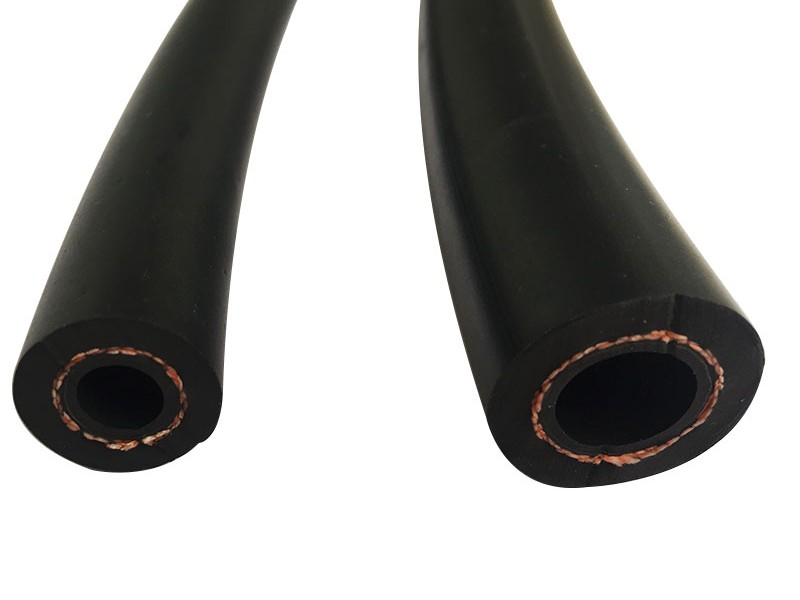
LPG hose construction typically involves multiple layers, each serving a specific function. The inner tube, in direct contact with LPG, is commonly made from a specialized synthetic rubber compound – typically a blend of nitrile rubber (NBR) for fuel resistance, and potentially polychloroprene (CR) for improved heat and ozone resistance. NBR exhibits excellent resistance to aliphatic hydrocarbons (the primary constituents of LPG) but is susceptible to swelling in aromatic fuels. Therefore, precise blending ratios are critical. The reinforcement layer, providing structural integrity and pressure resistance, is commonly composed of high-tensile strength textile braiding, typically polyester or nylon. The number of braids directly correlates with the hose’s working pressure. An intermediate cover layer, often a specialized rubber compound, enhances adhesion between the reinforcement and the outer cover. The outer cover, providing environmental protection and abrasion resistance, is typically a blend of synthetic rubbers such as EPDM (ethylene propylene diene monomer) for UV and weathering resistance. Manufacturing processes include extrusion for the inner tube and outer cover, followed by braid application via automated machinery. Critical parameters include extrusion temperature, braid tension, and vulcanization (curing) time and temperature. Post-production, hoses undergo stringent pressure testing, leak testing, and dimensional verification. The material’s glass transition temperature (Tg) dictates its flexibility at low temperatures, impacting handling and usability. Permeation rates are determined by the polymer density and molecular structure.
Performance & Engineering
The engineering of LPG hoses necessitates a comprehensive understanding of fluid dynamics and material stress-strain relationships. Burst pressure, the maximum pressure the hose can withstand before rupture, is a primary safety parameter, dictated by the reinforcement layer and the integrity of the hose’s construction. Working pressure is significantly lower and represents the maximum safe operating pressure. Tensile strength, the resistance to stretching, is crucial to prevent hose failure during handling and installation. Permeation, the rate at which LPG molecules diffuse through the hose wall, is a critical factor influencing safety and environmental concerns. Lower permeation rates are achieved through dense polymer structures and multi-layer construction. Environmental resistance, particularly to UV radiation, ozone, and temperature extremes, is vital for ensuring long-term performance. Finite Element Analysis (FEA) is commonly employed to model stress distribution within the hose under various loading conditions, optimizing layer thicknesses and material selection. Compliance with regional standards – such as those from EN, ISO, and relevant national regulatory bodies – is paramount. Fatigue analysis is also crucial; repeated pressure cycling can lead to material degradation and eventual failure. The hose assembly’s compatibility with fittings (couplings, connectors) must also be verified to prevent leaks and ensure a secure connection. Hose flexibility is also a key performance characteristic, impacting ease of installation and maneuverability.
Technical Specifications
| Parameter | Unit | Typical Value | Test Standard |
|---|---|---|---|
| Working Pressure | Bar | 15 - 30 | EN ISO 3821 |
| Burst Pressure | Bar | 45 - 90 | EN ISO 3821 |
| Tensile Strength | MPa | 15 - 25 | ISO 6892-1 |
| Permeation Rate (LPG) | cm³/m²/day | < 5 | EN ISO 14877 |
| Temperature Range | °C | -40 to +80 | EN ISO 3821 |
| Inner Tube Material | - | NBR/CR Blend | ASTM D2000 |
Failure Mode & Maintenance
Common failure modes in LPG hoses include permeation-induced swelling and softening of the inner tube, leading to decreased mechanical strength and potential leaks. Fatigue cracking, resulting from repeated pressure cycling, can initiate at stress concentration points (e.g., near fittings). Abrasion of the outer cover can expose the reinforcement layer, compromising pressure resistance. Chemical degradation, caused by prolonged exposure to LPG or environmental contaminants, can lead to material embrittlement and cracking. Kinking or twisting can create localized stress and damage the hose structure. Improper installation, such as over-tightening fittings, can induce stress and accelerate failure. Maintenance primarily involves regular visual inspection for signs of damage (cracks, abrasions, swelling), leak testing with soapy water, and adherence to the manufacturer's recommended replacement schedule. Hoses should be stored in a cool, dry, and dark environment away from direct sunlight and heat sources. Avoid contact with sharp objects and corrosive chemicals. If damage is detected, the hose should be immediately replaced. Proper fitting installation, using appropriate torque specifications, is critical for preventing leaks and ensuring a secure connection. Record-keeping of hose installation and replacement dates is recommended for traceability and safety compliance.
Industry FAQ
Q: What is the impact of LPG composition variations on hose permeation rates?
A: LPG composition (propane/butane ratio) influences permeation rates. Butane has a lower boiling point and smaller molecular size than propane, leading to slightly higher permeation rates. Suppliers should specify the permeation rates based on typical LPG mixtures in the intended application region. Hose material selection and layer construction are key to minimizing permeation across a range of LPG compositions.
Q: How does temperature affect the working pressure of an LPG hose?
A: Elevated temperatures reduce the tensile strength of rubber compounds, decreasing the hose's ability to withstand pressure. Working pressure ratings are typically specified at a standard temperature (e.g., 23°C). De-rating factors should be applied when operating at higher temperatures, as per the manufacturer's specifications. Prolonged exposure to high temperatures can also accelerate material degradation.
Q: What is the significance of the reinforcement layer braiding angle?
A: The braiding angle influences the hose's burst pressure and flexibility. A shallower angle provides greater flexibility but reduces burst pressure. A steeper angle increases burst pressure but reduces flexibility. Optimal braiding angle is determined through engineering analysis to balance these two factors based on the hose’s intended application.
Q: What are the common causes of premature hose failure related to fitting installation?
A: Over-tightening fittings can crush the hose wall, creating stress concentration points and leading to premature failure. Under-tightening can cause leaks. Using incompatible fittings (different thread types or materials) can also lead to leaks or damage. Proper fitting selection and torque application, following manufacturer's recommendations, are essential.
Q: How are LPG hoses tested for leak tightness during manufacturing?
A: Leak tightness is typically tested using a pressure decay test. The hose is pressurized with air or nitrogen, and the pressure drop over a specified time period is measured. Alternatively, immersion testing in a soapy water solution can visually identify leaks. These tests are conducted in accordance with relevant industry standards (e.g., EN ISO 3821).
Conclusion
LPG hoses represent a critical safety component in the distribution and utilization of LPG. Their performance relies heavily on material selection, meticulous manufacturing processes, and adherence to rigorous international standards. Understanding the interplay between material properties, engineering principles, and potential failure modes is crucial for suppliers and end-users alike. Continuous advancements in polymer technology and manufacturing techniques are driving improvements in permeation resistance, durability, and overall safety.
Looking ahead, the LPG hose industry will likely focus on developing more sustainable materials, enhancing hose traceability through advanced labeling technologies, and integrating smart sensors for real-time performance monitoring. Meeting increasingly stringent environmental regulations and ensuring long-term reliability will remain paramount. Collaboration between suppliers, regulatory bodies, and end-users will be essential for fostering innovation and maintaining the highest levels of safety in the LPG industry.