
Apr . 01, 2024 17:55 Back to list
lpg braided gas hose Performance Analysis
Introduction
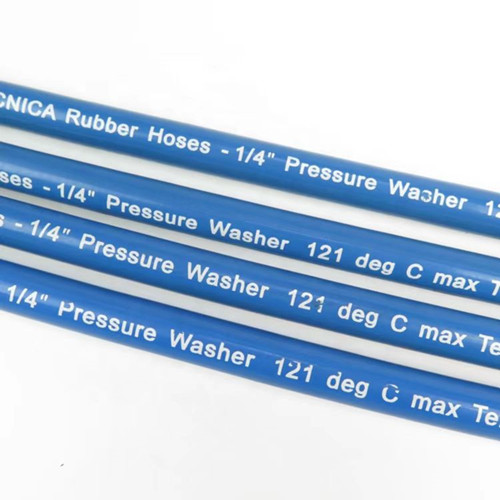
LPG braided gas hose is a flexible conduit designed for the safe and efficient transfer of Liquefied Petroleum Gas (LPG) in various applications, including residential, commercial, and industrial settings. Positioned within the fuel distribution infrastructure, it represents a critical component linking storage vessels or regulators to gas-consuming appliances. The hose consists of an inner tube, typically made of synthetic rubber compounds resistant to LPG permeation, reinforced with a high-tensile strength braided layer – commonly stainless steel or aramid fiber – and an outer cover providing environmental and abrasion protection. Core performance characteristics include pressure resistance, leak tightness, flexibility for ease of installation, and resistance to degradation from LPG exposure and environmental factors. A significant industry pain point revolves around ensuring long-term material compatibility, minimizing permeation rates to meet safety standards, and providing robust resistance to kinking and mechanical damage, especially in demanding industrial environments. The demand for improved hose longevity and decreased maintenance cycles drives continuous material and manufacturing innovation.
Material Science & Manufacturing
The core materials for LPG braided gas hose are carefully selected for their chemical compatibility and mechanical properties. The inner tube is typically formulated from a blend of synthetic rubbers, most commonly Nitrile Butadiene Rubber (NBR) or Chloroprene Rubber (CR, Neoprene), due to their excellent resistance to LPG, which is a mixture of propane and butane. NBR offers good oil resistance and flexibility at lower temperatures, while CR provides superior resistance to ozone, weathering, and abrasion. The reinforcement braid, critical for pressure containment, is usually constructed from high-tensile strength stainless steel wire (304 or 316 grade) or aramid fiber. Stainless steel provides exceptional strength and corrosion resistance, while aramid fiber offers a lighter weight and improved flexibility. The outer cover is often a blend of Chloroprene (CR) or Ethylene Propylene Diene Monomer (EPDM) rubber, chosen for its resistance to UV radiation, ozone, abrasion, and weathering. Manufacturing begins with the extrusion of the inner tube to precise dimensions. The reinforcement braid is then helically wound around the inner tube with controlled tension. This is followed by the extrusion of the outer cover, bonding it to the braided layer. Key parameters during manufacturing include braid coverage (affecting burst pressure), rubber hardness (Shore A durometer), and dimensional consistency. Curing processes are tightly controlled to ensure optimal cross-linking of the rubber compounds, maximizing their chemical resistance and mechanical properties. Post-manufacturing, hoses undergo rigorous pressure testing and leak detection to confirm their integrity. Permeation testing, measuring the rate at which LPG passes through the hose wall, is also critical for compliance with safety regulations.

Performance & Engineering
The performance of LPG braided gas hose is dictated by a complex interplay of material properties and engineering design. Burst pressure, a critical safety parameter, is determined by the reinforcement braid's strength and coverage, the inner tube's wall thickness, and the rubber compound's tensile strength. Force analysis, based on thin-walled pressure vessel theory, is used to predict burst pressure and ensure adequate safety margins. Environmental resistance is paramount; LPG hoses must withstand temperature extremes (-40°C to +60°C typically) without significant degradation in flexibility or pressure capacity. Long-term exposure to UV radiation and ozone can cause rubber cracking and embrittlement, necessitating the use of UV stabilizers and ozone-resistant rubber compounds. Flexibility is essential for ease of installation and routing, and is influenced by the braid structure and the rubber compound's elongation at break. Compliance with international safety standards, such as EN 1763 (European Standard), requires rigorous testing for pressure resistance, leak tightness, and resistance to permeation. The hose must also demonstrate resistance to kinking and crushing. The design must account for the potential for fatigue failure due to repeated bending and flexing. Proper fitting selection and installation are critical to prevent leaks and ensure the hose's long-term performance. The hose’s ability to withstand internal pressure fluctuations – rapid opening or closing of valves – is also an important engineering consideration. Creep resistance, the ability to maintain dimensional stability under sustained pressure, is another key performance attribute.
Technical Specifications
| Parameter | Unit | Typical Value (Stainless Steel Braid) | Typical Value (Aramid Fiber Braid) |
|---|---|---|---|
| Working Pressure | bar | 30 | 20 |
| Burst Pressure | bar | 120 | 80 |
| Inner Diameter | mm | 6.35 – 19.05 | 6.35 – 19.05 |
| Outer Diameter | mm | 12 – 32 | 9 – 25 |
| Minimum Bending Radius | mm | 5D (D = Outer Diameter) | 3D (D = Outer Diameter) |
| Tensile Strength (Braid) | MPa | 1700 | 1000 |
| Permeation Rate (Propane) | cm³/m²/day | <5 | <8 |
Failure Mode & Maintenance
LPG braided gas hose is susceptible to several failure modes in practical applications. Fatigue cracking, caused by repeated bending and flexing, is a common issue, particularly in high-traffic areas. This often initiates at stress concentration points, such as near fittings. Delamination, the separation of the outer cover from the braided layer, can occur due to inadequate bonding during manufacturing or prolonged exposure to UV radiation and extreme temperatures. Degradation of the rubber compounds, leading to embrittlement and cracking, is accelerated by ozone exposure and chemical attack. Oxidation of the stainless steel braid can occur in corrosive environments, reducing its strength and corrosion resistance. Permeation can increase over time as the rubber compounds degrade, leading to potential leaks. Leakage around fittings is a frequent failure point, often caused by improper installation or loosening of connections. Maintenance involves regular visual inspections for signs of cracking, abrasion, or delamination. Fittings should be checked for tightness and corrosion. The hose should be replaced immediately if any damage is detected. Avoid sharp bends and kinking during installation and use. Protect the hose from direct sunlight and extreme temperatures. Periodically cleaning the hose with a mild detergent can help remove contaminants and prevent degradation. Following manufacturer’s recommendations for storage and handling is crucial for maximizing hose lifespan. Consider implementing a preventative maintenance schedule based on usage frequency and environmental conditions.
Industry FAQ
Q: What is the impact of LPG composition (propane/butane ratio) on hose performance?
A: The propane/butane ratio affects permeation rates and rubber compatibility. Higher propane concentrations generally lead to slightly higher permeation rates due to its smaller molecular size. Rubber formulations need to be optimized for the specific LPG mixture being used to ensure long-term compatibility and prevent swelling or degradation.
Q: How does temperature affect the working pressure of the hose?
A: Working pressure decreases with increasing temperature. Rubber compounds lose stiffness at higher temperatures, reducing the hose’s ability to withstand internal pressure. Pressure derating factors, specified by the manufacturer and relevant standards, must be applied to determine the safe working pressure at elevated temperatures.
Q: What are the key differences between stainless steel and aramid fiber braided hoses in terms of longevity and cost?
A: Stainless steel braided hoses generally offer superior longevity and resistance to abrasion and corrosion, but are more expensive. Aramid fiber braided hoses are lighter weight and more flexible, but are less resistant to abrasion and UV degradation and may have a shorter service life. The choice depends on the specific application and budget.
Q: How is the permeation rate of the hose measured and what are acceptable limits?
A: Permeation rate is typically measured using a gas permeation test, where the hose is filled with LPG and the amount of gas that diffuses through the hose wall is measured over a specified period. Acceptable limits are defined by safety standards (e.g., EN 1763), and typically range from <5 to <10 cm³/m²/day for propane.
Q: What type of fittings are recommended for use with LPG braided gas hose, and what installation practices should be followed?
A: Fittings should be specifically designed for LPG applications and constructed from compatible materials (e.g., brass or stainless steel). They should be crimped or securely clamped onto the hose, using the manufacturer’s recommended tools and procedures. Thread sealant should be used to prevent leaks. Always verify the compatibility of the fittings with the hose and the LPG mixture before installation.
Conclusion
LPG braided gas hose represents a crucial safety component in fuel distribution systems, demanding meticulous material selection, precise manufacturing processes, and rigorous performance testing. Understanding the interplay between material properties, environmental factors, and engineering design principles is paramount to ensuring long-term reliability and preventing catastrophic failures. The continued evolution of rubber compounds, braid reinforcement technologies, and permeation barrier materials will drive further improvements in hose performance and safety.
The ongoing demand for safer, more durable, and cost-effective solutions necessitates a proactive approach to failure analysis and preventative maintenance. Adherence to international standards and best practices in installation and operation are vital for maximizing the lifespan and minimizing the risk associated with LPG systems. Future developments may focus on incorporating smart sensors into the hose structure to provide real-time monitoring of pressure, temperature, and permeation, enabling predictive maintenance and enhanced safety.