
Apr . 01, 2024 17:55 Back to list
low pressure hydraulic hose Performance Analysis
Introduction
Low pressure hydraulic hose is a critical component in fluid power systems designed for applications requiring the transmission of hydraulic fluid at relatively low operating pressures, typically up to 3000 PSI. Positioned downstream in the manufacturing chain from raw material suppliers (rubber, reinforcement materials) and hose fitting manufacturers, it functions as the conduit for transferring hydraulic energy to actuators and other hydraulic devices. Core performance characteristics encompass burst pressure, working pressure, temperature range, fluid compatibility, and bend radius. Its primary function is to safely and reliably transmit fluid power, demanding high levels of dimensional accuracy, material consistency, and robust construction to prevent leaks, failures, and potential safety hazards. Industry pain points center around hose longevity in harsh environments, maintaining consistent internal diameter to prevent flow restriction, and ensuring compatibility with increasingly complex synthetic hydraulic fluids. Incorrect hose selection or inadequate maintenance can lead to costly downtime, fluid contamination, and potentially dangerous system failures.
Material Science & Manufacturing
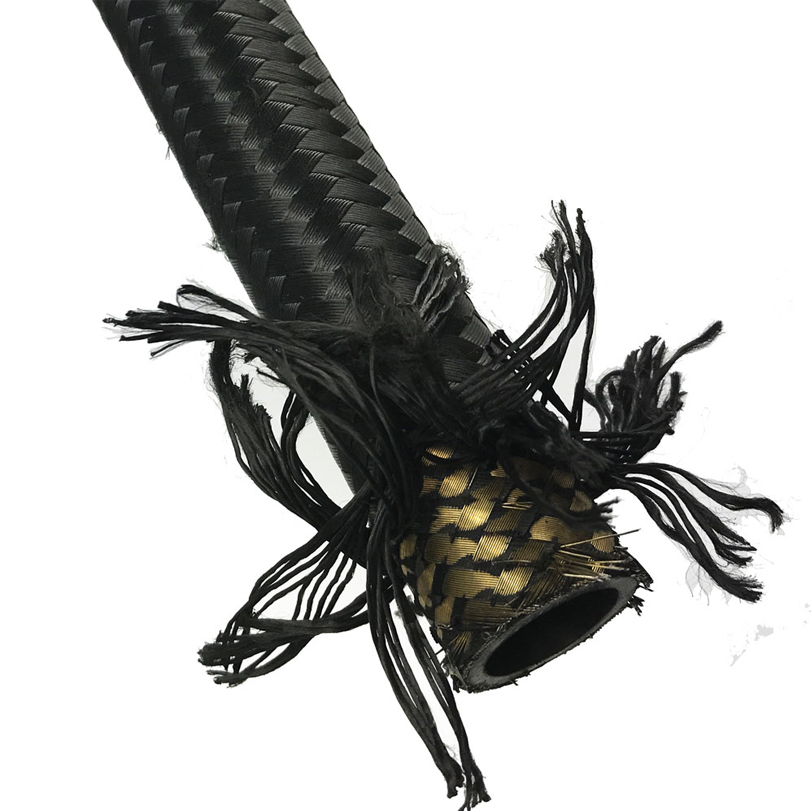
The construction of low pressure hydraulic hose typically involves several key materials. The inner tube is often composed of synthetic rubbers like Nitrile (NBR) – prized for its oil resistance – or Ethylene Propylene Diene Monomer (EPDM) for applications requiring resistance to water, ozone, and heat. The reinforcement layer is crucial for pressure containment and often consists of a single or multiple braids of high-strength steel wire. The outer cover provides environmental protection and abrasion resistance, commonly utilizing a blend of synthetic rubbers like Chloroprene (Neoprene) or PVC. Manufacturing begins with the extrusion of the inner tube to precise dimensional tolerances. Reinforcement braiding is then applied using automated braiding machines, carefully controlling braid angle and density to achieve the desired pressure rating. The outer cover is subsequently extruded over the reinforcement, followed by curing—a vulcanization process using heat and pressure to crosslink the rubber polymers, imparting elasticity and strength. Critical parameter control during extrusion involves maintaining consistent rubber temperature and flow rate to prevent voids and dimensional inconsistencies. Braiding requires accurate tension control to ensure uniform wire distribution. Curing parameters (temperature, pressure, and time) must be precisely controlled to achieve optimal rubber properties without causing degradation. Post-production testing includes hydrostatic pressure testing to verify burst pressure, impulse testing to simulate dynamic loading, and dimensional inspection to confirm adherence to specifications.
Performance & Engineering
Performance evaluation of low pressure hydraulic hose necessitates a comprehensive understanding of both static and dynamic loading conditions. Burst pressure, defined as the pressure at which the hose fails catastrophically, is a primary safety factor. Working pressure, typically a fraction of the burst pressure (often 50-60%), dictates the maximum permissible operating pressure. Fatigue resistance is critical, assessed through impulse testing which subjects the hose to cyclical pressure fluctuations simulating real-world application stresses. Hose bend radius is another key parameter; exceeding the minimum bend radius can cause kinking, restricting flow and potentially leading to premature failure. Environmental resistance is evaluated through exposure to various fluids (hydraulic oils, fuels, chemicals), temperature extremes, and UV radiation. Finite Element Analysis (FEA) is increasingly used in the design process to predict stress concentrations and optimize hose construction for specific applications. Compliance requirements vary by region and application. For instance, in the automotive industry, hoses must meet stringent flammability standards (e.g., FMVSS 302 in the US). In aerospace applications, fluid compatibility with specialized hydraulic fluids and resistance to extreme temperatures are paramount. Force analysis during installation and operation is also important. Proper installation practices, including avoiding sharp bends and ensuring adequate support, significantly impact hose life and performance.
Technical Specifications
| Parameter | Unit | Typical Value (Example 1) | Typical Value (Example 2) |
|---|---|---|---|
| Working Pressure | PSI | 1500 | 2000 |
| Burst Pressure | PSI | 4500 | 6000 |
| Temperature Range | °F | -40 to +212 | -40 to +250 |
| Inner Tube Material | - | NBR | EPDM |
| Reinforcement | - | Single Steel Wire Braid | Double Steel Wire Braid |
| Outer Cover Material | - | Neoprene | PVC |
Failure Mode & Maintenance
Common failure modes in low pressure hydraulic hose include fatigue cracking due to cyclical pressure, abrasion from external contact, and degradation of the rubber compounds due to exposure to heat, chemicals, or UV radiation. Fatigue cracking typically initiates at stress concentration points, such as near fittings or at locations where the hose is subjected to bending. Abrasion leads to thinning of the outer cover, eventually exposing the reinforcement layer to corrosion. Rubber degradation manifests as hardening, cracking, and loss of elasticity. Another failure mode is permeation, where hydraulic fluid slowly diffuses through the hose wall, leading to fluid loss and potential contamination. Oxidation of the rubber compounds can also occur, particularly in applications involving exposure to oxygen and high temperatures. To mitigate these failures, regular visual inspection is crucial, looking for signs of cracking, abrasion, swelling, or discoloration. Hose should be replaced if any defects are observed. Proper installation practices, including avoiding sharp bends and ensuring adequate support, are essential. Fluid compatibility should be verified to prevent chemical attack on the hose materials. Regularly check fitting connections for leaks. Storage of hoses in a cool, dry, and dark environment can prevent premature degradation. Proper handling to avoid kinking or twisting is also important. Preventive maintenance schedules should be implemented based on application severity and operating conditions.
Industry FAQ
Q: What is the impact of hydraulic fluid type on hose life?
A: Different hydraulic fluids exhibit varying levels of compatibility with hose materials. For instance, phosphate ester fluids can aggressively attack certain rubber compounds. Using an incompatible fluid can lead to rapid hose degradation, swelling, and ultimately, failure. It’s crucial to verify fluid compatibility with the hose manufacturer’s specifications before installation.
Q: How does temperature affect the performance of low pressure hydraulic hose?
A: Elevated temperatures accelerate rubber degradation and reduce hose flexibility. Conversely, low temperatures can cause the rubber to stiffen and become more susceptible to cracking. Operating outside the specified temperature range can significantly reduce hose life. Selecting a hose with a temperature rating appropriate for the application is vital.
Q: What are the primary causes of hose leaks?
A: Hose leaks are often caused by loose fittings, damaged hose ends, or internal degradation of the hose material. Improperly torqued fittings are a common culprit. Cracks, abrasions, or swelling can also compromise the hose’s ability to contain fluid. Regularly inspect fittings and hose surfaces for signs of damage.
Q: What is the significance of the hose’s “bend radius”?
A: The bend radius is the minimum radius to which the hose can be bent without kinking or causing structural damage. Exceeding the specified bend radius can restrict flow, increase stress on the hose wall, and lead to premature failure. Ensure the hose routing allows for compliance with the manufacturer’s recommended bend radius.
Q: How can I extend the service life of my hydraulic hoses?
A: Implementing a proactive maintenance program is key. This includes regular visual inspections, proper installation practices (avoiding sharp bends and providing adequate support), using compatible hydraulic fluids, and replacing hoses at recommended intervals or upon detection of any damage. Protecting hoses from abrasion and excessive heat also contributes to longevity.
Conclusion
Low pressure hydraulic hose represents a fundamental component in a diverse range of hydraulic systems, requiring careful consideration of material selection, manufacturing processes, and operational parameters. Understanding the interplay between hose construction, performance characteristics, and potential failure modes is crucial for ensuring safe, reliable, and efficient operation. Adherence to industry standards and best practices in installation and maintenance is paramount for maximizing hose service life and minimizing costly downtime.
Future developments in hydraulic hose technology are focusing on the integration of advanced materials, such as thermoplastic composites, to enhance strength-to-weight ratios and improve resistance to corrosion and abrasion. Smart hoses equipped with embedded sensors to monitor pressure, temperature, and structural integrity are also emerging, enabling predictive maintenance and improved system reliability. Continued innovation in hose design and manufacturing will be essential to meet the evolving demands of increasingly complex hydraulic applications.