
Apr . 01, 2024 17:55 Back to list
industrial hydraulic hose Performance Analysis
Introduction
Industrial hydraulic hose is a reinforced tubing designed to convey pressurized hydraulic fluid, serving as a critical component in numerous industrial applications including construction equipment, agricultural machinery, manufacturing processes, and oil & gas operations. Unlike pneumatic hoses, hydraulic hoses are engineered to withstand significantly higher pressures and operate with incompressible fluids. Its position in the industry chain lies between the hydraulic power unit (pump, reservoir, valves) and the hydraulic actuator (cylinder, motor). Core performance characteristics are defined by working pressure, burst pressure, temperature range, fluid compatibility, and resistance to abrasion and external damage. A primary industry pain point revolves around premature hose failure due to incorrect specification for application demands, leading to downtime, safety hazards, and costly repairs. Maintaining fluid cleanliness and ensuring proper hose assembly are also critical concerns.
Material Science & Manufacturing
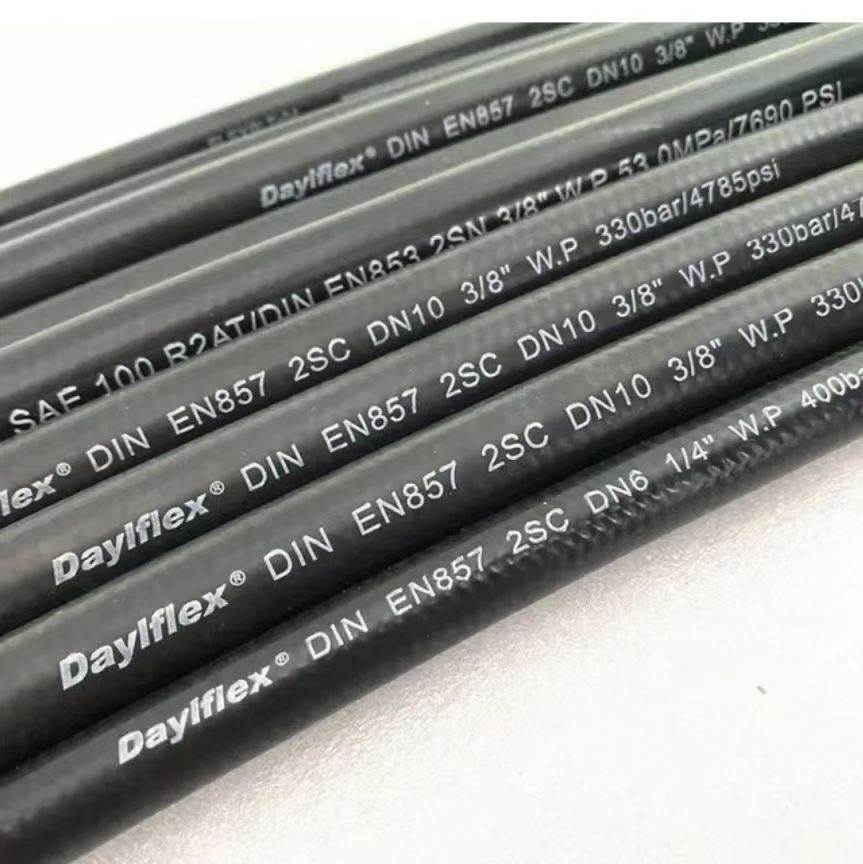
The construction of industrial hydraulic hose typically involves four key layers: the inner tube, reinforcement layer(s), and outer cover. The inner tube is commonly composed of synthetic rubbers like nitrile (NBR), ethylene propylene diene monomer (EPDM), or fluorocarbon (FKM – Viton) selected for compatibility with the hydraulic fluid being used (petroleum-based, phosphate ester, water glycol). NBR provides good resistance to petroleum oils, while EPDM excels in water and heat resistance; FKM offers the broadest chemical resistance, but at a higher cost. The reinforcement layer is crucial for pressure containment and is typically constructed from multiple braids or spirals of high-tensile steel wire. The number of layers and wire diameter directly correlate to the hose’s working and burst pressure. Some hoses utilize synthetic fiber reinforcement (e.g., aramid) for reduced weight and increased flexibility, though typically with lower pressure ratings. The outer cover is usually a synthetic rubber compound (e.g., chloroprene, polyurethane) providing abrasion, weather, ozone, and oil resistance. Manufacturing processes involve extrusion of the inner tube and outer cover, followed by helical winding or braiding of the reinforcement layers. Precise control of extrusion temperatures, curing times, and braid tension are paramount to ensure consistent hose quality. Post-production testing includes hydrostatic pressure testing to verify burst strength and impulse testing to assess fatigue life. Proper vulcanization is critical to develop the desired mechanical properties of the rubber compounds.
Performance & Engineering
Performance analysis of hydraulic hose centers on its ability to withstand sustained pressure, pressure fluctuations (impulse), and environmental factors. The working pressure is the maximum continuous operating pressure specified by the manufacturer, while the burst pressure is the pressure at which the hose fails catastrophically. A safety factor, typically 4:1, is applied between working and burst pressure. Impulse pressure, caused by pump pulsations or rapid valve closures, induces fatigue stresses in the hose reinforcement. The hose must withstand a specified number of impulse cycles without failure. Finite element analysis (FEA) is frequently employed in hose design to optimize reinforcement configurations and predict stress distribution. Environmental resistance is a key consideration; temperature extremes, exposure to UV radiation, ozone, and corrosive substances can degrade hose materials. Hose selection must align with the specific fluid being conveyed, considering viscosity, temperature, and chemical compatibility. Proper hose routing is critical to avoid kinking, twisting, and abrasion. Bend radius limitations must be strictly observed to prevent hose failure. Additionally, the hose’s elasticity and its impact on system response time are important engineering considerations in dynamic hydraulic systems. Compliance requirements vary based on industry and region, but often include certifications from organizations like SAE International.
Technical Specifications
| Hose Type | Working Pressure (PSI) | Burst Pressure (PSI) | Temperature Range (°F) |
|---|---|---|---|
| 1-Wire Braid Hydraulic Hose | 2000 | 8000 | -40 to 212 |
| 2-Wire Braid Hydraulic Hose | 3000 | 12000 | -40 to 212 |
| 4-Spiral Wire Hydraulic Hose | 4000 | 16000 | -40 to 212 |
| Thermoplastic Hydraulic Hose | 3000 | 12000 | -40 to 250 |
| Ultra-High Pressure Hydraulic Hose | 5000 | 20000 | -40 to 212 |
| Rubber Hydraulic Hose (NBR) | 1500 | 6000 | -40 to 212 |
Failure Mode & Maintenance
Common failure modes in industrial hydraulic hoses include burst failures due to exceeding pressure limits, pinhole leaks resulting from abrasion or corrosion, and fatigue cracking from impulse pressures or excessive bending. Internal abrasion from contaminated hydraulic fluid is a significant contributor to hose failure. External damage, such as cuts, scrapes, and kinking, can compromise hose integrity. Ozone cracking, particularly in unsaturated rubber compounds, can lead to premature failure. Delamination between the rubber and reinforcement layers can also occur. Maintenance involves regular visual inspections for signs of damage, leaks, or wear. Hose assemblies should be inspected after initial installation and periodically thereafter, with frequency dependent on application severity. Proper fluid filtration is crucial to remove contaminants and extend hose life. Hose routing should be checked to ensure adequate clearance and prevent contact with abrasive surfaces. Damaged hoses should be replaced immediately. During replacement, it is vital to use properly crimped fittings and follow manufacturer's specifications for assembly. A proactive hose management program, including detailed record-keeping and scheduled inspections, can significantly reduce downtime and improve safety. Furthermore, proper storage of hoses, protected from UV exposure and extreme temperatures, is essential for maintaining their service life.
Industry FAQ
Q: What is the impact of hydraulic fluid type on hose selection?
A: Hydraulic fluid compatibility is paramount. Petroleum-based fluids generally require NBR or Buna-N inner tubes. Phosphate ester fluids necessitate EPDM or Viton (FKM) due to their aggressive chemical nature. Water glycol fluids also require EPDM. Using an incompatible fluid can cause the inner tube to swell, degrade, or crack, leading to premature failure and system contamination.
Q: How does temperature affect hydraulic hose performance?
A: Extreme temperatures can significantly impact hose performance. High temperatures can accelerate rubber degradation and reduce pressure ratings. Low temperatures can cause rubber to become brittle and less flexible, increasing the risk of cracking. The specified temperature range of the hose must align with the operating temperature of the hydraulic system.
Q: What is the correct procedure for assembling a hydraulic hose?
A: Proper assembly requires specialized crimping equipment and correctly sized fittings. The fitting must be fully and evenly crimped onto the hose to create a secure, leak-proof seal. Incorrect crimping can lead to premature failure. Always follow the hose and fitting manufacturer’s instructions. Using unapproved fittings voids warranties and compromises safety.
Q: How can I prevent hose abrasion and external damage?
A: Proper hose routing is critical. Avoid sharp bends, contact with abrasive surfaces, and areas where the hose could be struck or pinched. Use hose guards or sleeves to protect hoses in high-wear areas. Regularly inspect hoses for signs of abrasion or external damage and replace them if necessary.
Q: What is the significance of impulse testing in hydraulic hose evaluation?
A: Impulse testing simulates the pressure pulsations inherent in hydraulic systems. It assesses the hose’s resistance to fatigue failure caused by these cyclical pressures. A hose that passes impulse testing is better suited for applications with frequent pressure fluctuations, such as those found in mobile hydraulic equipment.
Conclusion
Industrial hydraulic hose is a critical, yet often underestimated, component in numerous industrial applications. Its selection and maintenance require a thorough understanding of material science, engineering principles, and industry standards. Improper specification, incorrect installation, or inadequate maintenance can lead to premature failure, resulting in costly downtime, safety hazards, and environmental concerns.
Moving forward, advancements in hose technology are focusing on improved materials (e.g., enhanced synthetic rubber compounds, lightweight reinforcements), smart hose monitoring systems (incorporating sensors to detect pressure, temperature, and leaks), and more sustainable manufacturing processes. Implementing comprehensive hose management programs and adhering to best practices will be crucial for maximizing hose life, ensuring system reliability, and minimizing operational costs.